Japan earthquake kills at least 13 as rescuers search for people trapped in damaged mall and factory
Soldiers and emergency workers combed through a badly damaged shopping mall, paper mill and collapsed houses looking for trapped survivors Wednesday after a powerful earthquake that killed at least 13 people and left many missing in southwestern Japan.
Bullet train services and some airport operations remained suspended and damage was still being assessed a day after the magnitude 7.1 earthquake struck the Kumamoto area on the southern main island of Kyushu.
"There are people who are still waiting to be rescued, and it's a race against time," Prime Minister Sanae Takaichi said. "We will go all out to find and rescue as many people as we can."
About 36,900 homes were still without electricity, 9,500 homes were without gas and communication networks were not working in some areas, chief government spokesman Minoru Kihara told reporters.
More than 9,000 people left their homes to stay in more than 500 shelters, and he said power sources were being added so the evacuation centers had air conditioning. Japan has had an ongoing heat wave, and temperatures in the area were forecast to exceed 90 degrees Fahrenheit as a heat wave hitting the nation continued.
Public broadcaster NHK reported Tuesday that two victims were women in their 20s who were confirmed dead in a heavily damaged Aeon Mall shopping center in the city of Kashima in Kumamoto Prefecture. A third person was also found without vital signs, NHK said. The local fire department said that the second floor of the mall had collapsed.
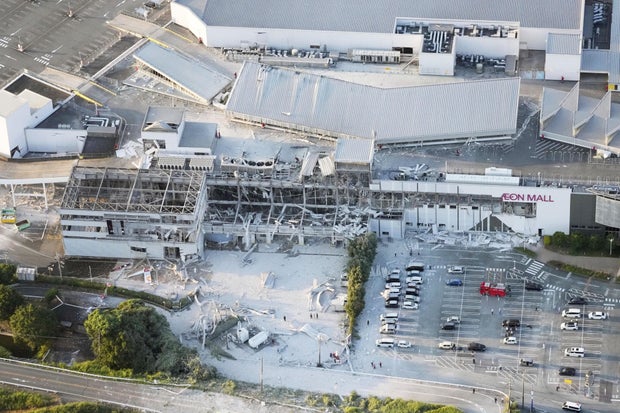
NHK said the mall collapse followed an explosion that was likely caused by a gas leak.
Police in the city earlier told CBS News' Japanese partner network TBS that there were "a lot of deaths" in the mall, but that it would "take time to confirm the exact number."
There were at least 11 people trapped inside the Nippon Paper Industries Yatsushiro Plant in Kumamoto after a chimney collapsed during the quake, according to TBS, and two of them were later found without vital signs.
The quake that struck at 4:27 p.m. local time (2:27 a.m. ET) had a magnitude of 7.1, according to the Japan Meteorological Agency, but reached the highest possible level of 7 on Japan's Shindo scale of shaking. The U.S. Geological Survey measured the quake — one of hundreds that strike Japan every year — at 6.8. The vast majority cause little damage.
At least 50 people were taken to hospitals and local emergency services and at least six other people were rescued earlier, according to NHK. Their conditions were unknown.
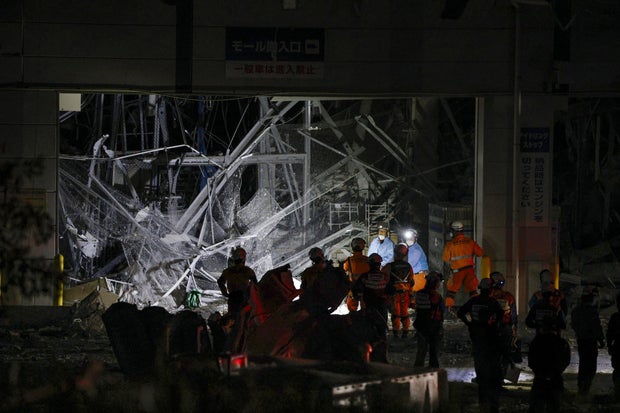
Takaichi said on social media she had established an emergency operations center.
"I extend my heartfelt condolences to all those affected by the disaster," Takaichi said. "The government will work tirelessly through the night to swiftly assess the overall damage situation and carry out emergency disaster response measures, starting with the rescue and lifesaving of those affected."
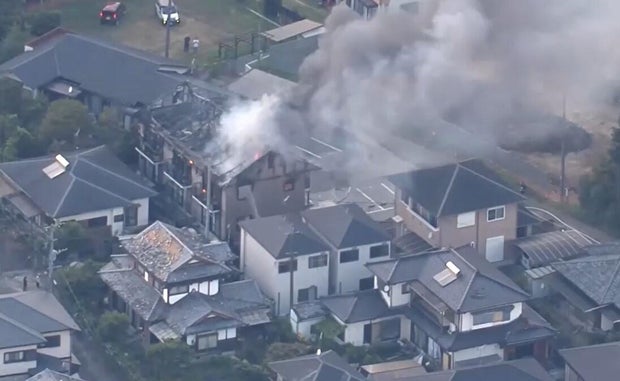
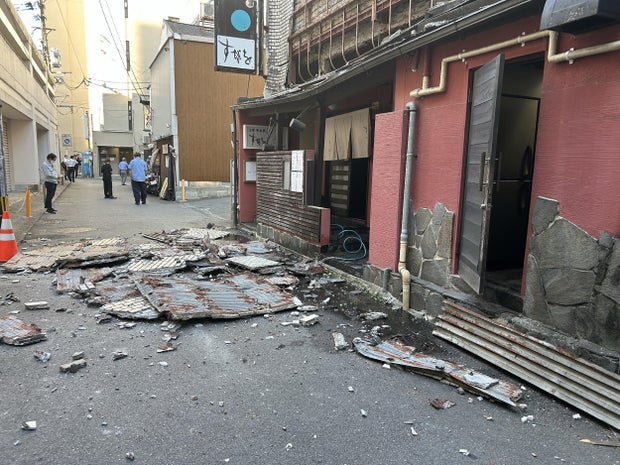
Video aired by NHK showed several blazes, damaged bridges, a derailed cargo train and cracked roads after the temblor struck at the far southern end of Japan's main Kyushu island.
The Japan Meteorological Agency initially issued an alert for a possible tsunami of up to 3 feet, but withdrew the warning after a couple of hours.
No immediate abnormalities were recorded at nuclear power plants, the Nuclear Regulation Authority said.
Toyota said Wednesday it would halt operations at three plants in southern Japan through Friday, a mere hours after resuming operations it had stopped on Tuesday, so it could assess the temblor's impact on suppliers and logistics, the Reuters news agency reported. And Honda said it would keep its Kumamoto motorcycle plant idle until Friday so quake-damaged parts of the factory can be repaired.
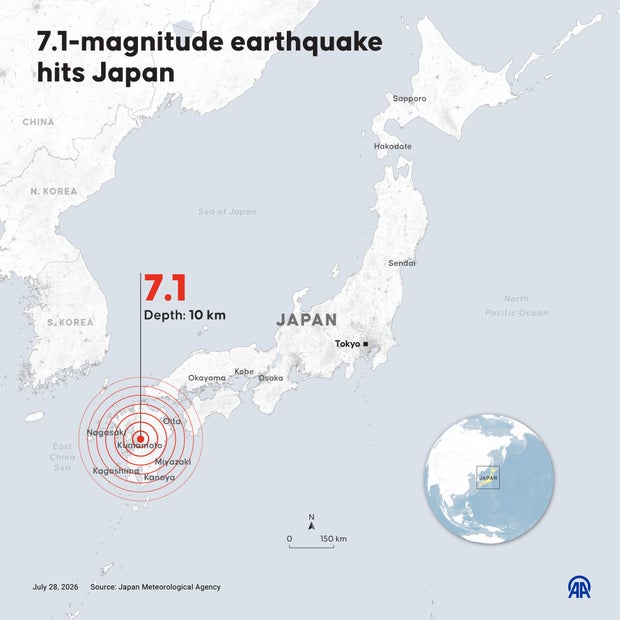
Kumamoto was hit by two devastating earthquakes in 2016 — one of magnitude 6.5, followed two days later by one of magnitude 7.3 — which killed 273 people and injured more than 2,800.
A quake with a magnitude of 7.2 hit northern Japan on June 25 but caused no deaths or major damage.
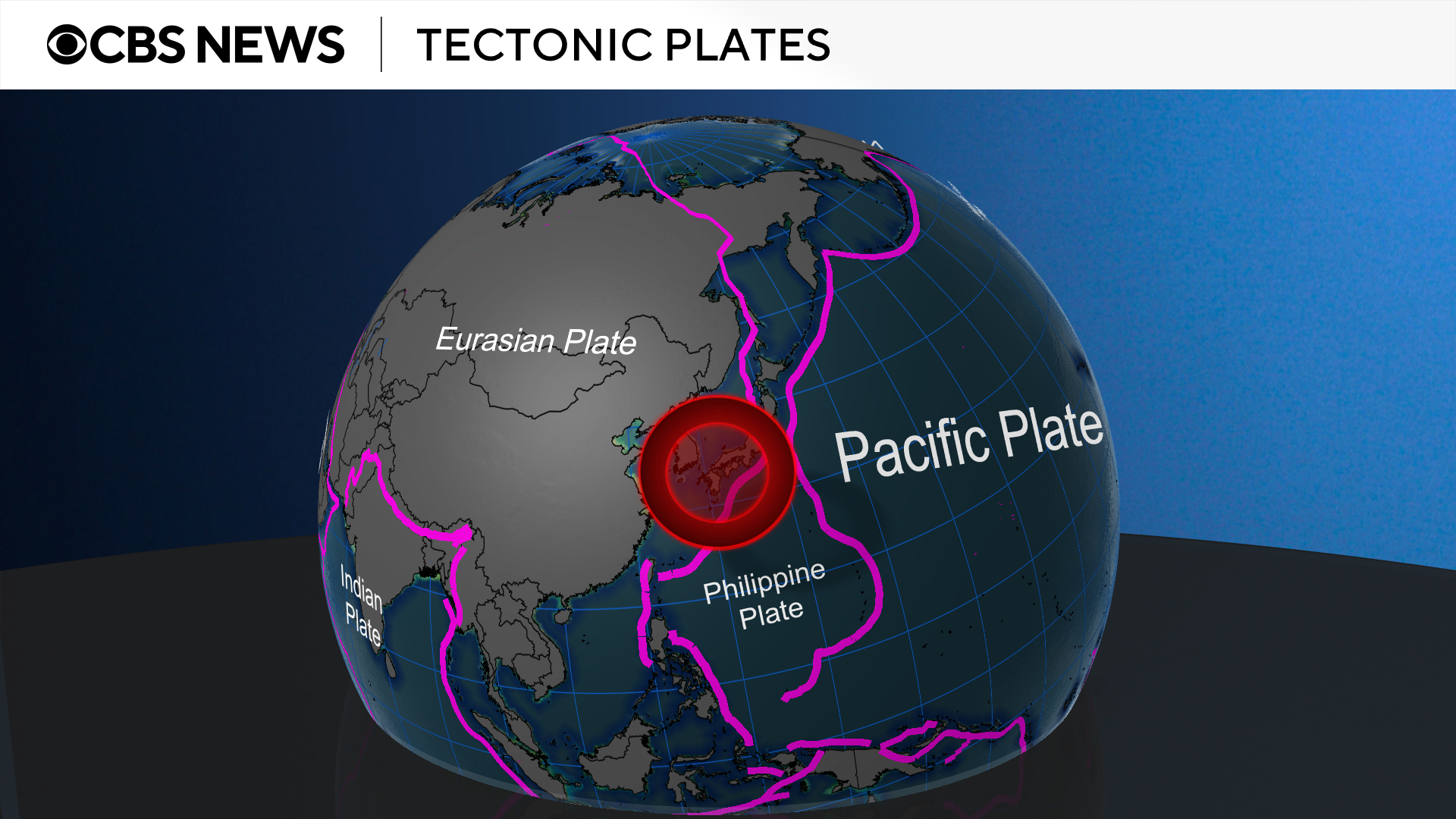
Japan is one of the world's most seismically active countries, sitting on top of four major tectonic plates along the western edge of the Pacific "Ring of Fire."
The archipelago, home to around 125 million people, typically experiences hundreds of jolts every year and accounts for about 18% of the world's earthquakes. The vast majority are mild, although the damage they cause varies according to their location and the depth below the Earth's surface at which they strike.
Japan is haunted by the memory of a massive 9.0-magnitude undersea quake in 2011, which triggered a tsunami that killed or left missing around 18,500 people and wrecked the Fukushima nuclear plant.
A tremor measuring 7.7 hit the country's north on April 20 this year, injuring at least 10 people and shaking large buildings in Tokyo.
That prompted authorities to issue a special advisory warning of an increased risk of earthquakes of magnitude 8.0 or stronger.
The advisory was lifted after a week.