Some states expand ACA subsidies as federal tax credits lapse
Six states are stepping up their efforts to offset the cost of Affordable Care Act (ACA) plans after a lapse in federal funding left millions of Americans facing higher premiums.
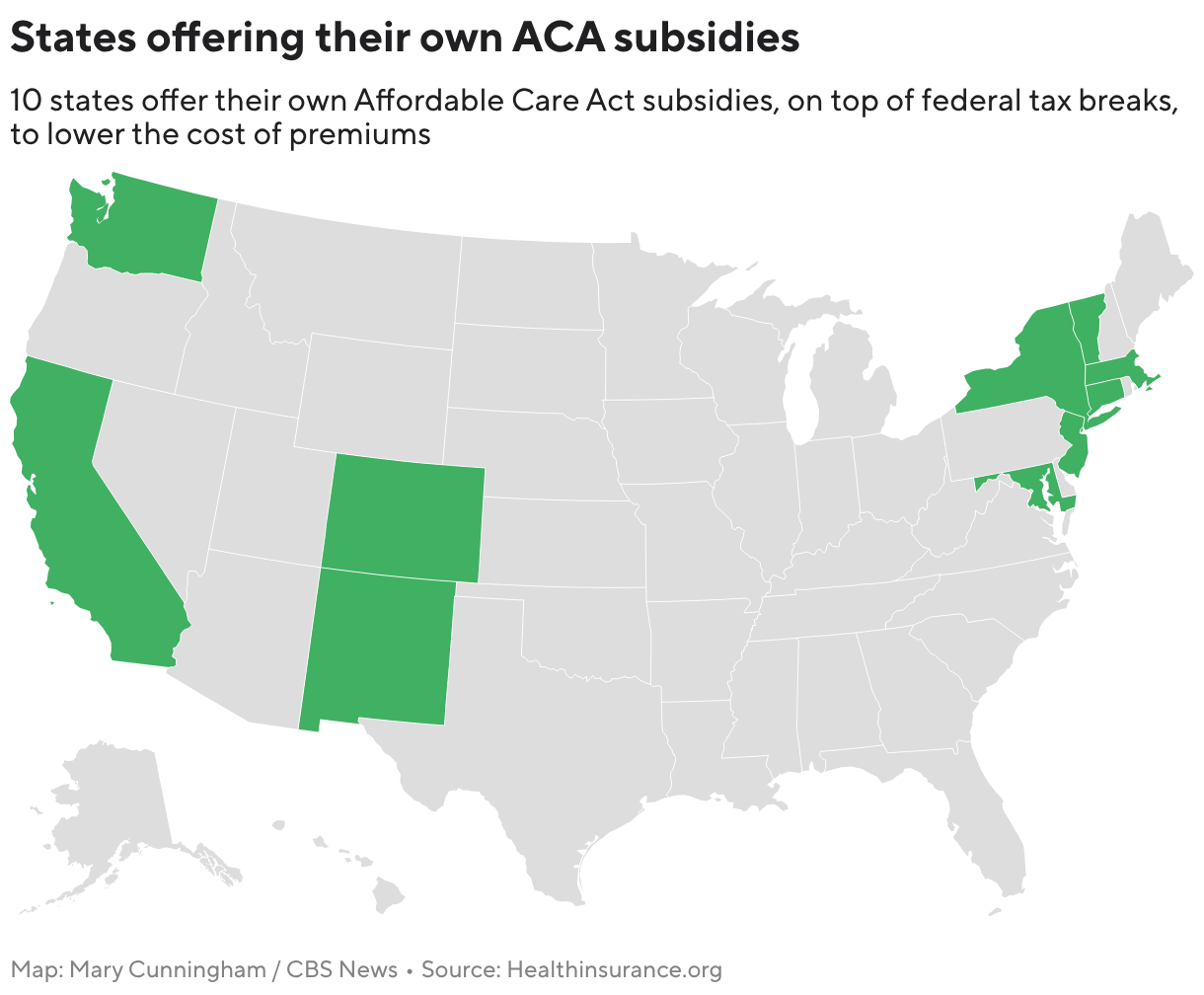
California, Colorado, Connecticut, Maryland, Massachusetts and New Mexico have all ramped up their state-funded ACA subsidies for 2026 in response to the expiration of federal tax credits at the end of last year, according to Louise Norris, a health policy analyst for Healthinsurance.org.
The states "modified or enhanced their programs directly to address the reduction in federal premium subsidies," she said.
A total of 10 states around the nation offer subsidies on top of federal ACA tax credits.
Congress has been locked in debate for months over the fate of the federal ACA tax credits, but has yet to reach a resolution. In the meantime, some ACA enrollees have seen their premium prices spike. Open enrollment for Obamacare, as the government health care program is known, ended in most states on Jan. 15.
Nonprofit health group KFF reports that a number of states, especially those operating what are known as State-Based Marketplaces (SBMs), have been preparing for the lapse of ACA tax credits for months. New Mexico, for example, decided to fully offset the loss of the federal tax credits for all of its residents, including recent immigrants.
"They actually saw a 17% increase in enrollment for 2026, versus 2025," Norris said of New Mexico.
Nationwide enrollment in ACA coverage has fallen sharply in recent months, according to figures from the Centers for Medicare and Medicaid Services.
Other states are taking a more targeted approach, offering assistance to ACA enrollees based on their household income. California, for instance, is making up for the loss of premium tax credits, but only for ACA enrollees who earn up to 150% of the federal poverty level.
Take the example of a Sacramento resident making $22,000 a year. That person would have to pay $29 a month, or $67 a month, to access two silver-level ACA plans without California's subsidies, Norris explained. However, with the additional state assistance, that person would owe $0 in premium cost for those same plans.
California's subsidies will only offset a portion of the $2.5 billion the state is losing in federal tax credit assistance, according to Healthinsurance.org.
Colorado is offering ACA participants with income up to 400% of the federal poverty level an $80 subsidy to offset their monthly premium, along with an additional $29 for each family member covered under the plan.
States that directly provide their own subsidies to ACA enrollees must operate their own exchange outside of HealthCare.gov, the government website most Americans use to register for Obamacare. That's because the federal enrollment portal isn't set up to calculate additional tax subsidies beyond the ones offered at the federal level, Norris explained.
In all, 20 states have their own exchanges, most of which are in states controlled by Democrats, she noted. States without their own exchanges can still offer ACA subsidies, but would do so using another mechanism, Norris said.
As concerns over health care costs mount, the Trump administration is also eyeing ways to soften the blow. Last week, President Trump unveiled what the White House is calling the "Great Healthcare Plan," which he said would involve sending money directly to the American people.
"It goes to you, and then you take the money and buy your own health care," Mr. Trump said in announcing the plan. "The big insurance companies lose, and the people of our country win."