Fast-moving wildfires in Washington destroy hundreds of homes: "Worst natural disaster our region has faced"
Fast-moving wildfires driven by strong winds and soaring temperatures have prompted the evacuation of thousands of people in eastern Washington state. Some 600 homes, businesses and other buildings have been destroyed in what Spokane Mayor Lisa Brown called the "worst natural disaster our region has faced."
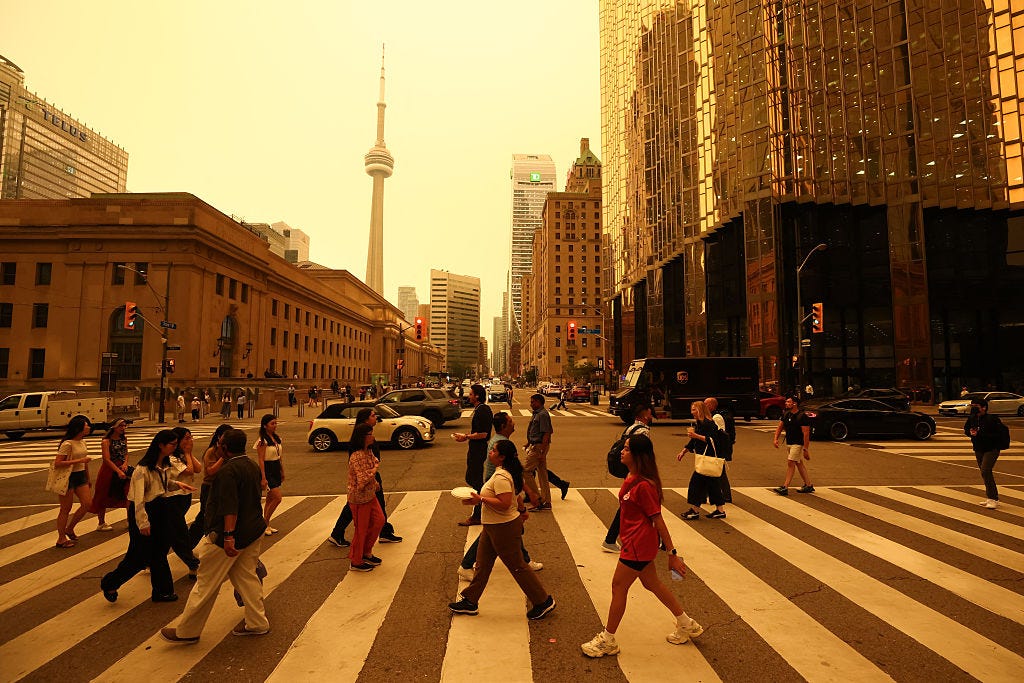
Three major fires were burning in the area: the Old Trails Fire — which broke out Saturday — the Fairview Fire, and the Autumn Lane Fire, which now also includes what had been known as the Meadowview Fire. The state has issued air quality warnings.
The blazes sent a plume of smoke billowing over the region, and almost 8.2 square miles of terrain had been burned around Spokane, the second-largest city in Washington.
In total, 15 major fires were burning across the state on Sunday, scorching more than 250,000 acres, Washington Public Lands Commissioner Dave Upthegrove said at a news conference. Some 4,000 people were involved in firefighting efforts in the state, Upthegrove said.
"This is an extraordinary fire season in the Pacific Northwest," he said.
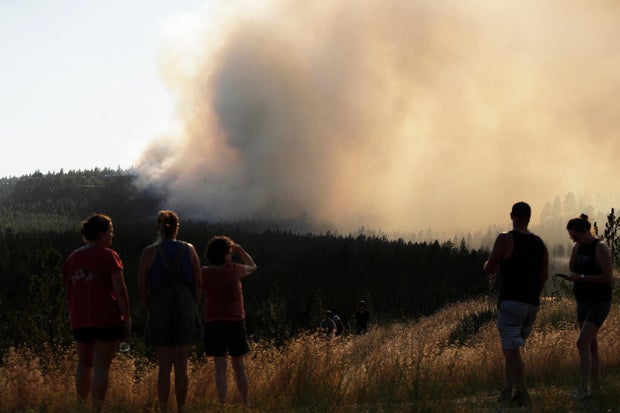
Orange and red flames were visible from the highway as cars lined the roads while people fled their homes. No deaths have yet been reported from the fires in the Spokane area, but Brown said Sunday, "We are still assessing the potential for lives to be lost."
"We urge residents of Spokane to heed evacuation orders and to stay alert to changing conditions and evacuations as they are rapidly changing," said Courtney James, spokesperson for the Washington State Department of Natural Resources.
The cause of the blaze is under investigation.
Firefighters had zero containment as of Sunday afternoon.
"There are just so many Washingtonians who have literally lost everything in a very, very short period of time," Washington Gov. Bob Ferguson said at a Sunday news conference. "Just in a matter of hours, their lives changed in deeply dramatic and fundamental ways. And so it's difficult to find words when folks have experienced a loss like that."
Ferguson stressed: "We're here for the long haul."
Power company Avista said it had implemented public safety shutoffs in the area due to elevated fire risk, but those had been restored by Sunday. Many others, however, remained without power due to the blazes. Avista CEO Heather Rosentrater said Sunday the company's utility crews were still unable to access many of the affected areas due to the ongoing blazes and evacuation orders.
A little over 10,000 customers were still without power as of Sunday evening, Rosentrater said. At the peak of the outages, more than 30,000 were without power, she said. She warned that others could lose power during peak energy hours due to diminished capacity.
Rosentrater said she does not believe the company's facilities were involved in the ignition of any of the fires in the Spokane area.
"We have weather working against us, and we have terrain working against us," said Benjamin Cossel, a public information officer for the federal response team from California called in Saturday night to deal with the Spokane-area blaze.
Ferguson declared a state of emergency Saturday after unusually high temperatures and high winds exacerbated record wildfires across the state.
"Things are extremely dynamic, especially in Spokane," Ferguson said during a press conference on Saturday.
The Federal Emergency Management Agency said Sunday it had authorized federal funds to help fight the Sinlahekin Fire, Fairview Fire and Autumn Lane Fire.
Ferguson said Sunday he had spoken with President Trump and Department of Homeland Security Secretary Markwayne Mullin and they "will be working together on additional requests for federal assistance."
"I deeply appreciate the President taking time to have this conversation, and I am optimistic we will receive a quick approval for our request for a federal emergency declaration," Ferguson said.
Ferguson again expressed optimism during a Sunday news conference that additional requests for federal funding would be granted, citing recent approvals for flooding in the state, but noted that long-term relief will take more time.
Cossel said that as it gets warmer during the day, cool air that earlier would be closer to the ground and keep winds at bay will rise, allowing those winds to move through the area. The Spokane River cuts through the city of about 229,000 people, and there are steep canyons on both sides that channel the wind.
"They push the fire through the canyons, up, up the slopes, and then outside the slopes and around," he said. "It's very, very hilly, very, very steep slopes, a lot of canyons that create really turbulent, really challenging sort of wind scenarios."
The National Weather Service issued a "particularly dangerous situation" red flag alert for eastern Washington.
Rep. Michael Baumgartner, who represents Washington's 5th Congressional District, said Sunday, "It doesn't look like the weather is getting much better for the next few days. Everyone needs to stay alert."