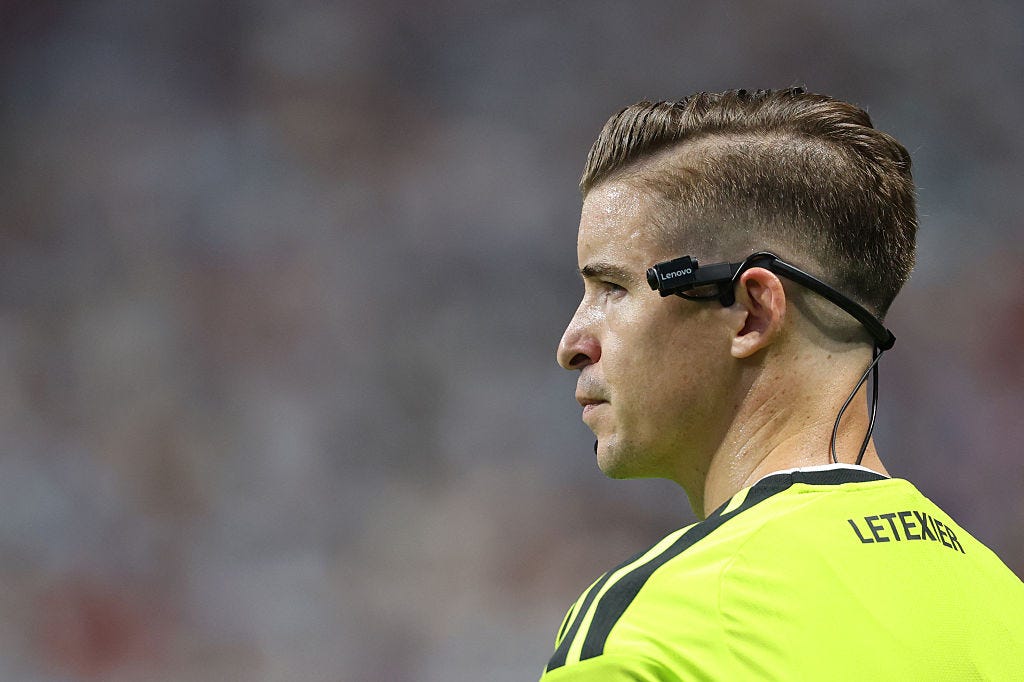
Spain and Argentina's World Cup trophy count before 2026 final
Spain and Argentina faced off Sunday in the World Cup final at MetLife Stadium in New Jersey, marking just the second meeting between the two sides in the tournament's history, and their first in 60 years. Spain defeated Argentina 1-0, earning their second World Cup title.
Both teams are among just eight nations to have ever lifted a World Cup trophy in the tournament's 96-year history.
The defending champions, Argentina, were looking to become the first country to win back-to-back World Cup titles since Brazil did so in 1958 and 1962.
Spain and Argentina's previous sole meeting prior to Sunday was in the group stage of the 1966 World Cup. Argentina defeated Spain 2-1 and made it as far as the quarterfinals before being eliminated by the hosts and eventual champions England. Spain did not make it out of the group stage.

How many World Cups has Argentina won?
La Albiceleste, a perennial contender, has won the World Cup on three occasions, but it has reached the final seven times.
Its first title came in 1978 on its home soil as host. At the time, the tournament consisted of only 16 nations and used a unique and somewhat convoluted format in which there was no knockout stage, and two teams advanced directly to the final after topping the second of two consecutive group stages.
This led to one of the most notorious results in World Cup history. To reach the final, Argentina needed to defeat Peru by a four-goal margin in its final group match, which it accomplished in a remarkable 6-0 rout. It then went on to defeat the Netherlands 3-1 in overtime in Buenos Aires in the final.
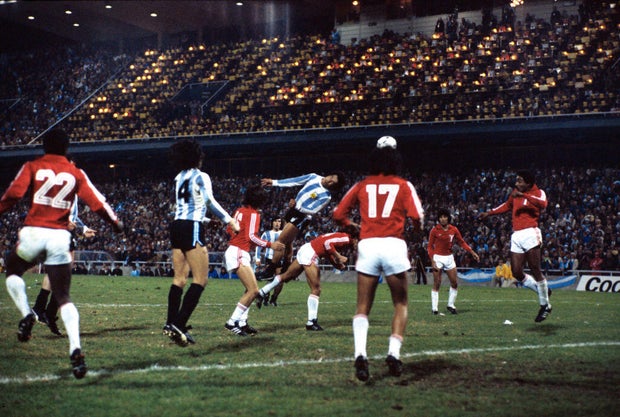
However, its match against Peru was shrouded in controversy over allegations that Argentina's ruling dictator at the time, Jorge Rafael Videla, had entered Peru's locker room prior to the match and delivered veiled threats to the Peruvian players.
Argentina's second and arguably most famous title came in the 1986 World Cup in Mexico. Led by iconic diminutive striker Diego Maradona, Argentina defeated West Germany 3-2 in the final.
But it was its quarterfinal match with hated rival England that will live in infamy, a matchup that came just four years removed from the bloody Falklands War between the two countries.
With the game scoreless early in the second half, Maradona leaped high for a ball in the penalty box with English goalkeeper Peter Shilton, clearly knocking it past Shilton and into the goal with his left forearm. The referee somehow missed what was an obvious handball, giving Argentina a 1-0 lead.

Argentina went on to win the match 2-1 thanks to a spectacular second goal from Maradona. But asked by reporters after the game about his handball, Maradona famously quipped, "A little with the head of Maradona and a little with the hand of God."
Argentina has repeatedly proved to be a thorn in England's side, eliminating the Three Lions from the 1998 World Cup in the round of 16 in a penalty shootout during which England's David Beckham was shown a red card, and then again in dramatic fashion in Wednesday's semifinal, when Maradona's heir apparent, the 39-year-old wonder Lionel Messi, rallied Argentina to a 2-1 comeback win in stoppage time to thwart England's World Cup dreams.
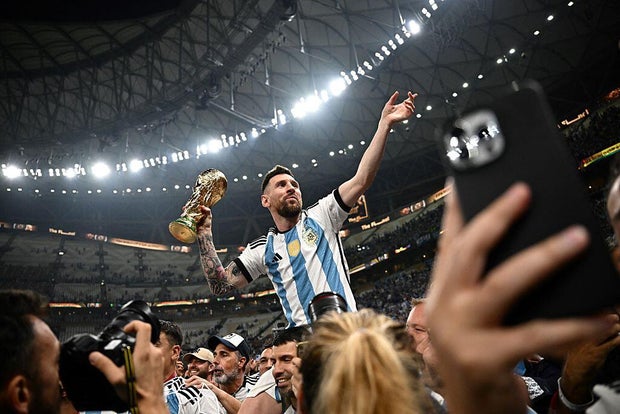
Argentina's third title came in Qatar in 2022 and marked a long-awaited coronation for Messi, who up to that point had achieved every imaginable accolade except success in international football. In that tournament, Argentina became just the second team ever to win a World Cup after losing its first game of the group stage, when it was shocked by Saudi Arabia 2-1, one of the biggest upsets in World Cup history. The only other team to do the same was, ironically, Spain, in 2010.
In what is widely considered the greatest World Cup final ever played, Argentina defeated France in a penalty shootout after drawing 3-3 in regulation in a breathtaking back-and-forth affair that saw French striker Kylian Mbappé score a hat trick, and Messi slot away two goals.
If Argentina were to win its fourth title Sunday, it would move into a tie with Germany and Italy for second all-time, and just one behind leader Brazil, which has five.
How many World Cups has Spain won?
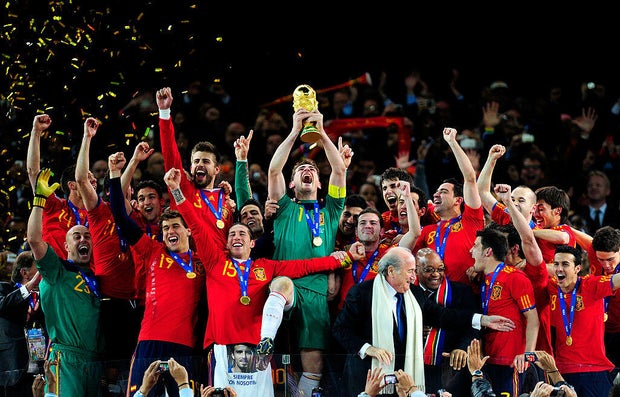
La Roja won the 2010 World Cup in South Africa, which was also its only other finals appearance before Sunday. However, Spain has been consistently solid for decades, qualifying for the last 13 consecutive World Cups dating back to 1978. Prior to its 2010 title, it had not advanced further than the quarterfinals.
Spain experienced a soccer renaissance beginning in the mid-2000s, spoiled with an embarrassment of riches by the likes of Gerard Piqué, Sergio Ramos, Xavi, Andrés Iniesta, David Villa and Sergio Busquets. Spain's World Cup title was also sandwiched between back-to-back European Championship titles in 2008 and 2012, marking one of the greatest stretches in international football history.
As such, Spain's current squad — featuring teen phenom Lamine Yamal and 2024 Ballon d'Or winner Rodri — is often referred to as the second golden generation.
Just like eventual champion Argentina later did in 2022, Spain opened its 2010 tournament with a 1-0 upset loss to an inferior Switzerland team.
Spain made it out of the group stage with victories over Honduras and Chile. Then in the knockout rounds, it won every match by a 1-0 scoreline, dispatching Portugal, Paraguay and Germany.
In the final, Spain defeated the Netherlands 1-0 thanks to a 117th-minute extra-time goal from Iniesta.
Spain became the first European team to win a World Cup that was not hosted on European soil.
The Messi-Yamal factor that made Sunday's final so compelling
Sunday's final was dripping with historical storylines for the two soccer powerhouses.
Foremost in that department was the much-anticipated meeting between Messi and Yamal, the teen many believe is the only player potentially worthy of one day taking the mantle from Messi as the greatest of all time.
The Argentinian legend is in the twilight of his career, and the ascending Spanish right winger is less than half his age, but the two have been inextricably linked for years.
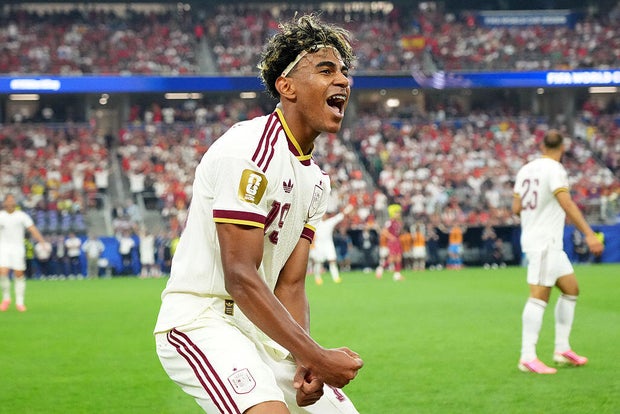
The final marked the first time that Messi and Yamal went against one another on a soccer pitch.
Messi likely played his last-ever World Cup match Sunday in what is his record sixth World Cup, one of only two players to do so with Portugal striker Cristiano Ronaldo. Yamal turned 19 just last week and was in his first World Cup.
It's an extraordinary full-circle moment for the pair, who have been connected since Yamal was a baby. In 2007, Messi cradled an infant Yamal in his arms for photos as part of a charity calendar while with FC Barcelona, the club Messi called home for 17 seasons, and which the young Yamal now stars for.
Speaking to "60 Minutes" last year, Yamal described Messi as "the best in history."
"We both know I don't want to be Messi, and Messi knows I don't want to be him," Yamal said. "I want to follow my own path, and that's it."