Space Success: Tiny NASA Satellite Unfurls Solar Sail (Pictures)
By Mike Wall This story originally appeared on Space.com
Talk about a comeback story: A tiny NASA satellite once teetering on failure has successfully unfurled its solar sail while orbiting the Earth,
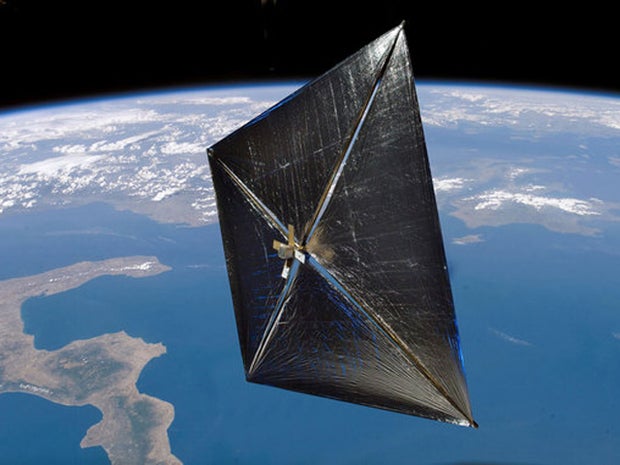
The NanoSail-D satellite -- which ejected from its mothership just this week, more than a month late -- deployed its sail at about 10 p.m. EST yesterday (Jan. 20; 0300 GMT on Jan. 21) and is operating as planned. The unfurling marks the first time a NASA craft has ever opened a solar sail in low-Earth orbit, according to agency officials. NanoSail-D, whose core is only the size of a loaf of bread, sent data home indicating that deployment of its 100-square-foot polymer sail had occurred. Ground-based satellite tracking efforts further confirmed the success, officials said. NASA's Comeback Space Sail NASA launched the NanoSail-D solar sail on Nov. 19 from Kodiak Island, Alaska. It was one of six different scientific payloads aboard a larger satellite called FASTSAT, which is about the size of a washing machine. On Dec. 6, NASA engineers triggered the ejection of NanoSail-D from FASTSAT. But it apparently didn't work. Yet on Wednesday (Jan. 19), NASA announced that the little solar sail satellite had spontaneously popped out on its own and was flying free in space. When it ejected, NanoSail-D initiated a three-day countdown to unfurl its polymer sail, and that countdown hit zero last night. Four booms deployed, unfolding the nanosatellite's sail within 5 seconds.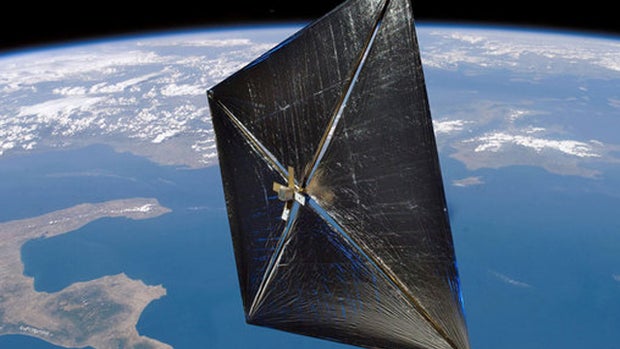
NanoSail-D's primary mission is a demonstration of a compact solar sail system. This technology could lead to further development of solar sails for future missions, and could help satellites deorbit cheaply and efficiently, officials have said.
The little satellite should keep sailing through space in low-Earth orbit for the next 70 to 120 days, depending on atmospheric conditions, officials said. At the end of this time, it will burn up in Earth's atmosphere. NanoSail-D will continue to send out beacon signals, which can be found at 437.270 MHz, until the craft's onboard batteries are expended, NASA officials said. More Tech and Science Stories from LiveScience.com