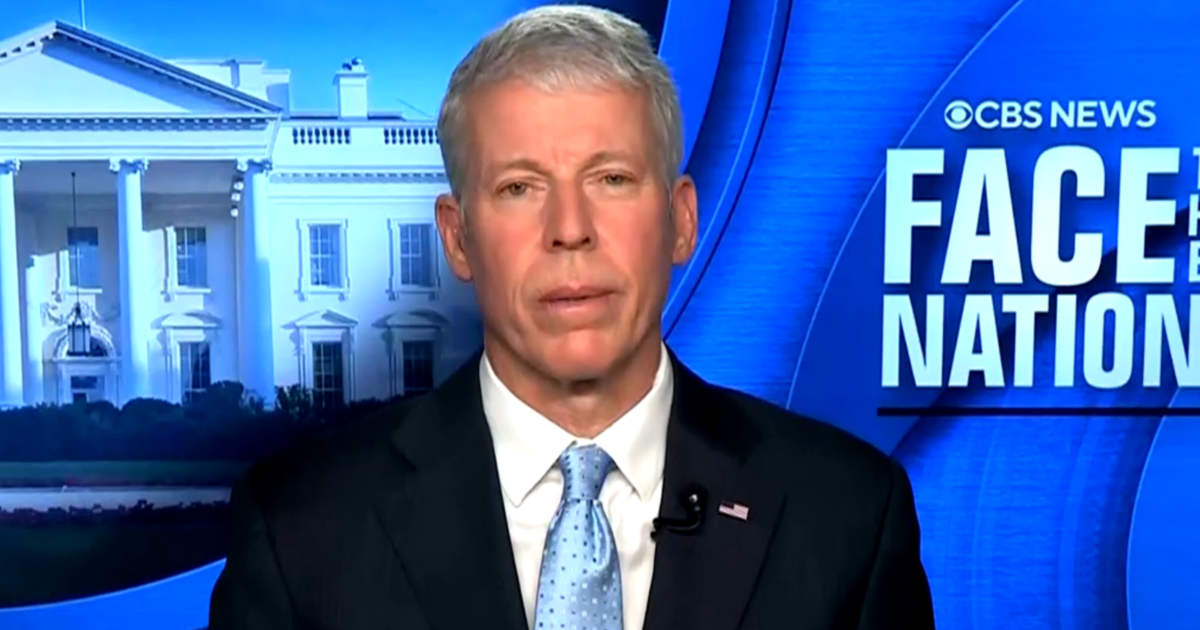
Transcript: Treasury Secretary Scott Bessent on "Face the Nation with Margaret Brennan," Dec. 7, 2025
The following is the transcript of the interview with Treasury Secretary Scott Bessent that aired on "Face the Nation with Margaret Brennan" on Dec. 7, 2025.
MARGARET BRENNAN: Good morning and welcome to 'Face The Nation.' We have a lot of news to get to, and we begin with the Secretary of the Treasury, Scott Bessent. Good to have you here.
TREASURY SECRETARY SCOTT BESSENT: Morning, Margaret.
SEC. BESSENT: Mr. Secretary, a lot of people are out there holiday shopping. Here is how the President described back in April, what to expect from this season.
[SOT]
PRESIDENT DONALD TRUMP: Maybe the children will have two dolls instead of 30 dolls, you know. And maybe the two dolls will cost a couple of bucks more than they would normally.
[END SOT]
MARGARET BRENNAN: Was the President's prediction then, correct?
SEC. BESSENT: Margaret, it's actually been a very strong holiday season, and the- you know, we've seen across all the income cohorts thus far. And so there's nothing to say that there are two dolls instead of 30 dolls.
MARGARET BRENNAN: The President was wrong to predict lower numbers of purchases and higher prices?
SEC. BESSENT: The economy has been better than we thought. We've had the 4- 4% GDP growth in a couple of quarters. We're going to finish the year, despite the Schumer shutdown, with 3% real GDP growth.
MARGARET BRENNAN: Well, the maker of Tonka Trucks, their CEO, said it's going to cost 40 bucks for their toys right now because of tariffs and inflation, it was 30 bucks the year before that, 25. Prices in the toy space are accelerating, and people are feeling that.
SEC. BESSENT: Well, Margaret inflation is a composite number, and it's roughly the same year over year. And if we were to look at all imported goods, imported goods inflation is below the inflation number.
MARGARET BRENNAN: The inflation number, you mean the--
SEC. BESSENT: The PC- the PCE number which is about 2.9%. Imported goods inflation is about 1.8. It's the service economy that's generating inflation, which actually has nothing to do with tariffs.
MARGARET BRENNAN: But when we hear from for example, the President, when he says that affordability is a con job by Democrats, that seems to just not be resonating with consumers that have been polled by CBS. 60% of Americans polled by this network told us President Trump makes prices and inflation sound better than they really are, and his approval rating in the economy is now down to 36% in our latest poll. On inflation, approval is even lower, 32%. Don't you need to show that you feel the pain?
SEC. BESSENT: Well, Margaret, I think the President's frustrated by the media coverage of what's going on--
MARGARET BRENNAN: This is the polling of average Americans.
SEC. BESSENT: --No, no- yeah, but I think the average Americans, they are hearing a lot from media coverage. And I will tell you that affordability has two components, there is inflation, and then there is real incomes. Real incomes are up about 1% and what we're not going to do is say that Americans don't know what they're feeling. We've been working on it every day. I was on your show on March talking about affordability. The- we've made a lot of gains, but remember, we've got this embedded inflation from the Biden years, where mainstream media, whether it's Greg Ip at the Wall Street Journal, toxic Paul Krugman at New York Times or former Vice Chair, Alan Blinder, all said it was a vibecession. The American people don't know how good they have it. Now, Democrats created scarcity, whether it was in energy or over regulation, that we are now seeing the- this. affordability problem, and I think next year we're going to move on to prosperity.
MARGARET BRENNAN: You do think there is an affordability problem?
SEC. BESSENT: Sorry?
MARGARET BRENNAN: You do believe there's an affordability problem?
SEC. BESSENT: Oh, I think the Biden administration created a terr--
MARGARET BRENNAN: No, but now we're nearly 12 months in, you said the President would own the economy at this point.
SEC. BESSENT: I said that the Biden administration created the worst inflation in 50 years, and maybe for working Americans, the worst inflation of all time. And we have pulled that number down- that Strategas research does something called the common man index. Under Biden, the accumulated inflation number, as measured by CPI, was about 20%. Their index showed 35. This year for the first time, the common man index is below the inflation index because the basket of goods for working Americans, food, gasoline, rent is coming down. So I wrote an essay March 12, 2024, and it talked about the three I's, immigration, interest rates and inflation. Immigrant- mass, unfettered immigration, depressed wages caused housing prices to go up. President has closed the border that is fixed. Interest rates have come down. The bond market just had the best year since 2020 and now we are working on inflation, and I expect inflation to roll down strongly next year.
MARGARET BRENNAN: Well, I mean, grocery prices are up nearly 3% compared to last September. The President seems to be acknowledging that grocery prices, or at least beef prices, are a challenge, because he put out this order just yesterday saying they're going to investigate corporate price gouging for high beef prices. Isn't suing the food companies the same thing the Biden administration did, and it didn't really work? How is this any different?
SEC. BESSENT: Well, nothing- nothing the Biden administration did worked--
MARGARET BRENNAN: So why are you doing it?
SEC. BESSENT: Because this isn't the same thing. If they- if they had done this, if they'd done it properly, we'd be in a different spot. And like, beef is one component. Thanksgiving Turkey was down 16%.
MARGARET BRENNAN: Well, I know you are working on the trade front, and for American farmers and the prices that they are experiencing, that they're feeling a pinch about not having a market to sell into, necessarily.
SEC. BESSENT: Not- not anymore.
MARGARET BRENNAN: Well, the agricultural Secretary just said that the President is going to announce a bridge payment for farmers this week to give them short term relief while you're working on these- finalizing these trade packages. There are these low crop prices, and the soybeans in particular, I know you spoke with China's Vice Premier Friday. Are they going to speed purchasing up?
SEC. BESSENT: Well, they're not going to speed purchasing up. They're in the cadence that we agreed to. Soybean prices are up about 12 or 15% since the agreement with the Chinese. They are going to buy 12.5 million metric tons. But Margaret, I'm involved in the agricultural industry. I run a soybean farm, and I can tell you--
MARGARET BRENNAN: You own one, you invest in it.
SE. BESSENT: Sorry?
MARGARET BRENNAN: You own or invest in--
SEC. BESSENT: --People in my family go out and work on it. I actually just divested it this week as part of the- my ethics agreement, so I'm out of that business. But I probably know more about any Treasury Secretary than- about agriculture since the 1800s and I can tell you that what farmers need is certainty, and we have put that in place with this trade deal. 12 and a half million metric tons this year, 25 million metric tons for the next three years, for soybeans, also sorghum, the- and lumber.
MARGARET BRENNAN: So those purchases, just to clarify, those will be this year, because I heard you say this past week that some of the purchases wouldn't take place until February.
SEC. BESSENT: Well, for the- for the season, so the crop year.
MARGARET BRENNAN: The season year?
SEC. BESSENT: Yep.
MARGARET BRENNAN: Okay. But why- if everything's fine, then why do farmers need a bridge payment from the Agricultural Department?
SEC. BESSENT: Sorry?
MARGARET BRENNAN: Why would farmers need a bridge payment from the Agriculture Department, then?
SEC. BESSENT: Because these prices haven't come in, because the Chinese actually used our soybean farmers as pawns in the trade negotiations. And we are going to create this bridge because, again, agriculture is all about the future. You've got to start financing for planning next year when things will be very good.
MARGARET BRENNAN: I want to ask you about something that was announced this past week, the Trump accounts, and building on this concept so parents, as I understand, are going to be able to open these accounts via the Treasury for their kids, their tax deferred investment vehicles to U.S. citizen children under 18, get $1,000 from the government for babies born between 2025 and 2028. So there are going to be restrictions on what the money can be used for college tuition or their first house, is that right?
SEC. BESSENT: No, it is- the federal government for children born in the period you just described, is going to put $1,000 into these Trump accounts, it will be invested in a widely diversified, low cost index, and then it will be available--
MARGARET BRENNAN: In the stock market, in an exchange traded fund or mutual fund.
SEC. SCOTT BESSENT: So in essence, it is a trust fund. It is a piece of the American economy for every child, and they will be able to take it out when they're 18, or they can convert it to a more IRA-type program and keep it for their retirement.
MARGARET BRENNAN: So there won't be the restrictions I mentioned there about how they use the money?
SEC. BESSENT: No.
MARGARET BRENNAN: Okay, so there was also a broadening of this- this past week, with the Dell Foundation making a significant investment in the American children. So how is this going to work? Why structure it this way, instead of a savings account, for example?
SEC. SCOTT BESSENT: Well, a savings account just gets interest. This is the compounding power of the stock market. As Warren Buffett says, don't- don't bet against the American stock market, don't bet against the economy. And this is going to bring a whole group of new investors into the market. We're going to couple it with a big amount of financial literacy, so that children understand what they own. The incredible gift by Michael and Susan Dell will be the- is a program that philanthropists' foundations can do to top up these accounts. And we are expecting, we're already at- Treasury is already in discussions with foundations, with major philanthropists to top up these accounts. It could either be for all children, or you can specify it by zip code, a school district, or you can do what the Dells did, and say that it will be- won't apply to the zip codes of the top 20% of earners.
MARGARET BRENNAN: And more information is going to be coming out on how to use this and access it?
SEC. SCOTT BESSENT: Yes, in the coming weeks, we'll do that, and then the official kickoff will be July 5.
MARGARET BRENNAN: Before I let you go, I want to ask you about this massive fraud out in Minnesota, and the state welfare program has been under federal investigation since all the way back in 2022. The President told you, though, this week, to look into Somalis who, quote, ripped off that state for billions of dollars. He said they contribute nothing. What exactly are you investigating?
SEC. SCOTT BESSENT: Well, Margaret, to be clear, the initial fraud that was discovered by the IRS for which I'm the Acting Commissioner- is discovered by IRS Criminal Investigations Unit. This was not an endogenous thing that the state of Minnesota decided. We had to go in and clean up the mess for them, and this is part of the continued cleanup. A lot of money has been transferred the- from the individuals who committed this fraud, including those who donated to the government- Governor, donated to Representative Omar and donated to AG Ellison, but they've been transferred to something called MBs--
MARGARET BRENNAN: Mortgage backed securities, what--?
SEC. BESSENT: Sorry?
MARGARET BRENNAN: Transferred to what?
SEC. BESSENT: These are money- the- bureau services, and they are wire transfer organizations that are outside the regulated banking system, and that money has gone overseas, and we are tracking that- the- both to the Middle East and Somalia to see what the uses of that have been.
MARGARET BRENNAN: Okay, but you have no evidence of that money being used to fuel terrorism, which is what some conservative writers are alleging?
SEC. SCOTT BESSENT: That's why it's an investigation. We started it last week. We'll see where it goes. But I can tell you that, you know, it's terrible. You know, Representative Omar tried to downplay it. Said, oh, it was very- the- it was very tough to know how this money should- should be used. She was gaslighting the American people.
MARGARET BRENNAN: Well, we'll talk to her.
SEC. BESSENT: Yeah. But, you know, when you come to this country, you got to learn which side of the road to drive on. You got to learn to stop at stop signs, and you got to learn the- not to defraud the American people.
MARGARET BRENNAN: Well, there are plenty of- plenty of criminal behavior from communities well beyond the immigrant community, but we'll talk about this with Representative Omar shortly. Thank you, Mr. Secretary.
SEC. BESSENT: Good.
MARGARET BRENNAN: We'll be back in a minute. Stay with us.