Republicans defend efforts to influence the independent Federal Reserve
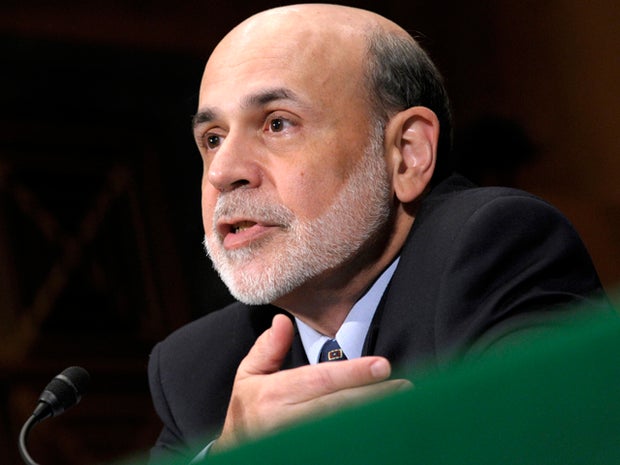
House Majority Leader Eric Cantor on Wednesday gave no apologies for an unprecedented letter he and other Republican leaders sent this week to the Federal Reserve, urging the independent body to hold back more efforts to boost economic growth because they might harm the economy.
Cantor told reporters the letter represented the concerns of many Republicans, who want to promote what he called a "strong dollar policy."
"I think that many of us feel that some of the very loose monetary policy has had a negative effect as far as global confidence in our currency and ultimately in our economy," he said. "We're trying to maintain a sense of fiscal discipline," Cantor said.
The Federal Reserve is responsible for monetary, or interest rate, policy, while Congress is responsible for fiscal, or spending, policy.
The central bank's interest rate setting committee said Wednesday it would sell $400 billion of its shorter-term securities to purchase longer-term holdings in its latest attempt to jumpstart a still struggling U.S. economy. Shifting to long-term debt could lower long-term interest rates and encourage more borrowing, spending and other economic activity.
Republicans have grown increasingly vocal in their opposition to the Fed's repeated attempts to stimulate the economy, charging that manipulating monetary policy to lower interest rates could further weaken the U.S. dollar or encourage spending among consumers already burdened with debt.
Cantor and other Republican leaders on Monday sent a letter to that effect to Federal Reserve Chairman Ben Bernanke.
"We have serious concerns that further intervention by the Federal Reserve could exacerbate current problems or further harm the U.S. economy," said the letter signed by House Speaker John Boehner, Senate Minority Leader Mitch McConnell, Senate Republican Whip Jon Kyl and Cantor.
The letter said the board should "resist further extraordinary intervention in the U.S. economy, particularly without a clear articulation of the goals of such a policy, direction for success, ample data proving a case for economic action and quantifiable benefits to the American people."
Some Democrats have decried the letter, arguing it's inappropriate for Republicans to try to influence the Fed, which is designed to be an independent body immune to short-term political pressures.
On the Senate floor today, Senate Majority Whip Dick Durbin, D-Ill., said the nature of the letter was unprecedented, and he called its policy suggestions "wrong-headed."
In a statement, Sen. Chuck Schumer, D-N.Y., called the letter "a heavyhanded attempt to meddle in the Fed's independent stewardship of monetary policy" and said it should be ignored.
House Democratic Whip Steny Hoyer was less critical of the Republicans. Speaking to reporters Wednesday, he noted, "it's a free country."
"The Republicans and Democrats and others have a right to make a suggestion to the Fed or to the president or to the Congress," he continued. "And of course the Fed, as an independent body has the right to say, 'Well, thank you very much, but we don't agree.'"
Hoyer said he thinks the Fed has acted "very responsibly" under the leadership of Bernanke, who was appointed by former President George W. Bush and was his chief economist at the White House before taking the helm of the central bank.
The Fed said at its August meeting that it expects the economy to struggle for at least two more years and will consequently keep short-term interest rates low until mid-2013.
In June, the Fed ended its Treasury-bond-buying program, which was intended to stimulate the economy. Earlier in the year, Bernanke defended the program, but Republicans slammed it. Last month, Republican presidential candidate and Texas Gov. Rick Perry called Bernanke's actions at the Fed "almost treasonous."