Understanding the relationship between gold prices and the U.S. dollar: What to know for 2026
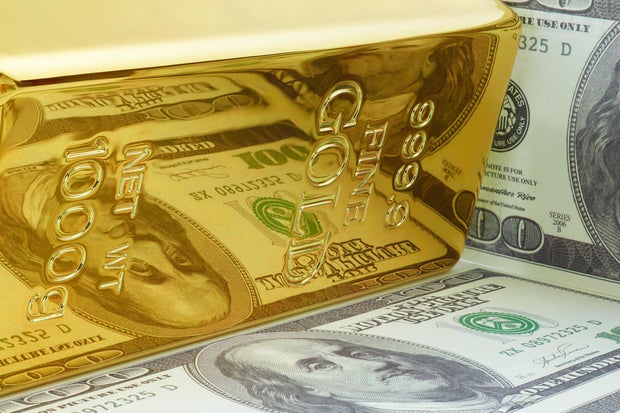
Gold prices have been making headlines over the last year, and the last several months in particular, as the price has surged past recent highs and set fresh records nearly every week. At the same time, the U.S. Dollar Index has been hovering near multi-month lows, marking a significant retreat from its highs just a year ago. For investors watching their portfolios, these parallel movements aren't coincidental. They're part of a long-standing dynamic that continues to reshape the investment landscape.
The relationship between gold and the U.S. dollar has taken on renewed importance as a number of looming issues, like economic uncertainty, geopolitical tensions and shifting monetary policies, create an environment where understanding this connection could mean the difference between protecting and eroding wealth. After a year that saw gold climb substantially and the dollar fall in tandem, investors are now confronting a fundamentally different market than they faced early last year.
What exactly should investors know about the relationship between gold prices and the U.S. dollar right now, though? That's what we'll examine below.
Find out how to add gold and other precious metals to your portfolio today.
Understanding the relationship between gold prices and the U.S .dollar: What to know for 2026
At its core, gold's historical relationship with the U.S. dollar is rooted in simple economics: Gold is priced in dollars globally, so when the dollar strengthens, gold becomes more expensive in other currencies and tends to lose some demand, putting downward pressure on its price. Conversely, when the dollar weakens, gold becomes relatively cheaper for holders of other currencies, which can boost demand and lift prices. This dynamic has created a generally inverse correlation between gold prices and the U.S. dollar over decades.
But why does this matter? For investors and analysts, movements in the U.S. Dollar Index, which acts as a measure of the dollar's strength against a basket of major world currencies, often serve as a quick barometer for how gold might fare. A rising U.S. Dollar Index historically corresponded with pressure on gold, while a falling U.S. Dollar Index offered a lift.
Yet the relationship isn't ironclad. In recent years, and particularly as markets dealt with rising global debt, geopolitical uncertainty and renewed demand for alternatives to traditional financial assets, gold and the dollar have occasionally moved in the same direction. For example, global safe-haven demand during periods of market stress can push both gold and the dollar higher simultaneously, even if that runs contrary to the usual inverse pattern.
And, when it comes to how the U.S. dollar and gold could interact throughout the course of 2026, several factors could influence this dynamic, including:
Monetary policy and interest rates
Federal Reserve decisions on interest rates play a significant role in shaping both the dollar and gold prices, meaning that any Fed rate decisions that occur this year could have an impact. Higher interest rates tend to support the dollar by offering better returns on dollar-denominated assets, making non-yielding gold less attractive. Conversely, expectations of rate cuts, or even political pressure on the Fed, can weaken the dollar and make gold more appealing.
Start protecting your investment portfolio with precious metals now.
Inflation expectations
Gold has long been viewed as a hedge against inflation, and right now, inflation, while cooler compared to recent highs, is still not fully under control. Where it heads next remains to be seen. When inflation expectations rise, particularly if real yields turn negative, investors often seek gold to preserve purchasing power. A weaker dollar often accompanies rising inflation expectations, reinforcing gold's safe-haven appeal.
Geopolitical tension and safe-haven demand
Conflict, trade disputes or instability in major economies can prompt investors to seek assets perceived as safe, boosting demand for both gold and the dollar. That behavior can blur the typical gold/dollar relationship, as both assets benefit from risk aversion at the same time.
Central bank behavior and reserve diversification
The ongoing diversification of official reserves by many central banks may also play a role in this relationship throughout 2026. Rather than holding primarily dollars and Treasuries, many central banks are adding gold to their portfolios. This shift supports gold prices independently of the dollar's short-term movements — effectively adding a structural demand component that wasn't as prominent in past decades.
Market forecasts and investor positioning
Analyst forecasts for gold prices in 2026 remain broadly bullish, with major institutions projecting significant upside. Some forecasts place gold near or above $5,000 per ounce by year-end, drawing on both continued safe-haven demand and persistent macro uncertainties. These forecasts often assume a backdrop of moderate dollar weakness or at least a less dominant dollar influence than in past cycles.
The bottom line
For decades, the dance between gold prices and the U.S. dollar followed a fairly predictable rhythm: strong dollar, weaker gold; weak dollar, stronger gold. That simple pattern helped investors anticipate market moves and balance portfolios.
But while the inverse relationship between gold and the dollar remains a useful lens, this year may see that link compete with fresh structural and sentiment-driven forces. For investors, this means it's important to keep an eye on not just currency metrics like the U.S. Dollar Index, but also inflation expectations, central bank behavior, geopolitical developments and broader macro trends.