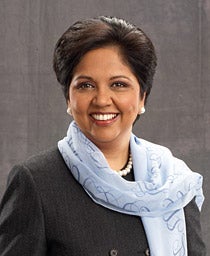
PepsiCo CEO Indra Nooyi
PepsiCo CEO Indra Nooyi was eager to purchase the remaining shares of its two largest U.S. bottlers, Pepsi Bottling Group and PepsiAmericas. Buying them outright — it already owned 33 percent of Pepsi Bottling and 43 percent of PepsiAmericas — would allow Pepsi to be more efficient and flexible when launching non-soda products that are increasingly critical to its growth. But at the end of 2007, the stocks of both were trading at all-time highs.
Cut to early August 2009, when Pepsi announced it had reached a $7.8 billion deal with its bottlers. Thanks to the stock slump, Pepsi Bottling’s shares were down 21 percent from its peak and Pepsi America’s had fallen by 23 percent, saving the beverage giant more than $1 billion in the purchase price.
The purchase, however, did more than save Pepsi a packet. By bringing its bottling system in house, and with it, the ability to quickly and easily deliver new products directly to stores, Pepsi is taking control of a critical component of its business.
Over the past decade, the in-store marketing of the company’s beverages have been handled by regional bottling companies; Pepsi Bottling and PepsiAmericas are the biggest by far. Buying the rest of those two companies will give PepsiCo control over 80 percent of its beverage volume, and is likely to boost the outlook for non-soda brands like Gatorade and Aquafina, which bottlers often overlooked.
At an internal meeting at PepsiCo in early August, Nooyi told employees that the existing bottling system was broken. “Our current bottler operating model has worked very well for the last 10 years and, unfortunately, that model was not designed for today's operating environment or the operating environment we expect over the next 10 years,” she said.
John Sicher, publisher of Beverage Digest, says he thinks the change will give Pepsi the ability to think more strategically and creatively about its marketing. “The old bottling system was based on a world where there were a relatively small number of carbonated soft drink products that grew every year,” he says. “That’s what the bottlers know. Everything is changing now.”
Sicher points to Tava, a fruit-flavored, no-calorie, carbonated beverage that was introduced last year, as an example of a product that could have had a shot at success if it had not been sold and delivered through the independent bottling system. Tava sales have been disappointing.
Analysts also say the new structure will enable Pepsi to compete more effectively against Coca-Cola, which remains committed to independent bottlers (although it owns one-third of its largest bottler, Coca-Cola Enterprises). For the past 17 quarters, Coke has gained market share, some of it at the expense of Pepsi. Currently, Coke owns about 35 percent of the domestic beverage market, and Pepsi about 30 percent.
By grabbing the reins of its distribution network, Pepsi is acting decisively to end — and perhaps reverse — that trend. “Having the direct relationship with retailers is the way to go,” says Philip Gorham, an analyst at Morningstar, explaining why he likes Pepsi’s new model better than Coke’s status quo. “It will allow them to change direction with both the economy and consumer tastes more quickly.”
Even with the discounted purchase price, buying its bottlers doesn’t guarantee that Pepsi did the right thing, of course. Before it can proclaim victory, the company has to successfully integrate the bottlers’ operations, and then deliver and promote its biggest soda brands as effectively as the bottlers have done for years. “They’ve got to do a good job on execution,” Gorham says.
More on BNET: