Orbital Debris: A Growing Headache that's Getting Worse
On Tuesday, astronauts aboard the International Space Station had to fire the craft's thrusters in order to move the orbiting lab and its crew of six safely away from a chunk of an old NASA research satellite.
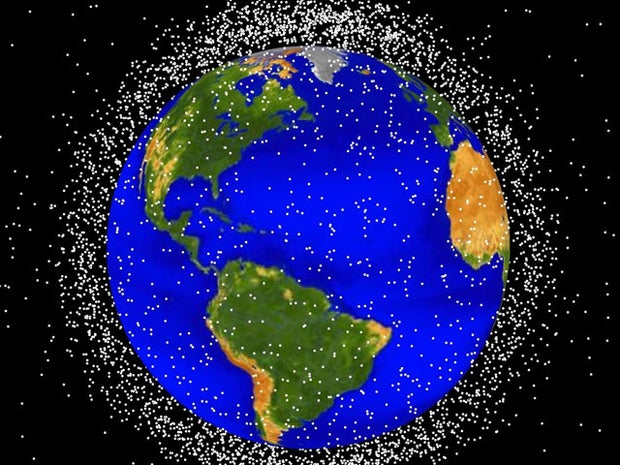
According to NASA, this potpourri of stuff iincludes:
- Derelict spacecraft and upper stages of launch vehicles
- Carriers for multiple payloads
- Debris intentionally released during spacecraft separation from its launch vehicle or during mission operations
- Debris created as a result of spacecraft or upper stage explosions or collisions, solid rocket motor effluents, and tiny flecks of paint released by thermal stress or small particle impacts.
To make things that much more interesting for any manned missions, the orbital debris circling the Earth feature speeds between 7 to 8 kilometers per second. NASA notes that average impact speeds of orbital debris with another space object can reach around 10 kilometers per second.
Thus the urgency of getting out of the way of a small piece of debris, when possible. Often, that's not the case and a craft winds up taking a beating - as you can see in the accompanying image gallery.
