New Supreme Court cases could affect 15-year-old Chicago boy charged with murder
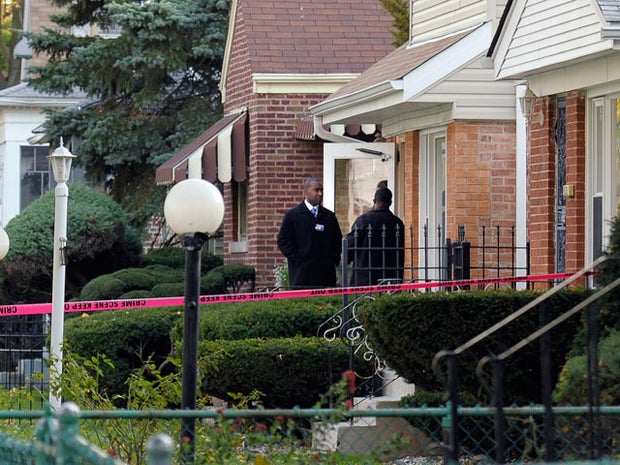
(CBS) NEW YORK - The 15-year-old Chicago boy accused of murdering his grandmother Friday after she found him skipping school has already been charged as an adult for first-degree murder. But if convicted, his sentence may be uncertain, thanks to two new cases pending before the Supreme Court.
On Monday, the Supreme Court announced it would hear two cases that address the constitutionality of life without the possibility of parole for juveniles convicted of murder.
Keshawn Perkins, 15, was charged Sunday with the murder of his grandmother, Hester Scott, an off-duty police officer. According to a spokesperson for the Cook County District Attorney's office, which will prosecute the case, if convicted, Perkins faces a sentence of 20-60 years in prison or life without parole.
There are approximately 2,200 juveniles serving sentences of life without parole in the United States, according to the Equal Justice Initiative (EJI), the non-profit legal advocacy group that brought the two cases the Supreme Court agreed to hear Monday.
Previously, in May 2010, the Court ruled that juveniles convicted of non-homicide crimes could no longer be sentenced to life without parole. In 2005, the court found that death sentences for juveniles who committed crimes before they were 18 are unconstitutional.
According to Shobha Mahadev, Project Director for the Illinois Coalition for the Fair Sentencing of Children at Northwestern University's School of Law, in banning life without parole for juveniles in non-homicide crimes, the court looked at new scientific and psychological data about the differences between juvenile and adult brains and found that "children are categorically less culpable" than adults and thus "life without parole is a particularly harsh sentence for a child."
The two cases that will be before the court concern defendants who committed murder at age 14, but Bryan Stevenson, Executive Director of EJI, told Crimesider that the issues addressed in the cases - specifically that, as Stevenson puts it, "kids are different" - could affect Perkins' future.
"We think that applies equally in homicide versus non-homicide cases," said Stevenson.
The Cook County District Attorney's office declined to comment on the Perkins case.