What is the mortgage refinance rate forecast for 2026? Here's what some experts expect.
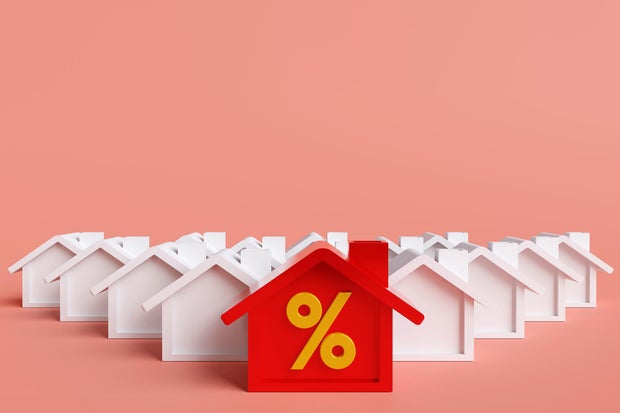
Interest rates have certainly cooled in the last year, thanks to a changing economic environment and multiple Federal Reserve rate cuts, and that relief has trickled down to mortgage rates. The dip in mortgage rates has impacted both mortgage purchase and mortgage refinancing rates, with the latter sitting close to 6.5% currently.
That, in turn, has led many homeowners, and those who bought a home over the last few years, in particular, to consider whether refinancing their current mortgage loan makes sense. And for many, like those who bought when mortgage purchase rates were sitting at recent highs, it does. As a result, mortgage loan refinances now account for more than half of all mortgage activity, according to the Mortgage Bankers Association.
So, is this something you should consider doing now, too? Or could waiting a few months to refinance your home loan help you snag lower rates? Here's what experts have to say about where mortgage refinance rates could land next year.
Find out how low your mortgage refi rate could be now.
What needs to happen for mortgage refinance rates to fall in 2026
In order for mortgage refinance rates to fall in 2026, experts say inflation would need to remain in check or possibly even decline.
"There are many factors that will affect mortgage rates going into 2026, but the first and most important is inflation," says Jeremy Schachter, branch manager at Fairway Home Mortgage. "Inflation and interest rates go hand in hand. Once inflation starts to lower, we will see rates come down."
Other factors, "such as easing tariffs, cooling housing, and falling rents — alongside continued softening in the labor market," could push rates lower, too, says Jeff DerGurahian, chief investment officer and head economist at loanDepot.
That last one is key, experts say, as rising unemployment typically forces the Federal Reserve to cut interest rates. Those cuts, in turn, help spur borrowing and economic activity.
"For interest rates to fall from where we are now, we would need to see significant job losses or possible recessionary signals that the economy was really in trouble," says Kevin Watson, branch manager at Churchill Mortgage. "Then, the Federal Reserve would need to quickly lower rates to stimulate the economy."
By and large, many pros do think conditions will be ripe for mortgage and refinance rates to drop in 2026. The answer to how much they'll drop, though, is harder to determine.
"I expect rates for those looking to refinance to continue softening into and throughout 2026," says Brian Shahwan, vice president and mortgage banker/broker at William Raveis Mortgage. "Of course, it may not be a straight line down, as there will be bumps along the way, but the overall trajectory of rates should continue downward.
Compare your mortgage refinancing loan options online now.
What needs to happen for mortgage refinance rates to rise in 2026
When it comes to mortgage refinancing rates, though, nothing is set in stone. That means as economic conditions evolve, there's a chance these rates could rise.
For example, this could happen if employment numbers start to strengthen or if inflation starts to rise again, DerGurahian says.
"To see interest rates rise significantly from where they are now, we would have to see that inflation is rising at a rate that is not sustainable for the economy, triggering the Federal Reserve to raise interest rates in order to slow both the economy and inflation," Watson says.
But, while a refi rate increase is a possible scenario, it's not a likely one, according to experts.
"We're unlikely to see a sharp rise," DerGurahian says. "Rates are expected to remain near current annual lows or drift lower."
What needs to happen for mortgage refinance rates to stay the same in 2026
If economic conditions hold steady, then mortgage refi rates have a good chance of remaining stable, too. Many experts predict this is what will happen, at least at the start of the year.
"I expect rates going into 2026 to be about the same as the end of 2025 or slightly less," Schachter says.
After that, mortgage refi rates could drop, but if that happens, it may be just a slight drop.
"Most economists believe that next year will see more stability and we won't have dramatic drops in interest rates," Watson says. "It could even mean that having rates in the low 6% to high 5% range is the new norm."
The bottom line
If you want to get a good pulse on where rates are headed, watch the 10–year Treasury yield, as mortgage rates tend to mirror it closely. "Following the trend of the 10-year Treasury yield on a daily basis is a good indication of whether mortgage rates will bump or soften on any given day," Shahwan says. "An improvement in long-term treasury yields is great to further soften mortgage rates."
But while there's a good chance mortgage rates fall next year, some homeowners may want to refinance now, rather than waiting for lower rates. This might be the case if you're currently paying a much higher interest rate than what's being offered, you need cash to pay off high-rate credit cards for an upcoming expense or you want to pay off higher-interest debts from the holiday season.
Ultimately, the best move may be to talk to a mortgage professional about your refinancing goals. They can help you determine the best time to make your move.