Lunar Eclipse 2011: Will Americans see it?
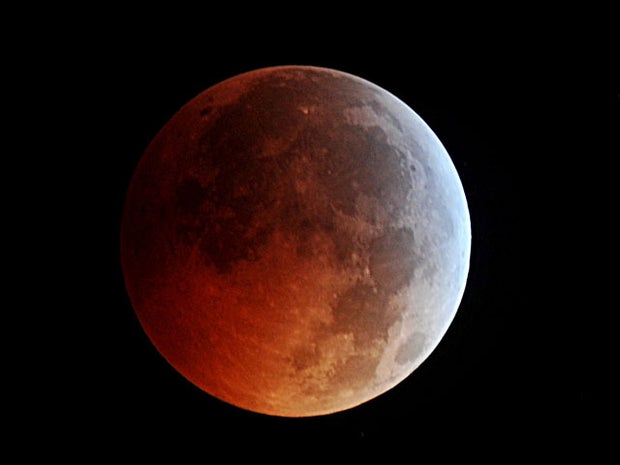
(CBS/AP) - The year's first total lunar eclipse of the moon will last an unusually long time on Wednesday and expectations are - pardon the pun - sky high.
Pictures: The Drama of a Total Lunar Eclipse
Unless you're in the United States and Canada.
North America will be left out of Wednesday's lunar spectacle, which will be visible from start to finish from eastern Africa, central Asia, the Middle East and western Australia - weather permitting.
The period when Earth's shadow completely blocks the moon - known as totality - will last a whopping 1 hour and 40 minutes. The last time the moon was covered for this long was in July 2000, when it lasted 7 minutes longer than that. Since the moon will pass close to the center of the Earth's shadow, the total eclipse phase will be longer than usual, said NASA eclipse expert Fred Espenak at the Goddard Space Flight Center in Maryland.
The full moon normally glows from reflected sunlight. A total lunar eclipse occurs when the moon glides through the long shadow cast by the Earth and is blocked from the sunlight that illuminates it.
It's difficult to predict the exact shade the moon will take, which will depend on how much dust and clouds are in the atmosphere during the eclipse.
The next total lunar eclipse will fall on Dec. 10 with best viewing from Asia and Australia. The moon will be completely blotted out for 51 minutes. Only parts of the U.S. including Hawaii and the Pacific Northwest will catch a glimpse.
The rest of the continental U.S. will have to wait until April 15, 2014 to witness a total lunar eclipse.
More on Tech Talk
Exceptional lunar eclipse on tap
Turning the Moon Blood Red
Blood Red Moon: Photos of 2010's Total Lunar Eclipse
Video: Top 10 Amateur Telescopes
