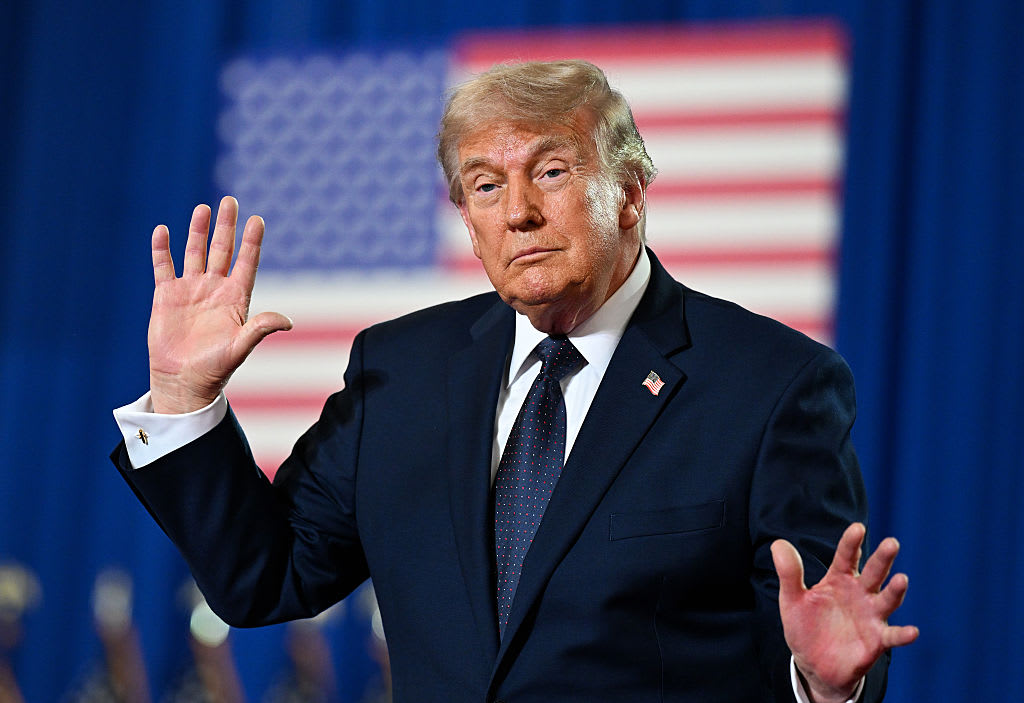
12 key races that will determine who controls the Senate
Washington — The key contests that will determine who wins control of the Senate are now set for the fall midterm elections, as the 2026 primary season wraps up.
Republicans are fighting to hold onto their majority, where the GOP currently controls 53 seats. The map this cycle initially appeared to be working in their favor, since most of the 22 seats the GOP is defending are in states that President Trump won by comfortable margins in 2024. But the unpopular war with Iran and persistent affordability issues have helped make several Republican-held seats increasingly competitive, while Democrats are trying to defend a handful of other seats from possible GOP flips.
To secure a majority, Democrats would need to net four seats in November's election.
These are the 12 key Senate races to watch:
Maine: Susan Collins vs. Troy Jackson
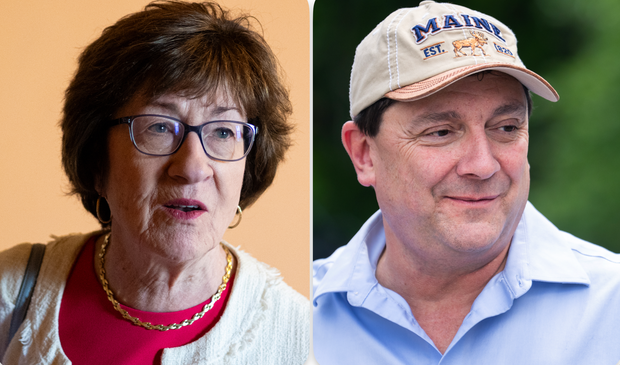
The Maine Senate race was closely watched even before personal controversies arose around the Democratic nominee, oyster farmer Graham Platner. In July, he bowed out of the race in the wake of a sexual assault allegation.
Maine Democrats then rallied around Troy Jackson as their nominee to take on GOP Sen. Susan Collins in November, in a race that once appeared to be Democrats' most straightforward opportunity for a pickup. But the five-term senator has overcome difficult reelection fights in the past, and Democrats' chaotic primary process could complicate the picture.
Jackson, 58, is a fifth-generation logger who was previously president of the Maine state Senate and bills himself as a champion of the working class. Sen. Bernie Sanders backed Jackson's failed run for governor — he finished third in the Democratic primary in June.
Collins, 73, has been in the Senate since 1997 and helms the powerful appropriations committee. She's considered among the most independent minded in the Senate, often breaking with President Trump. But whether that opposition is enough for Mainers, who supported Vice President Kamala Harris in the 2024 election, remains to be seen. The Cook Political Report and the University of Virginia's Center for Politics rate the race as a toss-up.
Michigan: Abdul El-Sayed vs. Mike Rogers
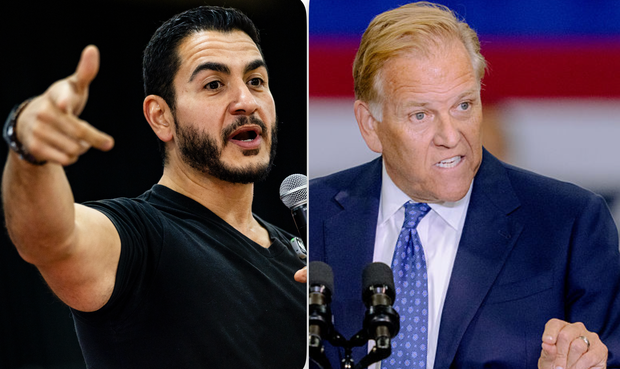
Another marquee Senate race has been playing out in Michigan between former GOP Rep. Mike Rogers and Democrat Abdul El-Sayed, a former Michigan health official.
El-Sayed, 41, won a divisive Democratic primary that highlighted a central fight this cycle over the direction of the party. He prevailed last month against a moderate candidate who was backed by national Democrats and who argued that El-Sayed's views were too far afield in the battleground state. That question will be put to the test as El-Sayed takes on Rogers, who's had months to refine his general election pitch, since he ran unopposed in the GOP primary.
Rogers, 63, is an Army veteran and former FBI agent who represented Michigan in the House from 2001 to 2015. He ran for Michigan's other Senate seat in 2024, but lost to Democratic Sen. Elissa Slotkin by less than 20,000 votes.
Rogers and El-Sayed are running to fill the vacancy left by Democratic Sen. Gary Peters' retirement. Michigan has flipped between supporting Democrats and Republican presidents in recent elections.
The state last elected a Republican to the Senate in 1994, and Mr. Trump won the state by less than two points in 2024. The Cook Political Report and the University of Virginia's Center for Politics rate the race a toss-up.
Ohio: Jon Husted vs. Sherrod Brown
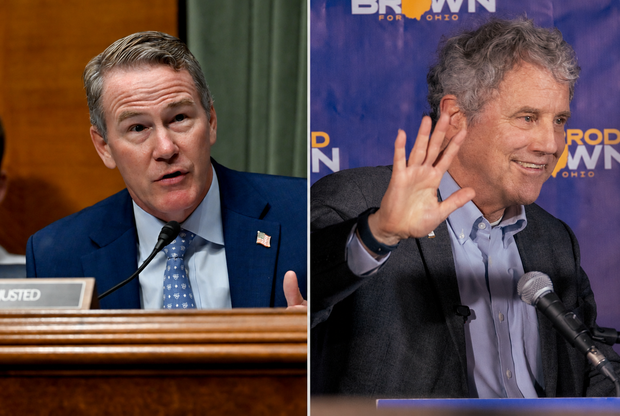
In Ohio, former Sen. Sherrod Brown is seeking a return to the Senate as Republican Sen. Jon Husted defends his seat for the first time.
Brown, 73, lost his reelection bid for a fourth term to GOP Sen. Bernie Moreno in 2024, but he has maintained a strong working-class brand and with widespread name recognition in the state, he is considered a formidable opponent.
Husted, 59, previously served as Ohio's lieutenant governor and secretary of state. He was appointed to the seat last year to replace Vice President JD Vance in the Senate.
Ohioans last elected a Democrat to the Senate in 2018, when Brown won reelection, and the state has backed Republicans in the last three presidential elections. But Democrats see a path to winning, after Brown lost his last race in 2024 by just four points in a state that Mr. Trump won by more than 10 the same year. The Cook Political Report and the University of Virginia's Center for Politics rate the race as a toss-up.
Alaska: Dan Sullivan vs. Mary Peltola and others
In the Last Frontier state, Sen. Dan Sullivan is seeking to hold onto his Senate seat amid a serious challenge from former Democratic Rep. Mary Peltola, while another Dan Sullivan has added a wrinkle to the already competitive race.
In Alaska, the top four vote getters in the primary advance to the general election. And while the sitting senator and Peltola are the front runners in the race, Daniel J. Sullivan (the senator is Daniel S. Sullivan) and Gerald Heikes also advanced to the general election, which will be decided by ranked-choice voting.
The second Sullivan, a former teacher, announced he was challenging the sitting senator in June, prompting an unsuccessful push by the senator to remove him from the ballot. But after the primary results, both Dan Sullivans are set to appear on the ballot, potentially complicating the incumbent senator's chances.
Sullivan, 61, is a second-term senator and a Marine veteran who worked at the State Department during the George W. Bush administration. His main competition is Peltola, 53, who became the first Democrat to represent the state in the House in 50 years in 2022.
Peltola ultimately lost her reelection bid for Alaska's sole House seat in 2024, although she fell short by less than three points while Mr. Trump won the state by 13 points. And although Alaska hasn't elected a Democrat to the Senate since 2008, Peltola, the first Alaska Native to serve in Congress, has framed herself as an independent voice for the state. Peltola was the top vote-getter in the August primary.
The Cook Political Report and the University of Virginia's Center for Politics rate the race as a toss-up.
Texas: Ken Paxton vs. James Talarico
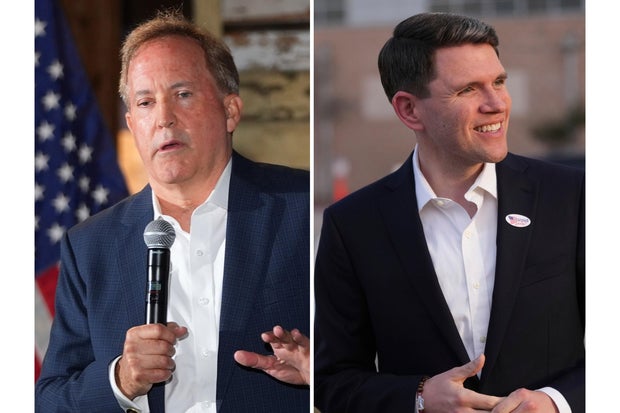
Democrats are eyeing a long-sought victory in the Lone Star State as Texas state Rep. James Talarico takes on Attorney General Ken Paxton in among the most closely watched races this cycle.
Paxton, 63, defeated Sen. John Cornyn in a runoff for the GOP nomination, ousting the incumbent senator who has represented Texas since 2002 with the support of a last-minute Trump endorsement. Democrats saw their chances improving with Paxton on the ticket this November, given his history of personal controversies and his more conservative positions. And though Republicans remain confident in their chances of holding onto the seat, some concede that the race will be tough — and expensive.
Talarico, 37, is a former teacher and Presbyterian seminarian. Although Texas hasn't elected a Democrat to the Senate since 1988, Democrats are hoping they have a winning candidate in Talarico, who calls himself a progressive Christian. Republicans have seized on previous comments he's made on issues like veganism and gender, claiming he's too extreme for Texas, but it remains to be seen whether voters agree.
The Cook Political Report and University of Virginia's Center for Politics rate the race as a toss-up.
Iowa: Josh Turek vs. Ashley Hinson
GOP Rep. Ashley Hinson and Democratic state Rep. Josh Turek will face off in November to represent Iowa in the Senate after GOP Sen. Joni Ernst announced she wouldn't seek reelection, opening up what's become a surprisingly competitive race in a state that's shifted to the right in recent years.
After Ernst's announcement, Republicans quickly rallied behind Hinson, 43, who has represented Iowa in the House since 2021. The former local news anchor has the president's endorsement and has vowed to be his "top ally" in the Senate, while campaigning on issues like healthcare, veterans benefits, and fighting corruption.
Turek, 47, is a state representative and former wheelchair basketball Paralympian. And as he aims to flip Iowa's Senate seat blue this cycle, he's touting his history as the Democrat representing the most conservative district in the state. On the campaign trail, he points to his record of working across the aisle and pledges to work with the president.
Although Iowa hasn't elected a Democrat to the Senate since 2008, and Mr. Trump won the state by 13 points in 2024, Democrats have been hopeful about their chances, as affordability issues and the Trump tariff policies weigh on Iowans. Democrats also hope that a strong showing from Auditor Rob Sand in the governor's race could buoy Turek in November. It will be challenging for a Democrat to flip the seat in a state that's become a Republican stronghold in recent years. The Cook Political Report rates the race as a toss-up, while the University of Virginia's Center for Politics ranks it as leaning Republican.
Georgia: Jon Ossoff vs. Mike Collins
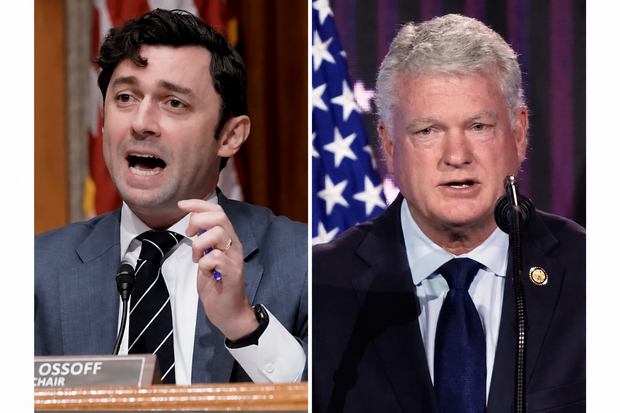
GOP Rep. Mike Collins is taking on Sen. Jon Ossoff in Georgia in a competitive race that was once expected to be the easiest pickup opportunity for Republicans.
Ossoff is the sole Democrat seeking reelection in a state that Mr. Trump won in 2024. But a messy Republican primary blunted efforts to launch the general election fight to unseat the first-term senator.
Collins, 59, became the Republican nominee in June after the primary went to a runoff. The owner of a trucking business, Collins has represented Georgia in the House since 2023, and has pitched himself in the Senate race as a staunch ally of the president, while touting his sponsorship of an immigration bill named for Georgia nursing student Laken Riley. At the same time, he's cast Ossoff as out of touch with Georgian values. But his campaign has also been marked with controversies surrounding people in Collins' circle, including a former staffer who reportedly shared Nazi and KKK images on social media.
Ossoff, 39, first came to the Senate in 2021, after previously working as a staffer on Capitol Hill and in investigative journalism. At the time, he delivered Democrats one of two runoff victories in Georgia, securing the party's control of the chamber. Now, Ossoff, a possible 2028 White House hopeful, is fighting to hold onto the seat in a state that shifted toward the right during the last election.
Georgians haven't elected a Republican to the Senate since 2016. And Democrats see Collins' closeness to the president as a possible boon for Ossoff amid the unpopular war with Iran and other White House policies. The Cook Political Report rates the race as leaning Democrat, while the University of Virginia's Center for Politics rates the race as likely Democrat.
New Hampshire: Chris Pappas vs. John Sununu
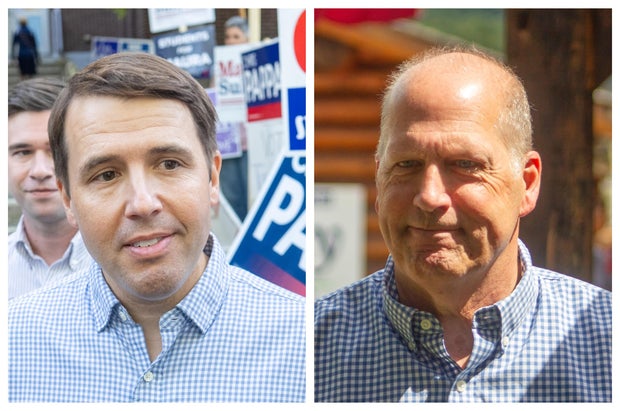
Democratic Rep. Chris Pappas and former GOP Sen. John Sununu are vying for an open Senate seat in New Hampshire after Democratic Sen. Jeanne Shaheen opted not to seek reelection in the Granite State.
Pappas, 46, has represented New Hampshire in the House since 2019. He's billed himself as an independent voice and campaigned on his record in Congress, where he's a member of the bipartisan Problem Solvers Caucus.
Sununu, 61, represented New Hampshire in the House and Senate for more than a decade, before he was ousted by Shaheen. The son of former Gov. John H. Sununu and brother of former Gov. Chris Sununu, his name carries significant weight in New Hampshire.
New Hampshire hasn't elected a Republican to the Senate since 2010, and a Republican hasn't won in the state at the presidential level since 2000. But Republicans have controlled the governor's mansion since 2017. The Cook Political Report and the University of Virginia's Center for Politics rate the race as leaning Democrat.
North Carolina: Michael Whatley vs. Roy Cooper
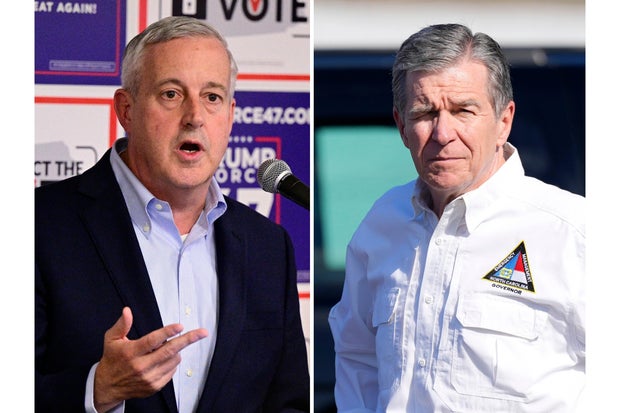
Former Gov. Roy Cooper and former Republican National Committee Chairman Michael Whatley will face off in North Carolina in November after Sen. Thom Tillis announced he wouldn't seek reelection, opening up a key seat in the competitive state.
The Tar Heel State offers a key prize for Democrats, representing their best chance at flipping a seat this cycle. And the party secured their dream recruit in Cooper, 69, a two-term governor and the longest-serving state attorney general in North Carolina's history.
Whatley, 57, has never run for office. He worked in former President George W. Bush's administration and as chief of staff for former North Carolina Sen. Elizabeth Dole before serving as chairman of the state Republican Party and going on to play a key role in Mr. Trump's reelection effort as RNC chair. He entered the Senate race with the president's encouragement and has campaigned on helping enact Mr. Trump's agenda and fighting for conservative values.
North Carolina hasn't elected a Democratic senator since 2008, the same year voters in the state last supported a Democrat at the presidential level. But Democrats think Cooper can break that streak.
The Cook Political Report and the University of Virginia's Center for Politics rate the race as leaning Democrat.
Minnesota: Peggy Flanagan vs. Michele Tafoya
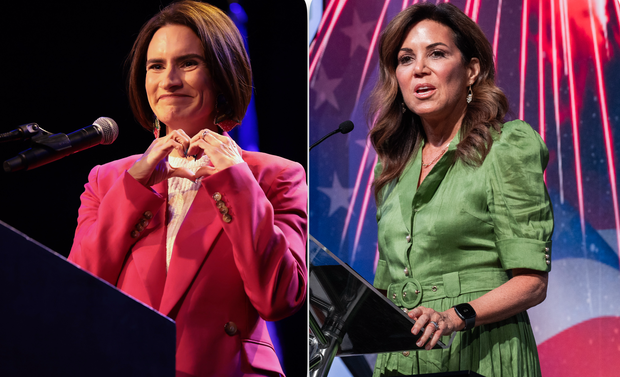
Lt. Gov. Peggy Flanagan and former sports broadcaster Michele Tafoya are vying for an open Senate seat representing Minnesota, after Democratic Sen. Tina Smith opted not to seek reelection in the North Star state.
Flanagan, 46, is the lieutenant governor and a former state representative. She won the Democratic primary in August against a more moderate candidate, running on progressive priorities like Medicare for All and securing endorsements from the likes of Sens. Bernie Sanders and Elizabeth Warren.
Tafoya, 61, beat out a crowded field for the GOP nomination. She's campaigned on restoring accountability as multimillion-dollar fraud schemes have rattled the state. And although Minnesota hasn't elected a Republican to the Senate since 2002, the GOP is hoping to make inroads as they seek to hold onto control of the chamber next year, seeing some opportunity in a state that former Vice President Kamala Harris won by just four points in 2024.
Republicans see a possible winning argument with Flanagan being tied to the Minnesota governor's handling of the fraud schemes in the state. But Minnesota has also been at the center of the Trump administration's controversial immigration crackdown, which saw the fatal shootings of two American citizens by federal agents in Minneapolis in January. The homeland security policies played a big role in the Democratic primary and will likely remain top of mind in November.
The Cook Political Report and the University of Virginia's Center for Politics rate the race as likely Democrat.
Kansas: Roger Marshall vs. Adam Hamilton
GOP Sen. Roger Marshall is defending his seat in a race that has appeared to become surprisingly competitive in recent months amid a challenge from Rev. Adam Hamilton, a centrist Democrat.
Marshall, 66, is seeking a second term in the Senate after representing Kansas in the House since 2017. The fifth-generation Kansan is a medical doctor who worked for 25 years as an OB-GYN and served in the U.S. Army Reserves before coming to Capitol Hill, where he's been a reliable supporter of the president's agenda.
Hamilton, 62, is also a fifth-generation Kansan who leads the U.S.' largest United Methodist church. He's running on an affordability-focused agenda, while aiming to bring together a cross-party coalition to take on Marshall. And as a well-known author and speaker, his high profile and fundraising chops have made him a formidable opponent.
Kansas last elected a Democrat to the Senate in 1932. But the Sunflower state has regularly oscillated between electing Democrats and Republicans in gubernatorial races in recent decades, and currently has a Democrat in the governor's mansion.
The Cook Political Report and University of Virginia's Center for Politics rate the race as likely Republican.
Nebraska: Pete Ricketts vs. Dan Osborn
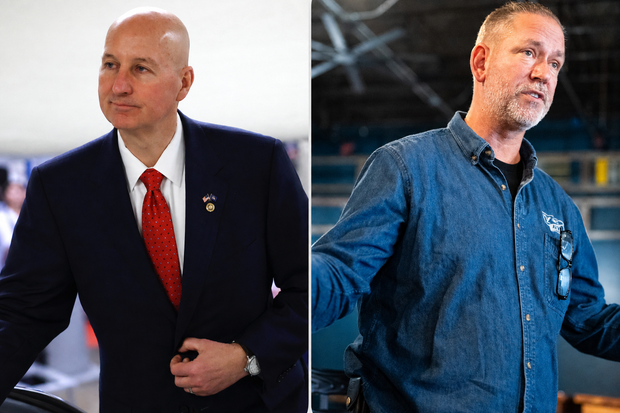
Independent candidate Dan Osborn is making a second attempt to unseat a Republican incumbent in Nebraska's Senate race this year, after losing his bid by single digits in 2024.
Osborn, 51, a former union leader lost to GOP Sen. Deb Fischer by seven points in 2024. Now he's attempting to unseat Sen. Pete Ricketts, the former Nebraska governor who was appointed to the Senate in 2023. Ricketts, 62, easily won his bid in a special election last year to serve out the remaining two years of Sen. Ben Sasse's term.
Osborn has said if he wins, he would remain independent and does not plan to caucus with either Republicans or Democrats.
Nebraskans haven't elected a candidate who wasn't a Republican since 2006, and the state is solidly red. But it's also home to a large share of nonpartisan voters, who could make the race within striking distance for Osborn, given that the Democratic candidate withdrew from the race. The Cook Political Report and University of Virginia's Center for Politics rate the race as likely Republican.