Bondi says Lindsey Halligan has departed DOJ, after judge bars her continued use of U.S. attorney title
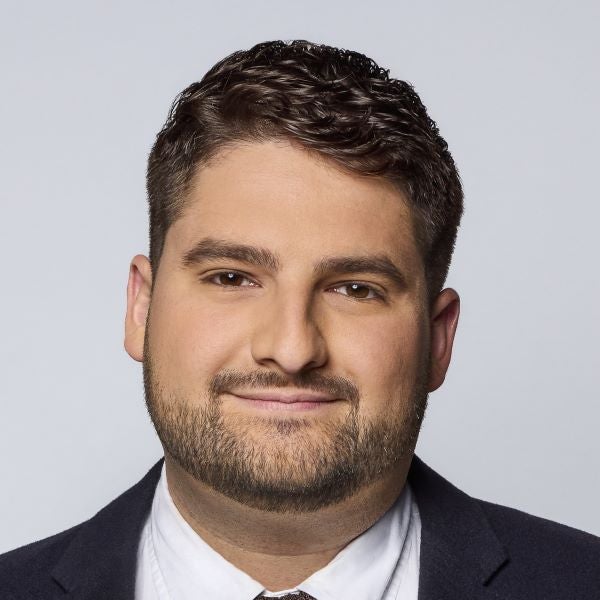
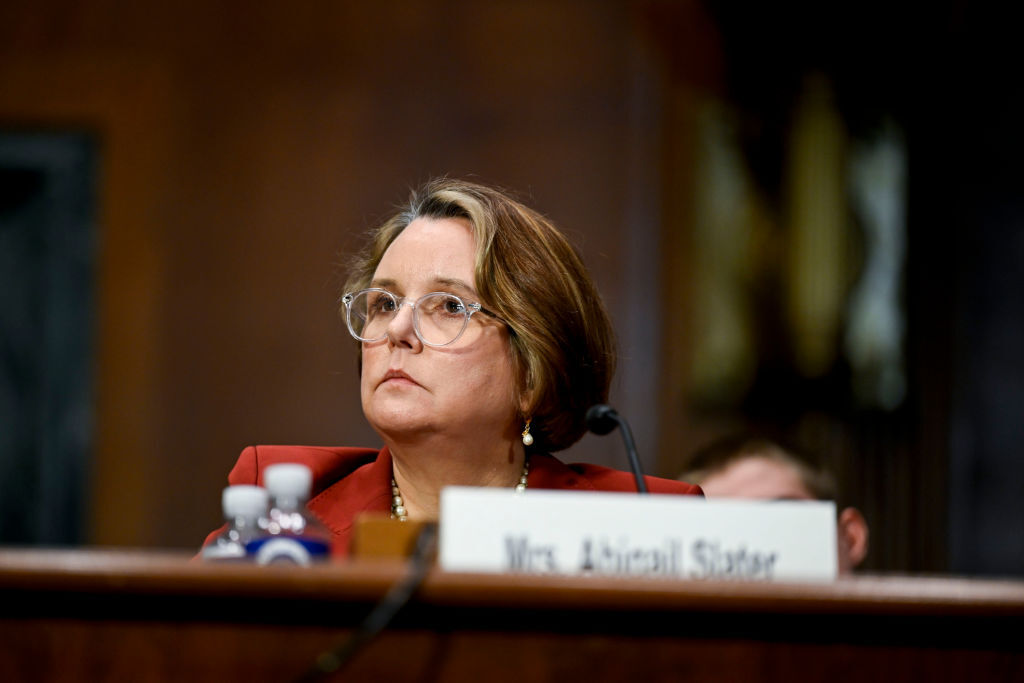
Lindsey Halligan has departed the Justice Department after a federal judge Tuesday barred her from referring to herself as a U.S. attorney in court filings, finding that her continued use of the title "ignores a binding court order" that disqualified her from the position last year.
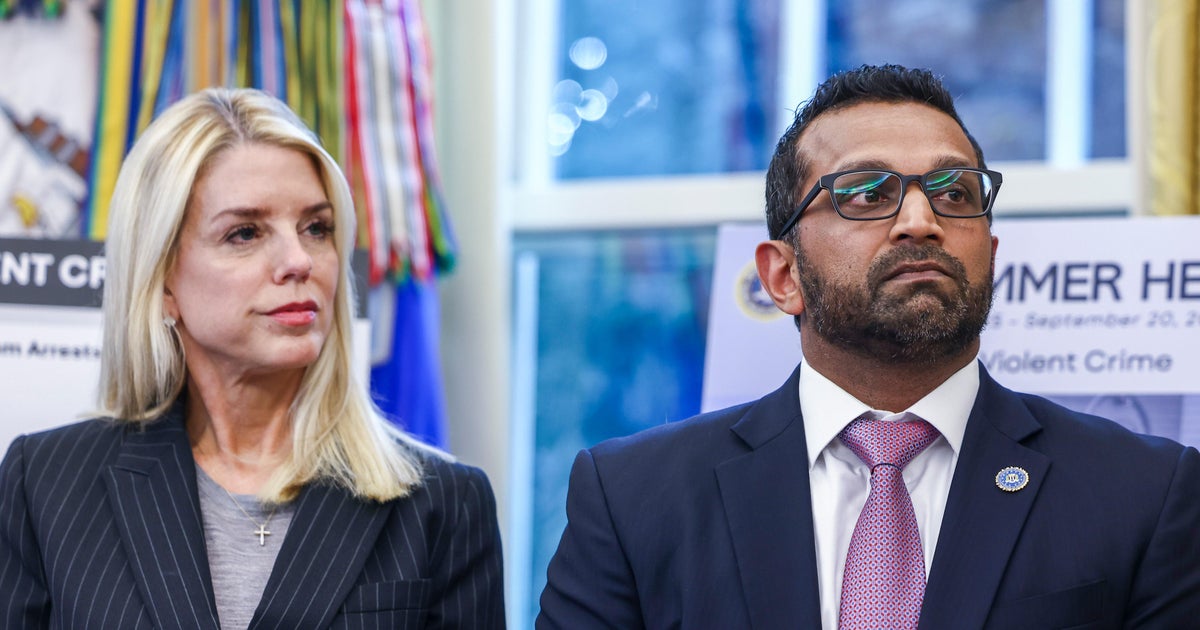
In a statement posted to social media Tuesday night, U.S. Attorney General Pam Bondi confirmed Halligan's exit, calling her departure a "significant loss for the Department of Justice and the communities she served."
Bondi also described the "circumstances that led up to this outcome" as "deeply misguided."
The announcement followed an 18-page ruling Tuesday from U.S. District Judge David Novak, who sits on the federal bench in Richmond, Virginia. Novak ruled that Halligan's "continued identification of herself as the United States Attorney for this District ignores a binding court order and may not continue," and ruled that Halligan could face disciplinary proceedings if she continues to use that "improper moniker."
Novak's ruling came after a November ruling from U.S. District Judge Cameron Currie found that Halligan's appointment as interim U.S. attorney in the Eastern District of Virginia was invalid and violated the Constitution's Appointments Clause. She dismissed the cases Halligan had brought against former FBI Director James Comey and New York Attorney General Letitia James. The Justice Department has appealed the ruling.
The statute invoked by the Trump administration to appoint Halligan allows an interim U.S. attorney to serve for 120 days. After that, the interim U.S. attorney may be extended by the U.S. district court judges for the region.
Earlier this month, Novak ordered Halligan to provide the basis for her repeated use of the title of U.S. attorney and explain why it "does not constitute a false or misleading statement," after she listed herself on an indictment returned in the district in December as a "United States attorney and special attorney."
Top Justice Department officials defended Halligan's attempts to remain in her position as a U.S. attorney in court filings, accusing the Trump-appointed judge of "gross abuse of power" and attempting to "coerce the Executive Branch into conformity."
The filing, signed by Halligan, Attorney General Pam Bondi and Deputy Attorney General Todd Blanche, called Novak's move an "inquisition," "insult," and a "cudgel" against the executive branch. The Justice Department argued that Currie's ruling in November applied only to the Comey and James cases and did not bar Halligan from calling herself U.S. attorney in other cases that she oversees.
However, earlier Tuesday, prior to Bondi's announcement that Halligan was departing the Justice Department, the DOJ had reversed course, telling prosecutors to stop referring to Halligan as U.S. attorney and to refer to her instead as special attorney going forward, according to a source familiar with the matter. CBS News reached out to the Justice Department for clarification.
In his ruling, Novak wrote that the Justice Department's argument "rings hollow," and "fundamentally misunderstands" the legal issue at question.
"Judge Currie, speaking for all district judges in this District, found Ms. Halligan's appointment as Interim United States Attorney unlawful and issued two orders dismissing indictments, both of which were premised directly on that rationale," Novak wrote. "Those Orders, though currently on appeal, have not been overturned or stayed, and thus constitute the law of this District. Having been found by this Court to be unlawfully appointed, Ms. Halligan lacks lawful authority to represent herself as the United States Attorney before this Court."
Novak also criticized the quality of the Justice Department's response to his order, stating that it had "unnecessary rhetoric" that "contains a level of vitriol more appropriate for a cable news talk show and falls far beneath the level of advocacy expected from litigants in this Court, particularly the Department of Justice."
Instead of working through "numerous legal options" that would have allowed her to identify herself as U.S. attorney while the appeal of Currie's ruling continues, "she elected to simply ignore valid court orders."
"The Court finds it inconceivable that the Department of Justice, which holds a duty to faithfully execute the laws of the United States even those with which it may have disagreement, would repeatedly ignore court orders, while simultaneously prosecuting citizens for breaking the law," Novak wrote. "If the Court were to allow Ms. Halligan and the Department of Justice to pick and choose which orders that they will follow, the same would have to be true for other litigants and our system of justice would crumble."
Halligan is a former insurance lawyer who was a member of President Trump's legal team and joined Mr. Trump's White House staff after he won a second term in 2024. In September, Halligan was selected to serve as interim U.S. attorney for the Eastern District of Virginia after her predecessor abruptly left the post amid concerns he would be forced out for failing to prosecute James.
She was appointed to her post on Sept. 22 for a total of 120 days, which Novak said expired Tuesday. While Halligan has been nominated by the White House, neither of Virginia's Democratic senators has signed on to advance the nomination for a vote in the Senate.
Days after she was appointed, Halligan sought and secured a two-count indictment against Comey alleging he lied to Congress during testimony in September 2020. James, the New York attorney general, was indicted on bank fraud charges in early October. Both pleaded not guilty and pursued several arguments to have their respective indictments dismissed, including the validity of Halligan's appointment and claims of vindictive prosecution.
"The Court recognizes that Ms. Halligan lacks the prosecutorial experience that has long been the norm for those nominated to the position of United States Attorney in this District," Novak wrote. "Consequently, and in light of her inexperience, the Court grants Ms. Halligan the benefit of the doubt and refrains from referring her for further investigation and disciplinary action regarding her misrepresentations to this Court at this time."
Also on Tuesday, the chief federal judge in the Eastern District of Virginia posted that the court is seeking applicants to replace Halligan. Federal law says that judges in a district without a Senate-confirmed U.S. attorney are tasked with selecting a replacement, although President Trump could fire whomever the court chooses to succeed Halligan.