Acting CDC director says Fauci "abused the place of power" during the COVID pandemic
One of the Trump administration's top health officials, Dr. Jay Bhattacharya, is accusing Dr. Anthony Fauci, the longtime former director of the National Institute of Allergy and Infectious Diseases, of an abuse of power during the COVID-19 pandemic.
"He frankly abused the place of power that he had been given both by the media and by powerful politicians," Bhattacharya told CBS News chief correspondent Matt Gutman in an interview Wednesday. Bhattacharya currently serves as both director of the National Institutes of Health and acting director of the U.S. Centers for Disease Control and Prevention.
Bhattacharya alleged that Fauci's "primary abuse" during the pandemic was that he "shut down scientific debate" and "denigrated scientists that disagreed with him, including myself and many, many others, simply for the sin of disagreeing with him."
During the pandemic, Bhattacharya, then a professor at the Stanford University School of Medicine, was publicly critical of the federal government's response and was vocal in his opposition to lockdowns and mask mandates.
In the interview, Bhattacharya took issue with Fauci's leading role during the pandemic. "You know, he was the head of a research institute, he wasn't the head of public health, yet he acted as if he were the head of public health in this country," he said.
When it was noted the first Trump administration had informally elevated Fauci into that role at the pandemic's onset, Bhattacharya countered that it was "absolutely imperative" that Fauci "convey clearly what is known and what is not known, that you don't step beyond the role that you actually have based on the expertise that you have."
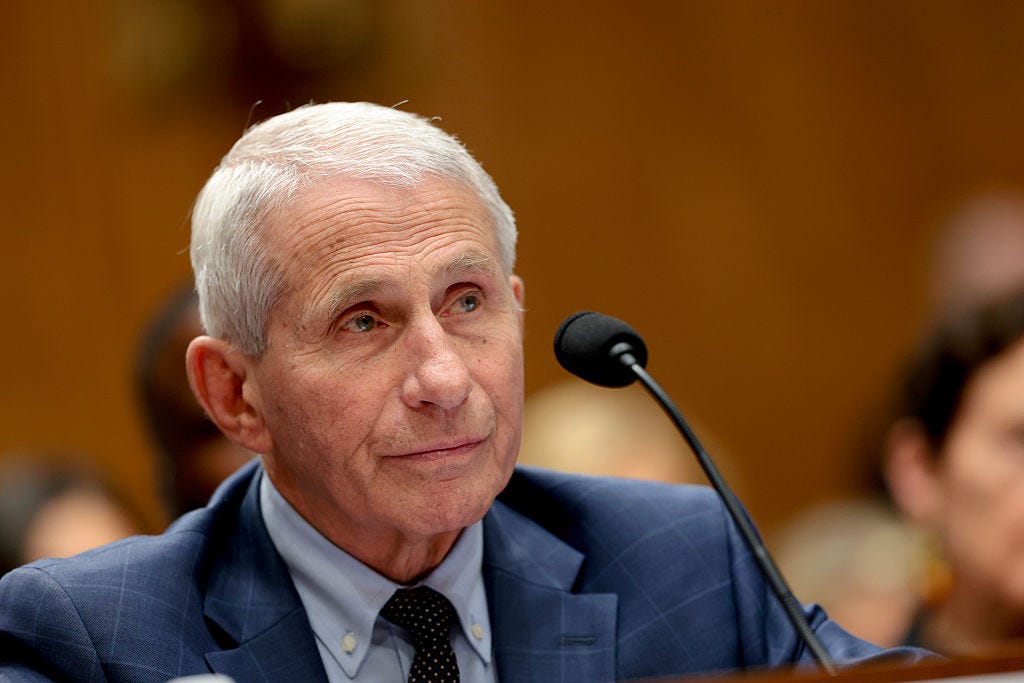
The accusations Wednesday came hours after Fauci's appearance before the Senate Homeland Security Committee under subpoena.
After reading an opening statement, Fauci invoked his Fifth Amendment rights on all questions, saying he did so because the chairman, Republican Sen. Rand Paul, was attempting "to get me to say something, anything, that could vindicate his repeated public pledges that I end up, in his words, quote, 'behind bars,' unquote."
Over the weekend, Paul, a longtime Fauci critic, released a trove of more than 1,000 pages of diary entries that Fauci wrote during his time as NIAID director during the pandemic. After nearly four decades in the post, Fauci retired in 2022.
Bhattacharya said he supported the release of Fauci's journal entries and noted they had been "kept on government servers."
"They reflect somebody who had a tremendous impact on the lives of every single person in the country, and in fact in the world," the acting CDC director said. "I think it's in the public interest for those notes to be released."
Bhattacharya argued there was a contradiction between Fauci's public statements during the pandemic and his journal entries.
"The way he was thinking in private regarding all of the advice he was giving to tremendously powerful people, and what he showed in public, were very different," Bhattacharya said.
As an example, Bhattacharya pointed to Fauci's recommendation in early 2020 that schools be closed.
"He was making decisions about closing schools, in my view, against what the actual evidence was saying at the time," Bhattacharya said. "... He conveyed a certainty that it turns out in his diary he didn't even feel himself."
As the federal government's top infectious disease expert, Fauci didn't have any direct power to impose restrictions or close schools, but his words carried weight with federal, state and local officials.
In a June 2024 interview with "CBS Mornings," Fauci said he believed the initial school closures were "the right thing," but agreed that keeping schools shuttered "for a year was not a good idea."
"If you go back and look at the YouTube, I kept on saying, 'Close the bars, open the schools. Open the schools as quickly and as safely as you possibly can,'" he said.
COVID origins controversy
Regarding the debate over COVID's possible origins, Bhattacharya said he believes it likely originated in a lab in Wuhan, China. It is an issue that has been studied extensively with no clear consensus, and many scientists believe the evidence suggests a natural spillover of the virus from animals to humans is more likely.
"We don't know for certain, but it seems really quite likely, given the evidence that I've seen, that it originated in a Chinese lab," Bhattacharya said.
Asked whether he thought Fauci lied to the American people about COVID and its origins, Bhattacharya said, "I think that Dr. Fauci's role in the COVID origins is much more complicated than he led on in his public statements earlier. Lie, I'll leave for other people to say one way or the other."
Fauci has long insisted he kept an open mind on research into the virus' origins and denied downplaying it or misleading the public.