Israel to redraw prisoner swap strategy
JERUSALEM — Israel is rethinking its policy on prisoner swaps to avoid the kind of lopsided deals that saw Israel recently trade more than 1,000 Palestinian prisoners for a lone Israeli soldier.
A government-appointed panel submitted its recommendations in a secret report Thursday and details were not divulged. But Defence Minister Ehud Barak said Israel has "no choice but to overhaul the rules" now that Sgt. Gilad Schalit has been freed after five years in captivity in Gaza.
Barak told Israel Radio, "We have to get off the slippery slope we ventured on 25 years ago."
Over the past three decades, Israel has carried out a series of wildly uneven prisoner swap deals. In some cases, the freed prisoners returned to violence against Israel.
Gaza abductor says Schalit was treated wellEgypt TV's Schalit interview angers Israelis
Israel releases 550 Palestinian prisoners
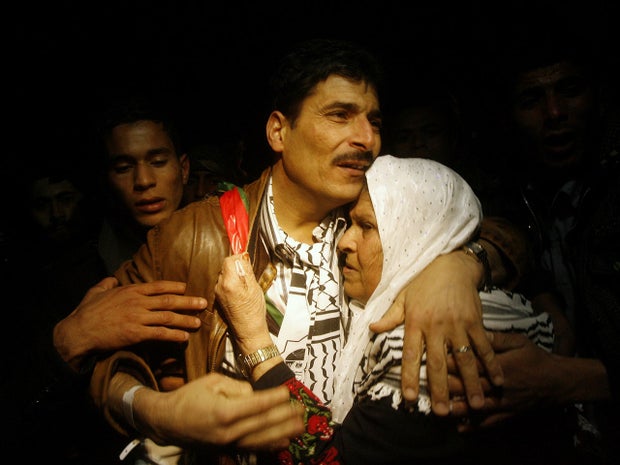
Under the Egypt-brokered deal for Schalit, Israel agreed to exchange a total of 1,027 prisoners, who was captured by Gaza militants in June 2006. Schalit returned home in October when Israel freed the first batch of 477 prisoners. Another 550 prisoners were released in mid-December in what was the most lopsided swap in Israel's history.
The prisoners freed in the first round included dozens of militants serving life sentences for involvement in bus bombings and other deadly attacks on Israeli civilians that killed hundreds. Their release set off celebrations in the Palestinian territories, particularly Hamas' Gaza stronghold.
As for Israeli-Palestinian peace talks, they have been frozen for three years, in part because of continued Israeli settlement construction in the West Bank and east Jerusalem. The Palestinians claim both territories, captured by Israel in the 1967 Mideast war, as parts of a future state.