In Praise of the Incomplete Leader
The Idea in Brief
Have you ever feigned confidence to superiors or reports? Hidden the fact you were confused by the latest business results or blindsided by a competitor's move? If so, you've bought into the myth of the complete leader: the flawless being at the top who's got it all figured out.
It's an alluring myth. But in today's world of increasingly complex problems, no human being can meet this standard. Leaders who try only exhaust themselves, endangering their organizations.
Ancona and her coauthors suggest a better way to lead: Accept that you're human, with strengths and weaknesses. Understand the four leadership capabilities all organizations need:
- Sensemaking--interpreting developments in the business environment
-
Relating--building trusting relationships
-
Visioning--communicating a compelling image of the future
-
Inventing--coming up with new ways of doing things
Take this approach, and you promote leadership throughout your organization, unleashing the expertise, vision, and new ideas your company needs to excel.
The Idea in Practice
Incomplete leaders find people throughout their company who can complement their strengths and offset their weaknesses. To do this, understand the four leadership capabilities organizations need. Then diagnose your strength in each:
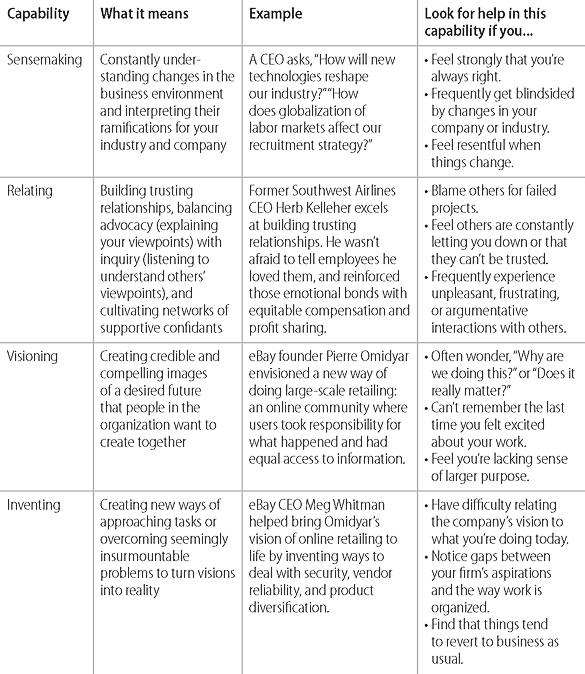
- Purchase the full-length Harvard Business Review article here.
- Visit Harvard Business Online.
- See more on Leadership and Managing People at Harvard Business Online.
Copyright 2008 Harvard Business School Publishing Corporation. All rights reserved.
Further Reading
Articles
What to Ask the Person in the Mirror
Harvard Business Review
January 2007
by Robert S. Kaplan
Diagnosing your own strengths and weaknesses isn't easy, so you may seek feedback from others in the organization. But the higher you climb on the corporate ladder, the less likely people are to give you candid feedback. So ask yourself some specific hard questions. For example, to assess your sensemaking capability, ask, "Am I attuned to business changes that may require shifts in how we run the company?" To assess your relating capability, ask, "How do I behave under pressure?" To assess your visioning capability, ask, "How often do I communicate a vision and key priorities to achieve that vision?"
Discovering Your Authentic Leadership
Harvard Business Review
February 2007
by Bill George, Peter Sims, Andrew N. McLean, and Diana Mayer
No leader has all the answers, but authentic leaders--those who generate long-term results--have the self-awareness critical to making the best use of their strengths and capitalizing on others' strengths. Denial can be the greatest hurdle that leaders face in becoming self-aware. Rather than falling victim to denial, authentic leaders work hard at developing self-awareness through persistent and often courageous self-exploration. They ask for, and listen to, honest feedback. And they use formal and informal support networks to help them stay grounded and lead integrated lives.
Primal Leadership: The Hidden Driver of Great Performance
Harvard Business Review
December 2001
by Daniel Goleman, Richard Boyatzis, and Annie McKee
This article focuses on the relating capability. Relating hinges on your ability to manage your own emotional state so it exerts a positive impact on others' emotions. Depressed, ruthless bosses create toxic organizations filled with negative underachievers. Upbeat, inspirational leaders cultivate positive employees who embrace and surmount even the toughest challenges. One way to manage your emotional state effectively is to repeatedly rehearse productive behaviors. For example, Tom wanted to learn how to coach rather than castigate struggling employees. Using his commuting time to visualize a difficult meeting with one employee, he envisioned asking questions and listening. And he mentally rehearsed how he'd handle feeling impatient. The exercise prepared him to adopt new behaviors during the actual meeting.