iStockPhoto
(CBS/What's Trending) Just like you should always think before you speak, you should think before you post.
Hewlett-Packard chief technologist and interim vice president of engineering for HP's new cloud service Scott McClellan now knows that lesson. See, McClellan is one of those people who has a LinkedIn account. In his due diligence to post a great profile about himself and everything he does at work, he posted all the information he had -- which included HP's detailed information about their new cloud system. The information was supposed to be revealed at VMware's VMworld conference in August.
Whoops!
We're still scratching our head as to how the chief technologist at a company could have made this simple posting error. Here's four other digital fails that still have us wondering why these tech companies could have allowed these digital flub ups.
It's not the iPhone, it's you When people claimed that they were having worse reception than usual when they touched the steel bands on their iPhone 4, Apple responded quickly by saying that they were holding their iPhone's the wrong way. Apparently, you have to delicately place your fingers on the outside of your iPhone case or cover, careful never to touch the touch screen. Speak to it in soothing terms and never hurt it in any way, and in time, it will learn to love you as much as you love it. Or as Steve Jobs famously emailed an customer, "Just avoid holding it in that way."
Yeah, that didn't exactly solve the problem. It turns out, the phone had issues, not the user, so Apple issued free rubber bumpers for a limited time.
TJX Companies loses "some" customer information Hackers had been at the TJX Companies computer system since 2003 when the company, which includes Bob's Stores, HomeGoods, Marshalls, T.J. Maxx, and A.J. Wright, discovered that information might have been leaked in 2006. To lessen the blow to customers, TJX Companies said "a limited number of credit card and debit card holders whose information was removed from the system," according to PC World.
Yeah, I don't know what your definition of "limited" is, but when around ten Massachusetts banks had to issue new debit cards to their customers as a result of their information being leaked, I would say "limited" might not be the right word. Fitchburg Savings Bank in Fitchburg, Massachusetts has had to reissue 1,300 cards alone to their customers. When all was said and done, it turned out that 45.6 million credit card numbers were released, the biggest ever breach in U.S. history. Your move Sony Playstation 3.
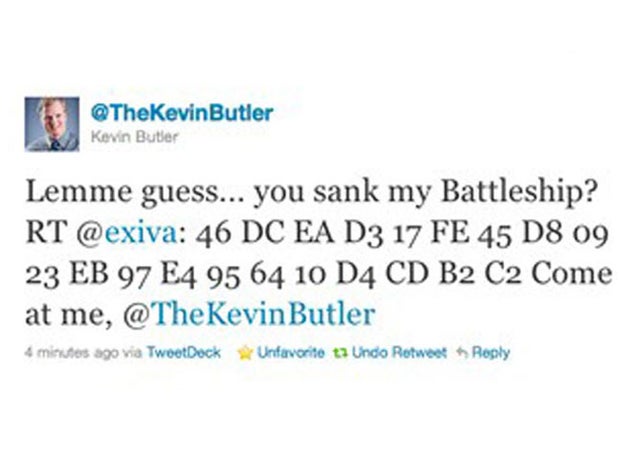
PS 3 "spokesperson" retweets jailbreak code Another case of think before you tweet, Kevin Butler, Sony's fake spokesperson, posted the METLDR root key without knowing that it could take down the PS3 system. Travis La Marr (@exviva) tweeted the code at the Sony account because he was angry that Sony was subpoenaing information from YouTube from people who watched the infamous hacking video.
@TheKevinButler Twitter page
Sony steals your data, says what you don't know can't hurt you Ah Sony, why are you at the bottom of so many of these scandals? Sony BMG decided that if they put a rootkit, software that allows remote access to devices without notifing user's knowledge, on CDs and other digital products they could track how many times you downloaded the material and shared it online. Instead of notifying the entire world, they decided to keep this operation clandestine... well that was until Mark Russinovic, a technical fellow in Microsoft platform and services division, found out and blogged about it.
The problem with rootkits is that they create security holes that make it easier to computer virus and worms to attack your devices. Also, the Sony rootkit had the nasty habit of installing XCP software without the user's knowledge -- which so happens to be illegal. On top of that, the rootkit slowed down your computer and caused system crashes. Sony's response was to say that most people don't know what a rootkit is, so they shouldn't be worried. Well, computer hackers do and they used the information, lawsuits were filed and Sony BMG ended up recalling all the affected CDs.
And, because it became such a high-profile case, no one could say they didn't know what a rootkit was anymore.