Hope amid desperation in African refugee camp
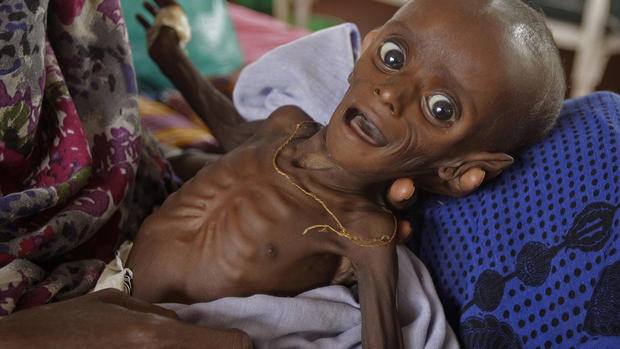
Drought and civil war in Somalia have helped fuel Africa's worst famine in nearly 60 years.
An ensuing pilgrimage of the masses sees more than 1,000 people a day crossing the border into Kenya and arriving at the refugee camp in Dadaab, the world's largest.
It has some 420,000 people, but its official capacity is only 90,000.
Still, "Early Show" co-anchor Erica Hill reported from the camp Monday, she found many stories of hope, and a determination to survive amid what's quickly become an international humanitarian crisis.
For many of the arrivals, the journey is a long one. Yet, reaching the refugee camps is just the beginning.
Some Somali families we have met here have traveled more than 100 miles across a desert with very little aside from the will to survive.
And when they do get here, they find their journey far from over.
- UN official: Millions of Somalis risk starvation
- "Huge strain" on crowded Somalia refugee camps
- Horn of Africa famine: How to help
Ismael says through an interpreter, "I had four goats and a big farm. For four years, there was no rain, and the farm died."
With nothing left for them in Somalia, Ismael and his family set out for Kenya, arriving in Dadaab on Sunday afternoon.
"I am relieved my family made it here alive," he says.
Once registered, there are basic supplies to help each family get started: a 21-day ration of food, a cooking pot, a tarp to make a tent.
It was too much to carry, so Ishmael went into the camp, looking for help.
His mother worried that he'd get lost.
Another refugee, Shafiro, has been here for a month. After walking for 40 days, arriving with nothing, she and her family found refuge -- and hardship.
"We sleep on the mats and we are disturbed by insects<" she said through an interpreter. ... In the morning, it is very dusty, heavy dust winds and at night it's very cold."
She tells us water is a problem.
Her neighbor, Issack, has appointed himself the keeper of a tank of water.
Yet, despite the hardships, they would rather be here than starving in Somalia.
And there is joy here - as we saw on the faces and laughter of the children.
There is also hope.
Within an hour, Ismael was back with a cart, and quickly on his way, pulling his family toward a dream of a better life, and a new beginning.

var so = new SWFObject("http://hosted.ap.org/interactives/2011/east-africa-famine/content.swf?SITE=NYCBN", "ap-east-africa-famine", "610", "560", "10", "#FFFFFF");
so.addParam("base","http://hosted.ap.org/interactives/2011/east-africa-famine/");
so.addParam("allowFullScreen","true");
so.addParam("allowScriptAccess","always");
so.useExpressInstall("http://hosted.ap.org/specials/interactives/template_items/expressinstall.swf");
so.write("ap-east-africa-famine");