More than 100 daily high temperature records are expected through Sunday, forecasts show
High temperatures are expected to continue baking large sections of the U.S. through the end of the week, potentially setting more than 100 new daily temperature records between Thursday and Sunday, forecasts show.
Temperatures were forecast to linger around 30 or 40 degrees above average in a number of southwestern and Central states, continuing a trend that began earlier in the week as a massive heat wave expands further into the western two-thirds of the country, said CBS News meteorologist Nikki Nolan.
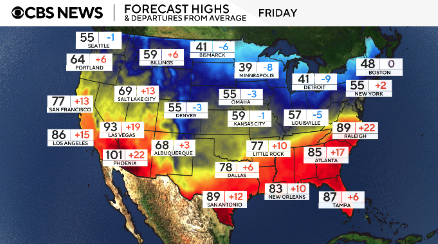
Indianapolis reached 81 degrees Fahrenheit on Thursday, breaking a 1907 record of 80 degrees, the National Weather Service said.
In Kansas City, Missouri, temperatures reached 93 degrees, tying the record for the warmest March day in the city's history that was set on Saturday, the NWS said. In Wichita, Kansas, temperatures reached 95 degrees, setting a new March record high, breaking the previous record set five days ago, according to the NWS.
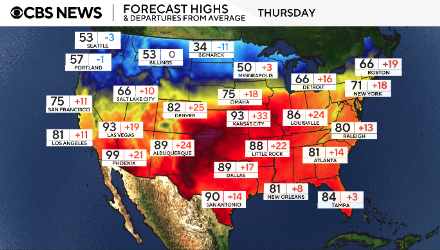
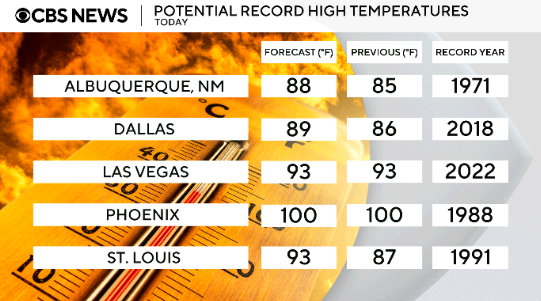
The hottest conditions were expected in Phoenix, where temperatures could reach 100 degrees, potentially breaking a 40-year-old record.
In Dallas, temperatures could climb to 89 degrees, which would surpass a daily record set in 2018. In Amarillo, Texas, they could soar to 99, which would top a 2020 record for the date by 11 degrees, Nolan said. Albuquerque could see an 88-degree day, a high for the day not seen since 1971.
Temperatures in El Paso, Las Vegas, Memphis, Nashville, Oklahoma City, St. Louis and Tulsa were all forecast to potentially break daily records with possible high temperatures of more than 90 degrees.
The latest wave of potential record highs follows records set in more than a dozen states on Wednesday, when many cities hit 90 degrees or higher. In Denver, it was the hottest March day ever recorded.
The heat wave that initially brought unusual warmth to the West last week has been slowly moving eastward, with forecasts indicating it would arrive on the southeastern coast by Friday. Along the way, it may fuel a series of potentially severe storms across parts of the Midwest.