High gas prices pose risk to economy, White House
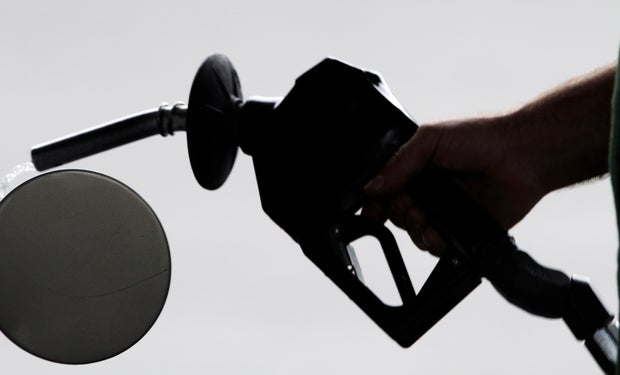
The rapid rise in oil and gasoline prices in recent weeks not only threatens the nation's economic recovery but also has become a political headache for the Obama administration.
Gas prices have surged since the beginning of the year to $3.58 a gallon nationally, according to AAA, and energy analysts expect the increases to continue. Most experts predict the national average will cross the $4 threshold in coming weeks, though drivers in some markets are paying that much already. Benchmark oil has been trading above $105 a barrel, up 5 percent in four days.
Energy analyst Stephen Schork said $4 a gallon gas is likely--and could shock the economy.
"These high gasoline prices, be they here in the United States or in Europe or in China, for that matter, will certainly slow and potentially tip the globe back into recession," he said.
As consumers spend more on gas and other energy, they will be forced to cut back elsewhere. And the sticker shock of $60 fill-ups is a drag on consumer confidence, which had been recovering in recent months, not to mention the psychological effect of those dollar-mark thresholds.
"When it breaks $4, if it breaks $5, that becomes a sign of angst, anxiety, fear, worry among many people who don't have a big cushion," said Leonard Steinhorn, professor of political communication at American University. "This, politically, is not good news for the White House."
Steinhorn said anything that interrupts the recovery carries a big risk for a president seeking reelection in the fall. "The White House is and ought to be worried about anything that can tip it back or slow it down," he said.
Job gains and the improving economy helped push President Obama's approval rating to 50 percent in the most recent CBS News / New York Times poll, the highest it's been since last May, right after Osama bin Laden was killed. His numbers on handling the economy and job creation were up significantly.
So with the president's political fortunes tied so closely to the economy, the White House certainly is paying attention to gas prices.
"There are no magic solutions to rising oil prices and the pain that Americans feel at the pump," White House spokesman Jay Carney said Tuesday, blaming turmoil in oil-producing regions and increased demand from India and China for higher prices.
Phil Flynn, an energy analyst with PFG Best in Chicago, said much of the crude oil increase that's behind higher gas prices is being driven by the potential for conflict over Iran's nuclear program.
"Tensions are running high," Flynn said. "And when tensions run that high there's always that chance, of course, that supplies will get cut off and prices have to reflect those increased risks."
He said those risks have been "priced in" to crude oil and that the current price spike will likely be temporary. "But still, in the short run, it will do a lot of damage to the economy," he said.
Whatever the reasons behind the increase, as prices continue to climb, drivers will blame the administration for the added cost to fill the tank.
American University's Steinhorn said there's little the administration can do other than speak directly to the public about why prices are high and hope drivers understand--a hard case to make and one that provides an easy avenue of attack for the president's Republican opponents.
"This is a good talking point. It's red meat. People understand it because it relates to them personally," Steinhorn said. "This is just a gift for them."
Indeed, it's becoming a campaign issue for the Republican presidential candidates to hammer the administration, with both Rick Santorum and Newt Gingrich pointing to President Obama's policies for the spike.
"The high price of gasoline has been a direct result of Obama," Gingrich said Tuesday on CBS This Morning. "His policy has been outrageously anti-American energy."
Gingrich said the president has given domestic energy production short shrift in favor of a policy emphasis on green energy and greater fuel efficiency. And Gingrich repeated his campaign pledge to drive gas below $2.50 a gallon by tapping more domestic sources.
"I want American energy, which is practical and available now, to liberate us from Saudi Arabia," he said.
Jay Carney, the White House spokesman, rejected the Gingrich attack. He said that U.S. oil production has increased in each year of the Obama administration.
"American oil production is at its highest now than it's been in eight years," he said.
Since the high prices are not being driven by domestic demand, which is down, the political argument about where the oil comes from is moot if the economy tips back into recession. And that's a real possibility, according to Stephen Schork, the energy analyst.
"Gasoline prices, if they continue on this path, are certainly in the danger zone of causing an economic contraction toward the end of this year," he said.