For 2012 GOP hopefuls, Afghanistan on the backburner
Just last week, President Obama announced shifts in his national security team, which reveal that the administration is seeking continuity in its national security leaders and policy in the face of continuing vulnerabilities. On Wednesday, eight American troops and a U.S. contractor were killed when an Afghan military pilot opened fire at Kabul airport.
But even as the United States' commitment in Afghanistan continues, and new developments occur regularly, it's rarely the topic of discussion among those seeking the 2012 Republican presidential nomination. In fact, at times it seems like those interested in serving as commander-in-chief have come close to forgetting the war.
Here's a review of what the 2012 candidates have said on the war:
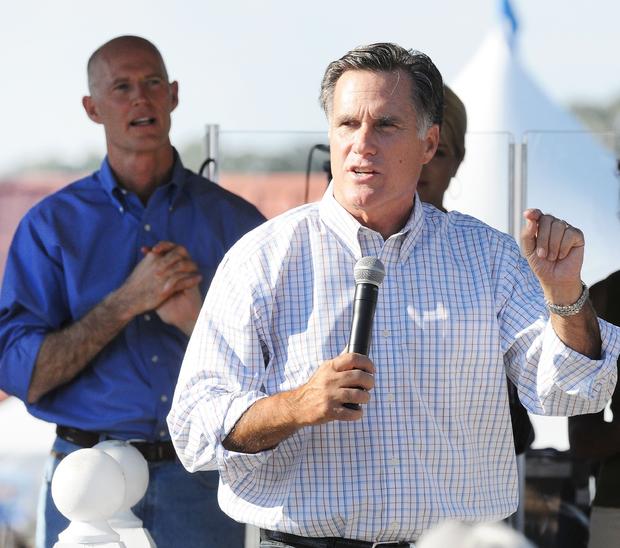
Mitt Romney: Peacetime? Not yet
The most recent remarks from former Massachusetts Gov. Mitt Romney that relate to Afghanistan may seem to illustrate how much of an afterthought the war has become.
In an op-ed published last week in the New Hampshire Union-Leader, Romney wrote that Mr. Obama is engaging in "one of the biggest peacetime spending binges in American history." The op-ed, of course, failed to consider not only Afghanistan, but the United States' continued presence in Iraq and new engagement in Libya.
According to a spokesperson for the governor, he made a mistake in the op-ed; Romney meant to say the biggest spending binge "since World War II."
Other comments this year, however, make clear Romney is committed to a stronger war effort in Afghanistan. At the Conservative Political Action Conference in February, Romney criticized Mr. Obama's timeline for withdrawal, which includes a troop reduction this July.
"The world, and our valiant troops, watched in confusion as the president announced that he intended to win the war in Afghanistan as long as it didn't go beyond August of 2012," Romney said. "And while the Taliban may not have an air force or sophisticated drones, they do have calendars."
Far from ignoring the war, Romney traveled to Afghanistan in January and said, according to the Boston Globe, that he supports a longer-term U.S. presence there.
"It is my desire and my political party's desire to support the people of Afghanistan and not to leave," Romney said, regarding U.S. withdrawal.
Santorum: Stabilize Aghanistan; more details later
Former Sen. Rick Santorum gave a foreign policy speech in Washington on Thursday, yet he failed to mention Afghanistan in his prepared remarks. Like Romney's "peacetime" flub, it seemed to be indicative of the lack of national discourse on the issue.
CBS News political analyst John Dickerson spoke with Santorum after the speech on CBSNews.com's "Washington Unplugged" and asked why he ignored the war in his remarks.
"We'll be talking about that in the course of the campaign in greater detail," he said. "This was more a big picture speech." Santorum did, however, mention in his speech specific policy positions with respect to countries like Syria, Israel and China.
Video: Santorum says Obama does not believe America is "exceptional"
Video: Santorum "befuddled" Obama birth certificate not released earlier
Video: Santorum urges Daniels to defund Planned Parenthood in Indiana
Santorum fleshed out his thoughts on Afghanistan for Dickerson: "My position from the very beginning is that we have engaged in this conflict, and we should engage to its logical conclusion, which is a stable Afghan government, on which minimal to little to no American presence [is] necessary."
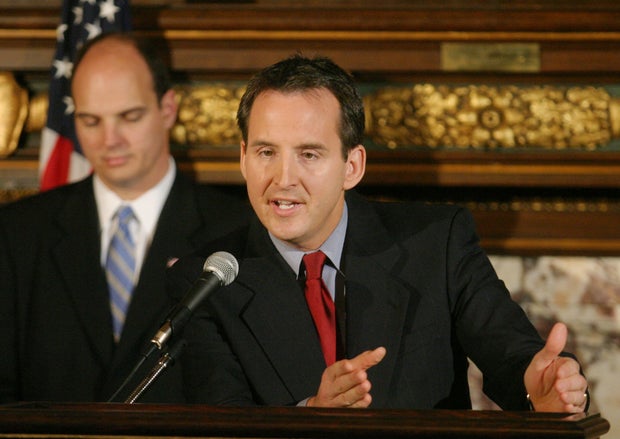
Pawlenty: No timelines, grow the defense budget
Like most Republicans, Pawlenty has praised Mr. Obama for increasing troop levels in Afghanistan last year but has criticized him for setting a timeline for withdrawal.
"You cannot put an arbitrary deadline in Afghanistan," he said last year. "If we are serious about what this means about terrorism and we are serious about what it means in terms of the threat to the United States of America and our national security interests, then we need to be serious about seeing it through to the point where we are satisfied our objectives have been met."
Pawlenty told Politico last month that he maintains that position: "Afghanistan of course was the place where the attack on America was hatched," he said. "And of course our response to be able to identify the threat and defeat it remains important. But we also have to make sure we update that mission."
He added that, in contrast to Mr. Obama's attempts to scale back the Defense Department budget, he believes the Pentagon budget should continue to grow but "perhaps a little more slowly."
Pawlenty has traveled to Afghanistan three times and, according to his staff, is critical of Mr. Obama for not doing more to build public support for the war.
Donald Trump: Build here, not Afghanistan
Since flooding the media with a series of interviews to cast himself as a serious candidate for president, business mogul and television personality Donald Trump has taken a decidedly anti-war stance.
In a recent interview with NBC, Trump said that if he were to have a foreign affairs "doctrine," it would be: "We take care of ourselves first."
"We don't build schools in Afghanistan," he said. "We go to Afghanistan, we build a road, we build a school. Two days later, they blow up the road, they blow up the school. In the mean time, we can't build schools in Alabama, in New Orleans, in Texas, in New York."
Before a crowd in Florida last month, Trump said he is "the strongest on military spending and military strength" of any potential Republican presidential contender, suggesting other politicians would simply waste money abroad.
"We are spending many billions of dollars in Iraq, Afghanistan and Libya," he said. "Nobody even knows what our end game is. I want this money to be spent rebuilding roads and bridges."
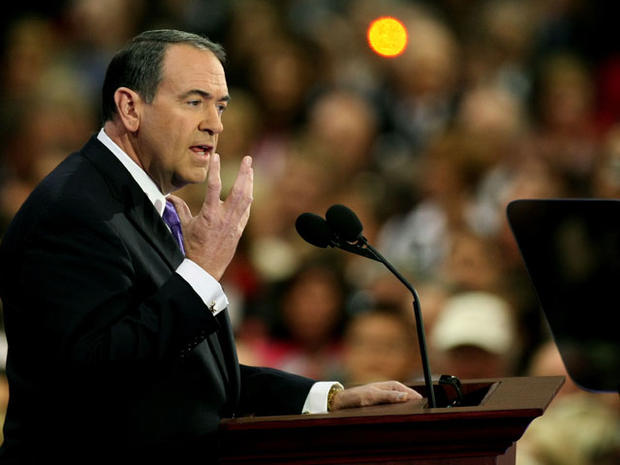
Huckabee: What's the end game?
Like Trump, former Arkansas Gov. Huckabee has been more skeptical of the war than most conventional Republicans.
At an event in Washington in February, Huckabee said he started doubting the war after visiting Afghanistan in 2006, the Huffington Post reported. "I came away from that experience wondering: What does the end game look like here? I can't see a conclusion," he said.
Ron Paul: End Obama's war
Rep. Ron Paul is known for his anti-interventionist, libertarian views and said when he announced his 2012 presidential exploratory committee that Mr. Obama will lose the youth vote over all that's happened in the past couple of years -- including the ongoing wars.
Paul has referred to Afghanistan war as "Obama's war" even though it started well before the current president stepped into office and told CBSNews.com's "Washington Unplugged" last year that the U.S. is not winning.
Like Paul, former New Mexico Gov. Gary Johnson says it's time to get out of Afghanistan "tomorrow."
He said on CBSNews.com's "Washington Unplugged" that the initial invasion was "completely warranted."
"That was a military strike against Osama bin Laden and al Qaeda, and I think we are at war with Osama bin Laden and al Qaeda and should remain vigilant to the terrorist threat," he said. "But we can talk for the next hour about all the problems associated with us getting out of Afghanistan tomorrow. I would suggest we would have that same conversation 25 years from now if that's when we decide to get out."
Johnson supports legislation from Sen. Barbara Boxer (D-Calif.) that would require the president to establish a timetable -- with an end date-- for withdrawing troops from Afghanistan.
Newt Gingrich: Rethink strategy
Former House Speaker Newt Gingrich has suggested Mr. Obama's strategy in Afghanistan is muddled and doomed to fail, though his public remarks in the past year have not offered much in the way of an alternative.
"We better rethink places like Afghanistan to make them sustainable," he said in a speech in November. "We're not, this is not World War II, we're not going to mobilize and win in three years. And so we better figure out, what's the right strategy, how do we bring our power to bear, how do we defeat our opponents? And we haven't even begun that conversation."
In a February Facebook note, Gingrich wrote that the fact that the U.S. supports the Afghanistan government while failing to have stepped into the Egyptian revolution to defend religious minorities "is evidence of a total lack of clarity regarding the purpose of US foreign policy."