Cuba's president says country poses "no threat" to U.S. after report of island's alleged military drones
Washington — Cuban President Miguel Díaz-Canel Bermúdez insisted Cuba "poses no threat" to the United States and doesn't have "aggressive plans or intentions against any country," after Axios reported that the island nation has hundreds of military drones and has been allegedly discussing plans to strike the U.S. military base in Guantanamo Bay and potentially Florida's Key West.
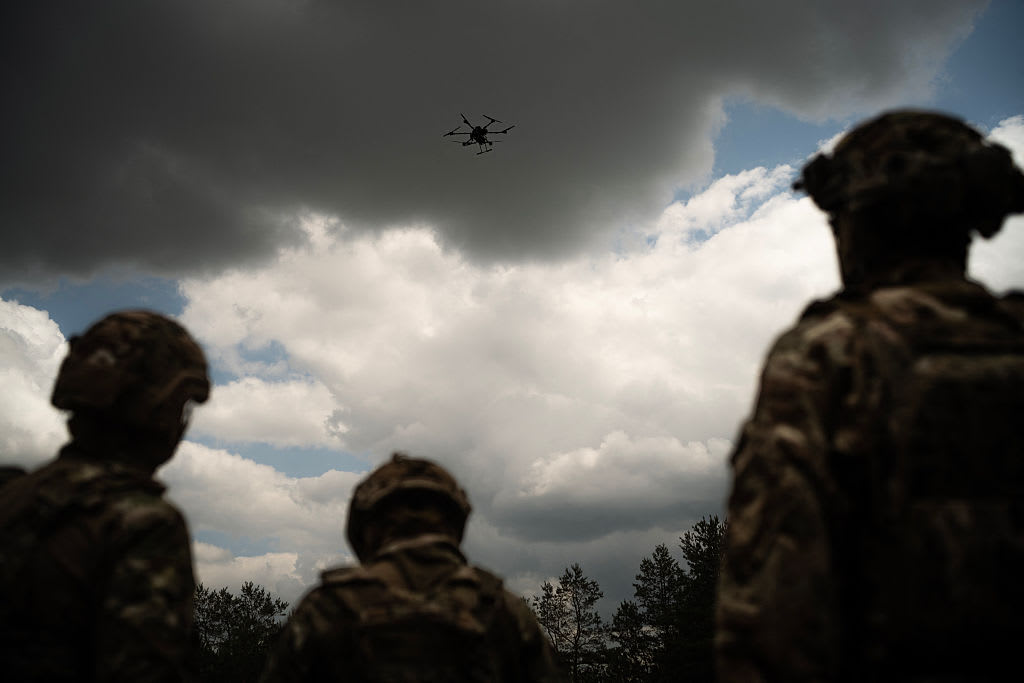
The Cuban president didn't specifically mention the reported drones, but rather, criticized what he described as "threats of military aggression against Cuba from the world's greatest power" and defended Cuba's "absolute and legitimate right to defend itself against a military onslaught." Axios reported Cuba has acquired roughly 300 military drones and stashed them throughout the country. CBS News has not independently confirmed the details of the drone report, although Cuba isn't denying the existence of military drones.
"The threats of military aggression against Cuba from the world's greatest power are well-known," Díaz-Canel said on social media in a translated statement. "The threat itself already constitutes an international crime. If it were to materialize, it would trigger a bloodbath with incalculable consequences, plus the destructive impact on regional peace and stability.
"Cuba poses no threat, nor does it have aggressive plans or intentions against any country," he continued. "It has none against the U.S., nor has it ever had any — something the government of that nation knows full well, particularly its defense and national security agencies. Cuba, which already endures a multidimensional aggression from the U.S., does have the absolute and legitimate right to defend itself against a military onslaught. Yet that cannot be wielded, either logically or honestly, as an excuse for imposing war on the noble Cuban people."
The Trump administration has been publicly considering the possibility of military intervention in Cuba, following the military operation in Venezuela, and putting financial pressure on Cuba in the form of sanctions in an effort to weaken the communist party leadership there. But the sanctions haven't crippled Cuba's leadership, as some had hoped.
President Trump, while touting the capture of Venezuela's Nicolás Maduro in January, has said that "Cuba is next." In March, he said he would have the "honor" of "taking Cuba in some form" and "I can do anything I want with it."
CIA Director John Ratcliffe visited Havana last week, demanding "fundamental changes" there and warning that Cuba can "no longer be a safe haven for adversaries."