Democratic senators file war powers resolution in bid to restrain Trump on Cuba
Washington — Senate Democrats have filed legislation that would prevent the U.S. from attacking Cuba without congressional approval as they seek to force a vote on President Trump's stated goal of a "takeover" of the Caribbean country.
Democrats have repeatedly used war powers resolutions to force debate on Mr. Trump's foreign policy moves, though Republicans have so far mostly backed the president. The resolution filed Thursday by Democratic Sens. Tim Kaine, Ruben Gallego and Adam Schiff would require the president to remove the military from any hostilities with Cuba and could potentially receive a vote by the end of the month.
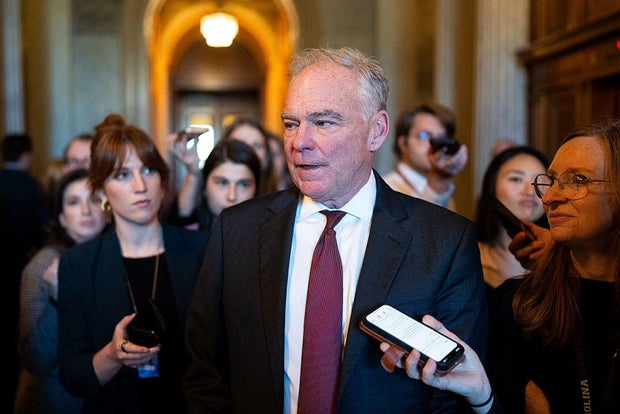
"Only Congress has the power to declare war under the Constitution, but he operates with the belief that the U.S. military is a palace guard, ordering military action in the Caribbean, Venezuela, and Iran without Congress' authorization or any explanation for his actions to the American people," Kaine said in a statement.
Mr. Trump said earlier this week that Secretary of State Marco Rubio was negotiating with Cuba's leadership as the country faces a crippling energy crisis that's been exacerbated by a U.S. blockade of the island.
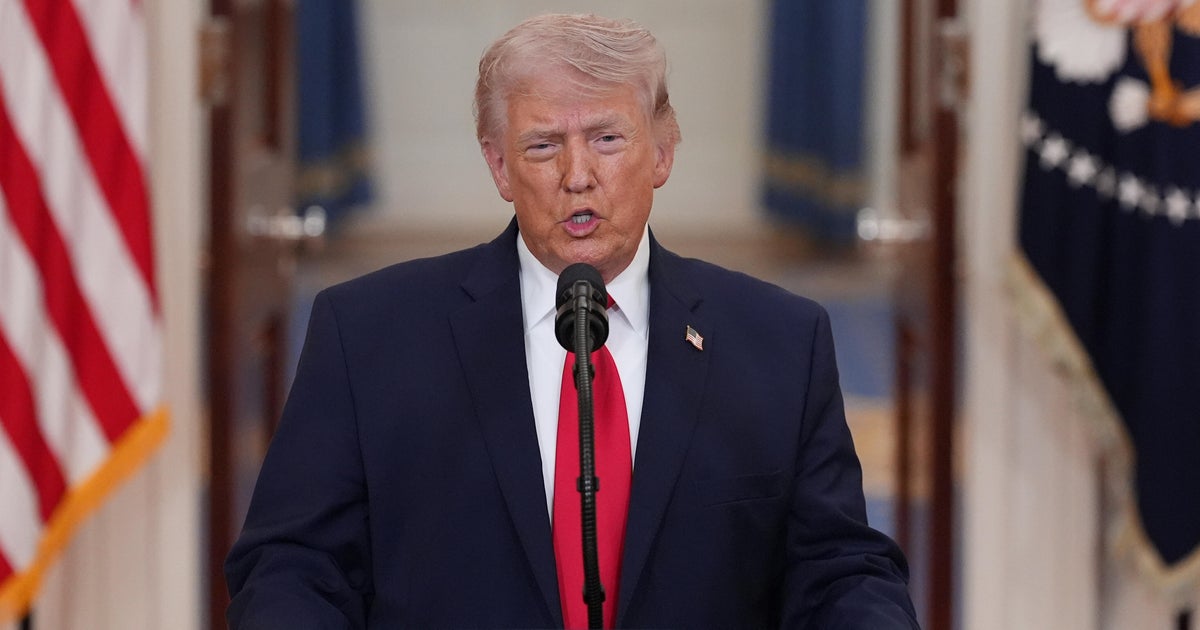
"It may be a friendly takeover, it may not be a friendly takeover," Mr. Trump told reporters this week at a news conference in Florida. He added that he and Rubio would focus on that goal after the war with Iran.
Cuban President Miguel Diaz-Canel confirmed Friday that Cuban officials recently held conversations with the U.S. government aimed at addressing long-standing differences between the two countries, though he cautioned that any potential agreement remains in the early stages.
"Cuban officials recently held conversations with officials from the U.S. government to look for solutions to the bilateral differences that exist," Diaz-Canel said during a press conference Friday morning.
He noted that such contacts are not unprecedented and pointed to similar discussions during the administration of former President Barack Obama.
Díaz-Canel said that the purpose of the talks was to identify "bilateral problems that require solutions based on their severity and impact" and find solutions to them.
The U.S. has had a tense relationship with Cuba for decades, but Mr. Trump's turn to using military action to take out foreign opponents has raised anticipation that the island could be next. Rubio, whose family immigrated to the U.S. from Cuba in the 1950s, has long pushed for the U.S. to aggressively oppose the Caribbean nation's leadership.
Rubio told senators earlier this year that the Trump administration would "love" to see a regime change in Cuba, but cautioned that "does not mean we are going to provoke it directly." Republicans in Congress have mostly stood behind the Trump administration's aggressive foreign policy.
However, Democrats have turned repeatedly to war powers resolutions in order to force debates over how Mr. Trump can use military force in foreign nations. They have not succeeded in passing any of the resolutions so far, but the tactic at times has compelled the Trump administration to explain its goals to Congress.
Democrats also plan to potentially force votes on a series of war powers resolutions that apply to Iran, unless Republicans agree to hold public hearings on the conflict.
"He ran on America First, but now it's clear he's become a puppet of the war hawks in his party," Gallego said in a statement.