Cholera Outbreak Easing in Haiti: Where Will Disease Strike Next?
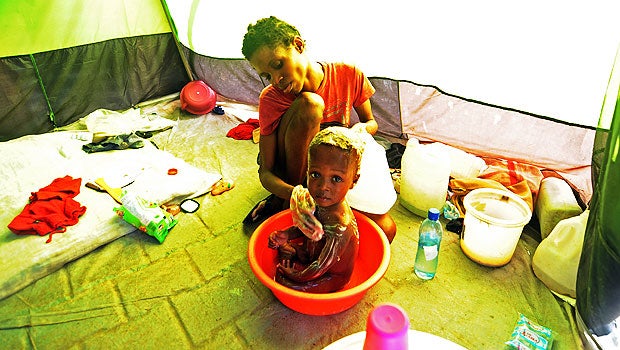
(CBS/AP) The cholera outbreak in Haiti showed signs of easing Monday after killing more than 250 people in a sweep through rural areas. Still, experts warned that the earthquake-devastated country's first bout with the disease in decades is far from over.
Aid groups were joining the government in a race to purify water and warn people throughout the countryside and the capital, Port-au-Prince, where the Jan. 12 earthquake left more than a million survivors in squalid stick-and-tarp camps that are ripe for the waterborne disease.
"The worst part is over, but you can always have a new spike of cholera," said Health Ministry Director Gabriel Timothee. He said the situation is beginning to stabilize with only six new deaths reported since Sunday.
Haiti is the latest developing country to be afflicted by the disease that sickens an estimated 3 million to 5 million people a year and kills 100,000.
It is common in regions such as the Indian subcontinent and sub-Saharan Africa - an outbreak in Nigeria this year killed at least 1,500 people, according to the United Nations - but it has been rare in industrialized nations for the past 100 years.
The disease, spread through feces-contaminated drinking water or food, leads to vomiting and watery diarrhea which, if not treated, can kill a person within hours. It is preventable with clean water and sanitation, but both can be hard to find in corners of the Western Hemisphere's poorest country.
Water purification tablets and oral rehydration salts - used to counteract potentially lethal dehydration caused by diarrhea - have been widely distributed in the region where the river or rainwater remain the only water source for many, said Louise Ivers, an official with the aid group Partners in Health.
Experts said the disease is likely to spread eventually to the Dominican Republic, which is on the same Caribbean island as Haiti.
Cholera is not a major threat in countries such as the U.S. because of advanced water and sanitation systems. On average, only about seven cases a year are reported in the U.S., and they almost always involve a traveler infected in another country.
Cholera has played a central role in the development of the field of public health: A cholera outbreak in London in 1854 was successfully battled by a London physician, Dr. John Snow, who helped lay to rest the long-held theory that the disease is caused by miasma, or foul-smelling air.
Snow deduced that polluted water coming from a Broad Street pump was the source of illness. He is considered the father of the disease investigation field known as epidemiology.