Emotional exit: Betty Yee opens up hours before ending California governor's race campaign
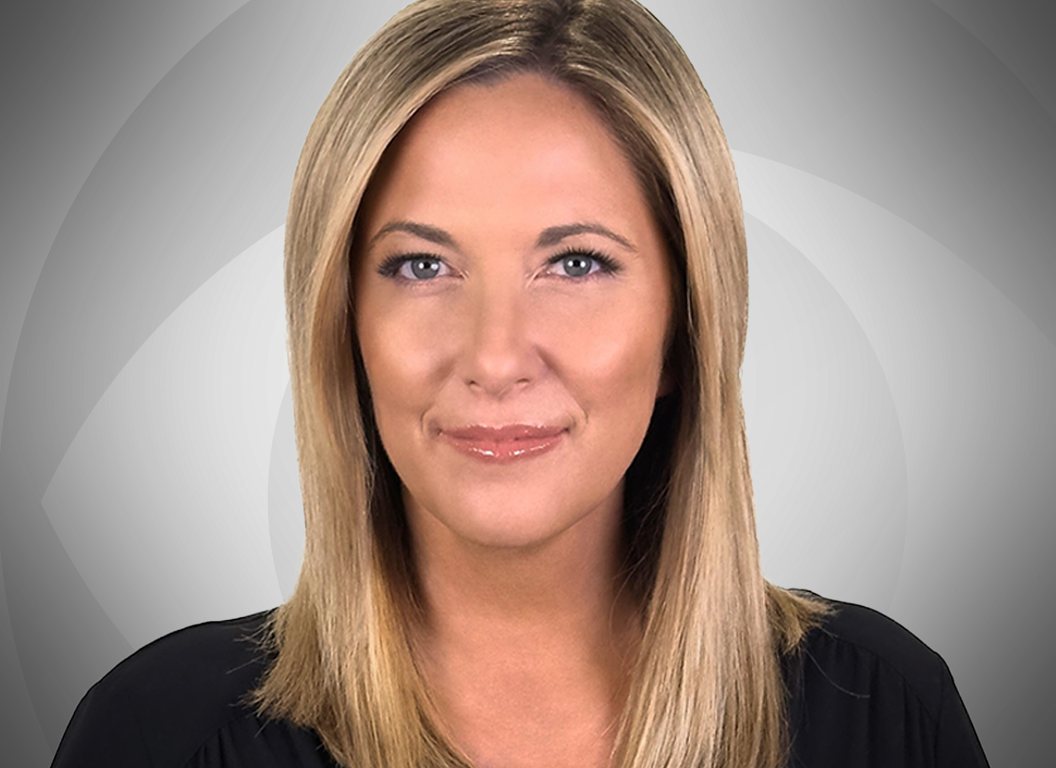
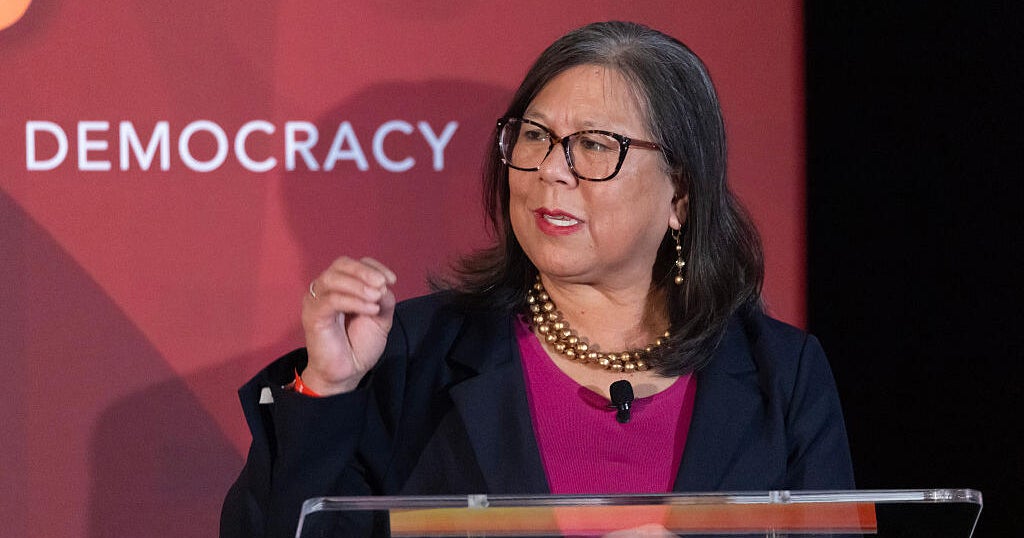
Just hours before suspending her campaign in the California governor's race, Betty Yee sat down with CBS News California Investigates for a candid and emotional interview. The former state controller reflected on a race she described as "unpredictable and turbulent," and the difficult realization that she no longer saw a viable path forward.
Yee pointed to a combination of hard political realities: polling that showed voters weren't prioritizing experience and competence, a large bloc of undecided voters that never broke her way, and a campaign finance environment where donor support dried up.
She also spoke openly about a deeper disappointment: that support from within the Asian American and Pacific Islander community, which she had hoped would rally behind her historic candidacy, never fully materialized.
At the same time, Yee pulled back the curtain on the personal toll of the race, describing the emotional strain on her family and the quiet strength of her husband, whom she calls her "superpower." As she steps aside, Yee says the campaign may be ending — but her commitment to public service, and to the communities she fought to represent, is not.
Watch Yee's emotional interview
(Click the chapter titles below to hear Yee's responses)
- An emotional exit
- Why now? Inside Yee's decision to end her campaign
- Polling reality: "Experience and competence" don't rank
- Yee's biggest disappointment
- A deeper concern: Voter trauma
- "Conflict sells": Yee on reality-TV political era
- Delegates vs. voters: A Democratic disconnect
- Should others drop out?
- Ballot math: Could Yee's name still impact the race?
- Who benefits from Yee's exit?
- Endorsement watch: When will Yee make her pick?
- The personal toll: Yee on sacrifice and her husband
- Her message: "I don't see a path, but the work continues"
An emotional exit
Julie Watts: As we sit here today, voters still don't know that you are about to shake up the California governor's race once again. In just about an hour from now, you're going to announce that you're stepping down out of the race. What are you feeling right now? Relief? Sadness? Exhaustion?
Betty Yee: Well, Julie, I have to say, sadness for sure. This has been a two-year journey, and really thinking that what I brought to the table was going to resonate. But I'm not done. That work will continue.
But sadness, for sure. It's been a great journey. It's just, unfortunately, been one of the most unusual and unpredictable and turbulent races, I think, that we've seen in modern California history. And I'm sure a lot will be written about it in the years to come. I will be sharing more observations and experiences in the weeks and months to come.
Why now? Inside Yee's decision to end her campaign
Julie Watts: You have been under pressure for months to drop out. We still have nearly a quarter of voters undecided. Why now, Betty?
Betty Yee: You know, I don't see a path to really making it to the primary, for a couple of reasons.
Given the polling that's been done, particularly from the California Democratic Party about narrowing the field, that in and of itself has been self-fulfilling. It's really put a chill on, frankly, my donors.
So I'm just not going to be able to have the resources that I need to be viable by the June 2 primary.
Polling reality: "experience and competence" don't rank
Julie Watts: Was there a moment or a poll or a conversation — something behind the scenes from the party — that made it apparent to you that now was the time?
Betty Yee: No, nothing from the party. They're doing their job and, for whatever reason, decided to put money into a poll that would narrow the field.
This was really a decision that I made after working with a stellar polling research firm I do business with. They've been polling gubernatorial races for the last 50 cycles, and they've never seen anything like this.
And what they were seeing, which was concerning, was this: experience and competence were not polling as high as we thought when I first started this race.
The issues I raised with respect to what we've been experiencing in this race — around sexual assault allegations and things that I think are so offensive in terms of what is still acceptable behavior in many of our political circles — that was not getting resonance, and I felt that even when I was speaking about it publicly.
The number of undecideds, and even the people who were responding with the candidates of their choice, were still shopping. There wasn't a deeply rooted sense that people were really deeply into this race.
And the time is short. So I had to do my own assessment of what I could realistically do.
Yee's biggest disappointment
Betty Yee: And I will say the donors weren't there. What was a big disappointment was that donors from my own community were not there, even past donors. And I am not sure why that is, but that is gonna be something that I will take a closer look at.
Being the only Asian, Pacific Islander woman in the race, I really take that to heart. There's something in our community that is going on that I want to better understand that.
We're the fastest-growing demographic and here we had an opportunity to elect a leader who's been just really mindful of the needs of our community and yet they weren't stepping up.
A deeper concern: Voter trauma
Julie Watts: What does this moment say about how campaigns are funded? You just said experience and competency weren't polling well.
What does that say about polling, voters, and how campaigns are funded — because money moves voters?
Betty Yee: Let me talk about the voters first, because a lot of polling is obviously about the sentiments of voters.
We have a lot of Californians who are carrying unaddressed trauma with them, to the point where I think they really are looking for security. They're looking for a sure thing, and a sure thing might even be a billionaire who they believe can actually take care of the state
"Conflict Sells": Yee on reality-TV political era
Julie Watts: I hear this all the time — from people in the Democratic Party, from other campaigns, even from candidates themselves — that Betty may not be able to win, but she is one of the most qualified, if not the most qualified, to run the state.
Why is it that the people seen as most capable, they're not the ones that the Democratic machine is backing? Do you think you were given a fair shot?
Betty Yee: You know, I think — and I said this at the outset of this campaign, because we had early forums in this campaign — and I thought, my goodness, we're, one, not talking about the issues, and two, who's garnering the attention?
The candidates that are having conflicts on the stage.
And so, you know, we are in this new era where it's kind of almost a reality TV show mentality that people want, and frankly, conflict sells. And so that's what gets people's attention.
I'm not a flashy person. I don't come with gimmicks. I even said and joked with my team one time, maybe I just need to bring a folding stool and throw it off the stage just to get some attention. I mean, what's it going to take, right?
This is the era we're in. I do think that when we get closer to the primary, certainly as we get into the general, that we'll see more of those fireworks.
And I hope that's not the case, because we have so many issues that we have to address in California
Delegates vs. Voters: A Democratic disconnect
Julie Watts: Let's talk about delegates. At the Democratic Convention, Eric Swalwell had the most delegates. You were second, just behind him. Behind you were Xavier Becerra and Tom Steyer.
But it seems the party is putting support behind Becerra and Steyer. Do you think there's a disconnect between delegates, party insiders, and voters?
Betty Yee: I do, I do. I mean, first of all, delegates — people have to remember — delegates are all volunteers, either appointed or elected in their own right. And they have a responsibility to understand who the elected leadership of this party will be.
And one of the single most important decisions that they get to make is to endorse a candidate. And so they actually do have to get behind the backgrounds of each of the candidates, understand who they are.
I've been a delegate for a long time, and so they know me and know my work, certainly. But when you have what's happening within the party translated into voters in general, there is a disconnect.
It's actually a big thread that runs between them, where those who supported me — I mean, yes, they still continue to be my foot soldiers out in the field — but since nobody got the endorsement, it's kind of a whole scattershot of different things that voters are hearing about who would be the best governor.
So how do we close that chasm? If we had had an endorsed candidate coming out of that convention, that chasm would have been closed much easier.
Should others drop out?
Julie Watts: So we just announced the candidates that we've invited to our CBS California stations debate, and we have really prided ourselves on being the most inclusive. Because, frankly, as somebody who has interviewed all of you, I argued that we should be including you and Tony (Thumond), who were polling around 1% in the most recent polls, because you had some really great ideas.
And I think it's important for viewers and voters at home to hear those ideas, juxtaposed with what the top-polling candidates are saying. I think that context is important for voters to have.
Now, obviously, you have withdrawn from the race.
What does this say about Tony and Antonio's (Villaraigosa) campaigns moving forward? Do you think that, because of where they are polling, they should also step down, or that maybe there is a path for them?
Betty Yee: I'm going to say this, Julie — I know each of the candidates. I know what goes into the decision to run. And I'm not in a place to ask anybody or their team and surmise whether they should step down or not. These are very personal decisions.
And I am not sure what their internal teams are saying about their path to viability. But what I will say is this — thank you for being the model of being inclusive with the candidates, particularly now that voters are focused on this race.
They should have every opportunity to hear from all of us about what we plan to do, about our backgrounds, and our outlook on the future of California. And when those avenues are closed, I think it actually does a disservice to voters.
I still, at the end of the day, trust voters to make a good choice. It's incumbent upon us to make our case. And so the venues that allow us to do that, we welcome.
And if we're not successful in making our case, then I think we each have to make a decision about whether there really is a path to victory. And for me, what I will be announcing today is that I've concluded that there is not.
Ballot math: Could Yee's name still impact the race?
Julie Watts: You're a numbers person. And Betty, I think you can put this into perspective for us better than most. Your name will still be on the ballot. So will Eric Swalwell's.
We've seen before, even after candidates drop out — Leland Yee dropped out of the Senate race amid federal charges and still got 10% of the vote.
How much could your name — and Swalwell's name being on the ballot — and frankly other low-polling Democrats, how much could that splinter the race?
Betty Yee: You know, I think given that I have been low polling, I don't think it will be a factor. I think voters will know after today that I've suspended my campaign, and they'll make their choice based on that information.
So I am not going to speculate what kind of impact that's going to have, but I'm going to be very clear that I'm suspending my race, and so that word will get out and the field will be narrower for voters to choose from.
Julie Watts: But from a data perspective, what do you think about Swalwell's name still being on the ballot?
Betty Yee: Well, I think the quick handling of that situation — from the perspective of his withdrawing from the race and then resigning from Congress — I think will, I mean, from my perspective, I think will have the impact that people are not going to consider him a viable candidate to cast a vote for.
Who benefits from Yee's exit?
Julie Watts: Who do you think benefits most from your exit?
Betty Yee: That's a good question. I'm not sure. I mean, I think I've been aligned with each of the other candidates in one way or another. And because I don't know what the voters are looking for, that is a really good question, Julie, because if I knew, I wouldn't be in this…
To the extent that experience and competence hasn't polled well — and that's not at the top of the list — I'm not sure. I really can't answer that question.
Endorsement watch: When will Yee make her pick?
Julie Watts: OK, the big question — drumroll, please — who are you going to endorse?
Betty Yee: Julie, I'm going to ask you to give me this next day or so. I'm with my team. I am with my family. It's been, as you can imagine, emotional.
I just want to thank them for getting me to this point. And I'm going to make a serious assessment of who I'm going to put my name behind, and there will be an announcement soon. I'd rather do it sooner rather than later. My supporters deserve to know.
The personal toll: Yee on sacrifice and her husband
Julie Watts: Speaking of family, anyone who has spent any amount of time with you — anyone who has interviewed you — has met your lovely husband, Steven.
I've got to imagine this has been really difficult for him. He comes to every interview with you, every public appearance. He's your biggest supporter. How hard has this been for Steven?
Betty Yee: It's been difficult, it's been difficult. You know, he's a rabbi by profession — retired now, although once a rabbi, always a rabbi.
But I will say that as a rabbi, you really see a lot and understand human nature a lot. And I think he's seen the best sides of people, and also some of the not-so-pretty sides of people.
And it's sad. For us, the sadness is that it doesn't have to get to this point — where it has to be ugly, where people feel like power has to come at the expense of somebody else.
And where you're so committed to a cause — like really elevating the state of California in ways that bring people into it, where they're a part of this. And so that's the vision we were selling.
And when people aren't responding, we are just sharing a lot of sadness today. And I hope this vision can be something that we can resurrect. The community work that we'll continue to do — I think that is where a lot of that work will happen naturally anyway.
But thank you for asking. He is my superpower. He's my life partner in more ways than one. And he says this all the time — I don't say this, but I'm going to say it — I could not have gotten this far without him and so many others.
Her message: "I don't see a path, but the work continues."
Julie Watts: OK, in closing, I want to give you a chance to help voters understand — what do you want voters to understand about this decision that they won't see in the headlines?
So I want you to finish this sentence: "I am stepping aside today because…"
Betty Yee: I am stepping aside from this race for governor because this is a time where I do not see a path to be successful.
But success comes in many forms, and I do feel we've run a successful campaign. But the work doesn't stop here.
My commitment to public service is both in my public life and in my personal life. I will be back in the communities.
And just know, for anyone viewing, as challenged as we are here in California, this is the greatest state. Anything is possible here.
Any challenge we have can be solved right here in California if we have the right leadership and if we tap into the immense talent in all of our communities.
So that's the work I will continue to do. And I am just so grateful to have had this opportunity.
And Julie, thank you for allowing me to share some personal thoughts. It is a sad day, but also a day I'm looking forward to — continuing my service in a different way.