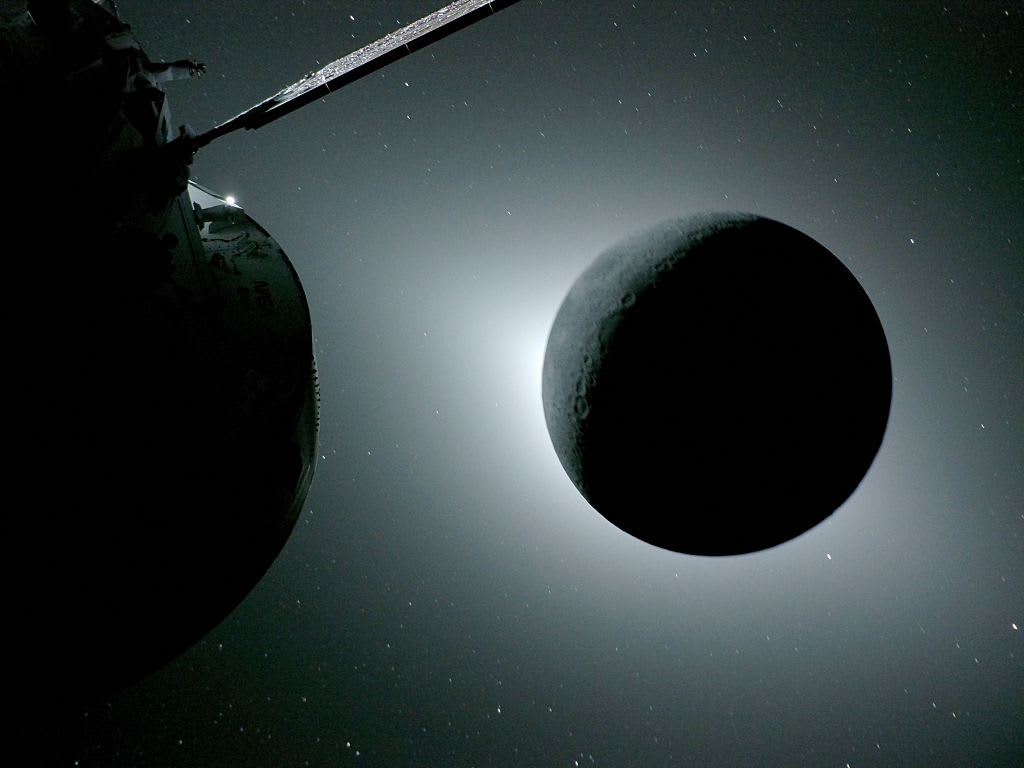
Astronauts complete practice countdown for upcoming trip around the moon
Four astronauts in training to fly around the moon early next year strapped into their Orion spacecraft this weekend for a dress rehearsal countdown in a major milestone toward launch.
Based on repeated stops and starts seen on NASA's countdown clock, the complex test originally planned for late November, ran into problems at various points on Saturday. NASA provided no details, but Artemis 2 commander Reid Wiseman said that overall, the test went well.
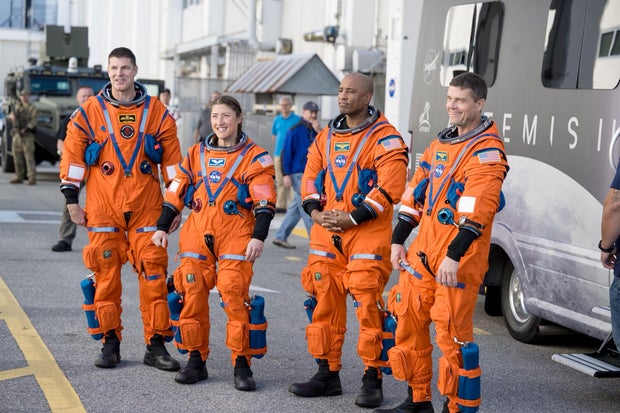
"Extremely successful day in our spacecraft #Integrity," Wiseman said in a post on X. "Did everything go perfectly? Absolutely not. But this vehicle and our team showed us they're up to the challenge. Launch is getting very close."
Launch is tentatively targeted for early February, but the schedule is extremely tight and the flight may slip to early March. No decisions are expected until after the first of next year.
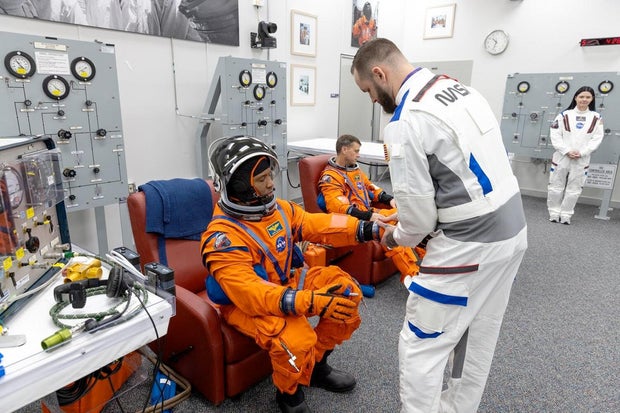
In any case, Wiseman, Victor Glover, Christina Koch and Canadian astronaut Jeremy Hansen, wearing bright orange pressure suits, strapped into their Orion capsule using the same procedures they'll follow on launch day.
Such "countdown demonstration tests" have traditionally taken place shortly before launch with the rocket and crew ship already on the launch pad. But for Saturday's test, the astronauts boarded their spacecraft atop NASA's huge Space Launch System (SLS) rocket inside the cavernous Vehicle Assembly Building at the Kennedy Space Center.
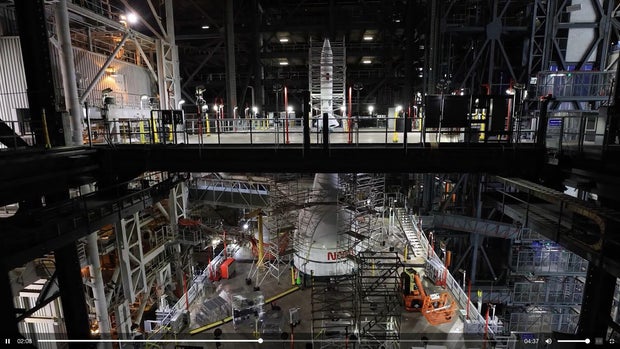
Over the course of the exercise, the astronauts and the launch control team worked through the same countdown procedures they will follow on launch day, ending less than a minute before the clocks would normally hit zero.
Five launch opportunities are available in February when the moon and Earth are in the proper relative positions. The first such opportunity comes on Feb. 6. To make that date, the SLS rocket and Orion would have to be rolled from the assembly building to pad 39B in mid January, setting the stage for a critical fueling test that must go well before NASA can proceed to launch.
Given the amount of work remaining to complete preparations, sources say NASA may opt to delay the flight to early March.
Whenever it takes off, the flight plan calls for the Orion and its crew to spend 25 hours in an elliptical orbit around Earth to test spacecraft life support, propulsion and navigation systems.
The crew plans to fly in close proximity to the SLS rocket's upper stage to test the Orion's maneuvering systems and rendezvous procedures that will be needed for eventual moon landing missions.
An uncrewed Orion carried out a similar loop around the moon during the Artemis 1 mission in November 2022. But the Lockheed Martin-built spacecraft was not equipped with a full life support system and it did not carry out thruster firings like those needed for a rendezvous.
Once the testing is complete, the Artemis 2 Orion will leave Earth orbit on a "free return" trajectory that will carry the crew around the moon and back to a Pacific Ocean splashdown. The ship will not go into orbit around the moon.
But Artemis 2 will still be the first piloted trip back to the moon since the Apollo 17 mission in 1972, carrying Wiseman and his crewmates farther from Earth than any other humans have ever traveled.
The flight will set the stage for Artemis 3, carrying yet-to-be-named astronauts to the surface of the moon near the lunar south pole, NASA hopes, in 2028.
The Artemis 3 flight originally was planned for 2024, a target set during the first Trump administration. But the mission has been repeatedly delayed by processing problems, slowdowns during the COVID pandemic, Super Heavy-Starship testing and work to develop the lunar lander, known by NASA as the Human Landing System, or HLS.
The current 2028 target was set in the past few weeks when it became apparent the space agency would not be ready in time for the most recent previous target of 2027.
China also plans to land its own "taikonauts" on the moon by 2030, creating a new space race of sorts, one that NASA vows to win.