A Civilized Ending to the Russian Spy Affair
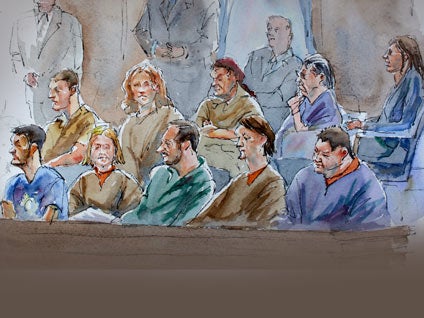
The "Case of the Deep Cover Russian Spies" came to a rapid conclusion on Thursday evening, as 10 of the 11 foreign agents who were charged with acting as unlawful agents within the U.S. on behalf of the Russian Federation pleaded guilty and were deported. They headed back to mother Russia, with children in tow, in exchange for four people who were behind bars in Russia for alleged contact with Western spy agencies.
According to a statement by Mark Toner of the Department of State, "A determination to seek a rapid and comprehensive solution was made on national security and humanitarian grounds. No significant national security benefit would be gained from the prolonged incarceration in the United States of these ten unlawful agents. The United States took advantage of the opportunity presented to secure the release of four individuals serving lengthy prison terms in Russia, several of whom were in poor health."
Overall, it was a civilized and "humanitarian" affair. The Cold Warriors sent by Russia's foreign intelligence agency (the SVR) to blend in with politically connected movers and shakers in America and procure valuable intelligence came up mostly empty in their undercover endeavors.
The Cold War prescription of planting deep-cover operatives in suburban neighborhoods to infiltrate PTA meetings and try to get invited to the right parties probably isn't the most efficient way to gather vital foreign intelligence in the 21st century.
The Russians applied some high-tech spy tradecraft but they appeared to fail in their social engineering practices -- manipulating people into divulging confidential information, such as computer passwords, plans for a new bunker-buster bomb or the identity LeBron James' next team.
The fact that the FBI was tracking them for several years and that they apparently didn't gather intelligence of any import, makes the entire affair more of an embarrassment to Russian pride and former president and KGB officer Vladimir Putin than a threat to U.S. national security.
U.S.-Russia relations, which were recently buoyed when President Obama ate hamburgers with Russian President Dmitry Medvedev in Washington DC, will easily survive. And, as a bonus four individuals who allegedly supported U.S. and allied interests will be freed from captivity in Russia.
This affair won't mark an end to the spy trade between the two countries. The SVR will still try to recruit Americans to spill state secrets and the CIA will do the same on Russian soil.
It appears the Russian spy agency needs to go back to the drawing board. On the other hand, as in a good spy novel, the 10 deportees may be pawns, sacrificed for the greater good to protect more important foreign intelligence assets who are operating under even deeper cover in neighborhoods across the U.S. Stay tuned for the next chapter in this convoluted saga.