Judge letting high school gunman be resentenced, potentially freeing him after 23 years behind bars
A judge granted a request Tuesday by the gunman in a 2001 shooting at a San Diego high school to be resentenced, potentially allowing him to be freed after 23 years in prison.
Charles "Andy" Williams, who was 15 at the time, pleaded guilty to killing two students and injuring 13 others after opening fire with his father's revolver at Santana High School on March 5, 2001. He was sentenced to 50 years to life in prison.
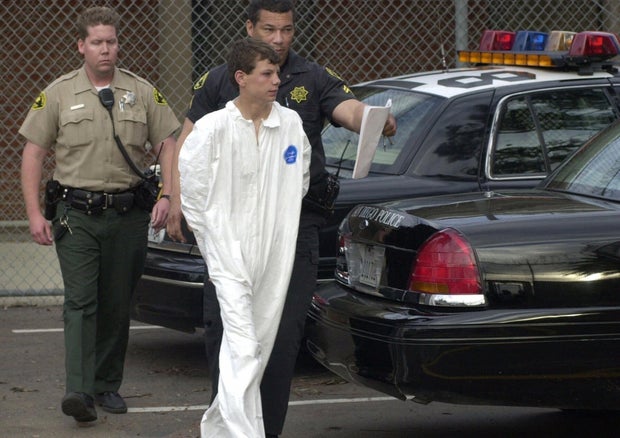
The decision by San Diego Superior Court Judge Lisa Rodriguez meant Williams' case would be sent to juvenile court and lead to his immediate release from prison without parole supervision or evaluation, according to San Diego County District Attorney Summer Stephan's office.
Rodriguez said she had to follow the law, not the emotion surrounding the case, according to CBS San Diego affiliate KFMB-TV.
Prosecutors immediately challenged the ruling in an appellate court to try to stop Williams' release, The San Diego Union-Tribune reported.
"As prosecutors, our duty is to ensure justice for victims and protect public safety, and the defendant's cruel actions in this case continue to warrant the 50-years-to-life sentence that was imposed," Stephan said. "At some point our laws must balance the rights of defendants, the rights of victims, and the rights of the community to be safe."
Williams' attorney Laura Sheppard remarked after the hearing that she thinks "it was the right ruling," the Union-Tribune said. "I'm grateful that Judge Rodriguez was able to put away emotional reasoning and base her decision on the law," she continued.
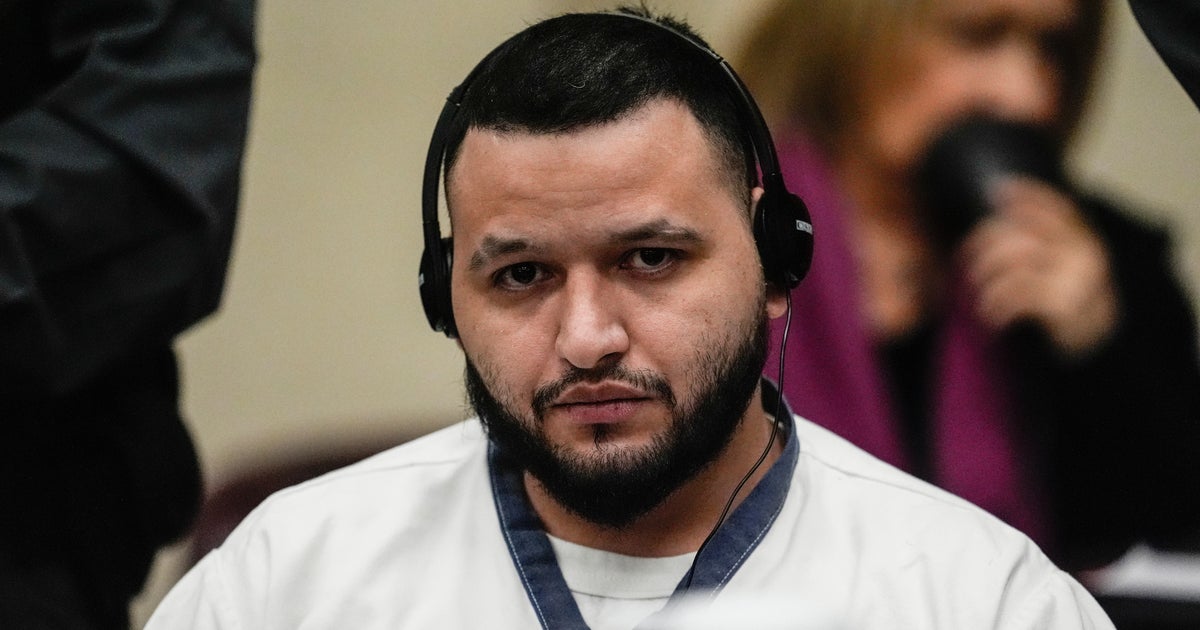
Williams attended the hearing virtually from prison but could be seen on a large monitor in the courtroom, the newspaper said, adding that as Rodriguez issued her ruling, Williams appeared to cry.
Williams killed two students, 14-year-old Bryan Zuckor and 17-year-old Randy Gordon. He wounded 11 students and two staff members.
Now age 39, he is being held at the California Institution for Men in Chino and became eligible for parole in September 2024.
He was denied parole that year after being deemed an "unreasonable risk to public safety" by a state board, the Union-Tribune reported. The board also said it was unclear if Williams understood why he committed the shooting.
Prosecutors say Williams' case has been transferred to juvenile court for a disposition hearing. Due to his age at the time of his shooting, his convictions will be redesignated as juvenile "true findings," after which he would be released from prison and potentially placed on juvenile probation, prosecutors said.
Williams was able to petition for resentencing due to a law enacted in 2011 that allowed judges to give juvenile offenders with life without parole sentences a chance to be resentenced. An appeals court decision in 2022 made those with the "functional equivalent" of life without parole sentences eligible as well.