Los Angeles space tech company to launch mirrors in space to redirect sunlight to earth

A Hawthorne-based space technology startup is preparing for a hefty clean energy project, launching giant mirrors into space to reflect sunlight onto Earth for use at night.
Ben Nowack is the cofounder and CEO of Reflect Orbital, and says there are plenty of applications for redirected sunlight, especially at night. Solar farms could charge, plants could grow, construction could continue 24 hours, and it could be helpful in search and rescue operations.
"We are providing control over sunlight with satellites with very large mirrors on them," Nowack said.
He explained that the reflective material, like a space-grade potato chip bag, gets folded up to the size of a shoe box in a satellite. Once deployed, it springs into a 60-by-60-foot mirror that reflects a 3-mile-wide circle down on Earth.
"If somebody falls overboard in the middle of the Pacific Ocean, and you're trying to find them, you can just hit a button on the satellite-connected device, rotate the satellite, and the whole area around the search and rescue operators gets lit up, and it's going to be a lot easier to find that person," Nowack said.
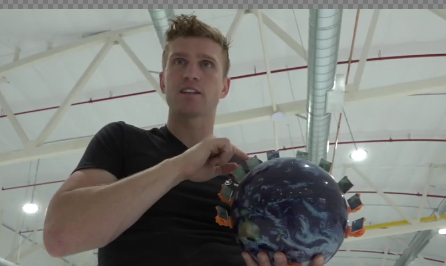
Reflect Orbital has garnered nearly $30 million in investor funding and more than 260,000 applications from companies wanting to use its services. But not everyone is on board.
Dr. Andrew Farnsworth, Cornell University Visiting Scientist, worries that unnatural sunlight would disorient birds, cause collisions and possibly destroy circadian rhythms, which may lead to higher mortality rates.
"Light pollution impact is a detour and disruption to migration," Farnsworth said. "I would just like to see a company like this one, that has a really intriguing idea to do the environmental impact, not in a way that derails the company or derails the concept, but in a way that makes it better than it is."
Nowack says light pollution concerns have been factored in, as the satellites would turn off when they aren't in use. A five-minute test launch this fall will allow them to gather data and make adjustments, he said.
"We'll start out by testing in the middle of nowhere. Just to make sure that the vehicle is working. There will be restrictions on when you can use it, and for what applications," Nowack said, hoping that his childhood dream can change the course of humankind.


