Senate Democrats continue push for ICE reforms in emerging DHS shutdown deal
Washington — Senate Democrats said Tuesday that they will continue to push for reforms to Immigration and Customs Enforcement as part of any deal to reopen the Department of Homeland Security, complicating GOP efforts to find an off-ramp to the funding impasse.
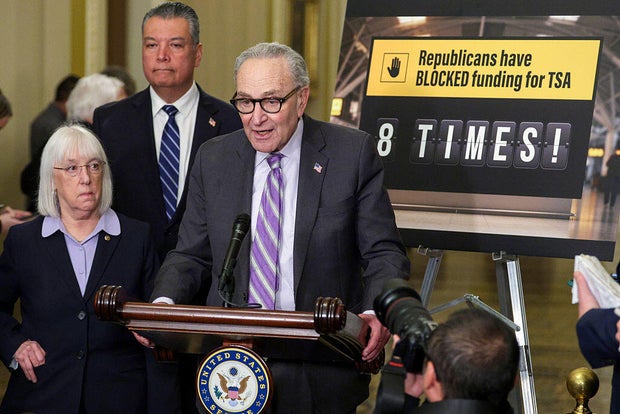
"We have to rein in ICE and stop the violence," Senate Minority Leader Chuck Schumer said at a news conference at the Capitol. "We need reform."
Senate Republicans sent Democrats a formal offer on Tuesday after what appeared to be a breakthrough in the talks late Monday. A group of Republicans met with President Trump at the White House on Monday evening and returned to the Capitol optimistic about a possible deal. Asked by reporters if they had a solution, Sen. Katie Britt of Alabama said, "We do."
But Democrats threw cold water on the offer after a caucus meeting Tuesday afternoon, reiterating their calls for reforms to ICE. Democrats have refused to fund the agency without the reforms following two deadly shootings by federal agents in Minneapolis in January.
Schumer said the GOP offer "does not have any reforms" to the immigration agency. He said negotiations are ongoing and "we'll be sending them an offer back."
"And I can assure you, it will contain significant reform in it," Schumer said.
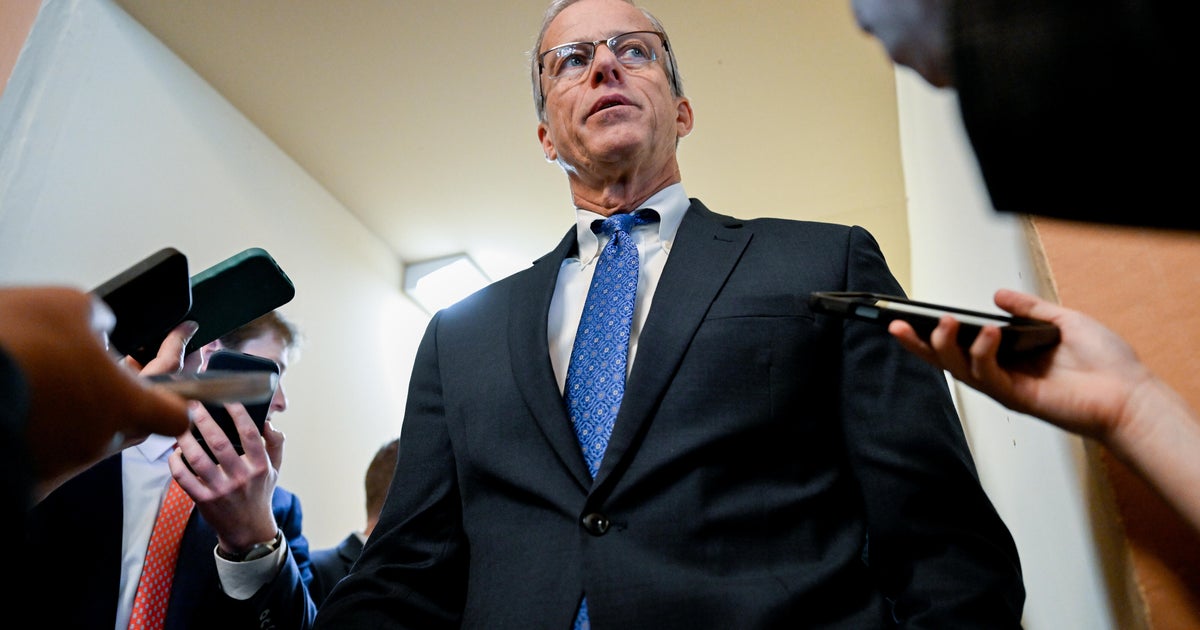
Senate Majority Leader John Thune, a South Dakota Republican, told reporters that the GOP offer would fund 94% of the DHS budget while withholding $5.5 billion for ICE's deportation arm, known as Enforcement and Removal Operations. ICE received tens of billions of dollars in the One Big Beautiful Bill Act, which has allowed the agency to continue functioning during the shutdown.
Thune told reporters earlier Tuesday that "a lot of the reforms are contingent on funding for ICE."
"If you're not going to have funding, I don't know how all of a sudden now you can demand reforms," Thune added.
But Sen. Patty Murray of Washington, the top Democratic appropriator in the Senate, made clear that Democrats "are continuing to push for modest reforms." Their bottom line, she said, is that "reforms must make it into law."
Democrats have been swapping proposals with the White House in recent weeks, and a bipartisan group of senators met twice last week with border czar Tom Homan amid increased pressure to end the stalemate.
Murray said she and other Senate Democrats have had "productive meetings" with the White House as they press for ICE reforms. But she said "they would be a lot more productive if the president didn't keep making new and unreasonable demands over social media."
"It is awfully hard to find common ground with Republicans when it's not clear that they have common ground amongst themselves," she added.
President Trump threw a wrench into talks over funding DHS on Monday by demanding that Republicans refrain from making a deal. He argued that lawmakers should link DHS funding with the SAVE America Act. The president has put pressure on lawmakers for weeks to approve the elections bill, which would require proof of citizenship to register to vote and photo ID to cast a ballot. Democrats strongly oppose the bill.
Mr. Trump said at the White House Tuesday that Democrats "broke the deal that we had."
"Any deal they make, I'm pretty much not happy with it," Mr. Trump said, while noting he would reserve judgment until any agreement is final.
Republicans eye budget reconciliation
The GOP proposal would fund many of the agencies DHS oversees, like TSA, FEMA and the Coast Guard. Senate Republicans would then work to approve the excluded ICE deportation funds, and elements of an elections bill known as the SAVE America Act, through the budget reconciliation process.
Budget reconciliation would give Republicans the ability to approve a package with a simple majority, instead of the 60-vote threshold needed to advance most legislation. But the maneuver comes with limitations, chiefly that the bill's components must have a direct impact on the budget.
Republicans used reconciliation to approve the One Big Beautiful Bill Act last year. But some GOP lawmakers have come out against trying to use reconciliation for the SAVE America Act, saying key components of the bill wouldn't comply with the strict budget rules.
"It's hard to imagine how the SAVE America Act could be passed through reconciliation," Utah Sen. Mike Lee wrote in a post on X on Tuesday. "And by 'hard' I mean 'essentially impossible.'"
Thune said the possibility of using reconciliation was part of Senate Republicans' pitch to the president when a group of senators met with him at the White House on Monday. GOP Sens. Steve Daines of Montana, Bernie Moreno of Ohio, Lindsey Graham of South Carolina and Britt attended the meeting.
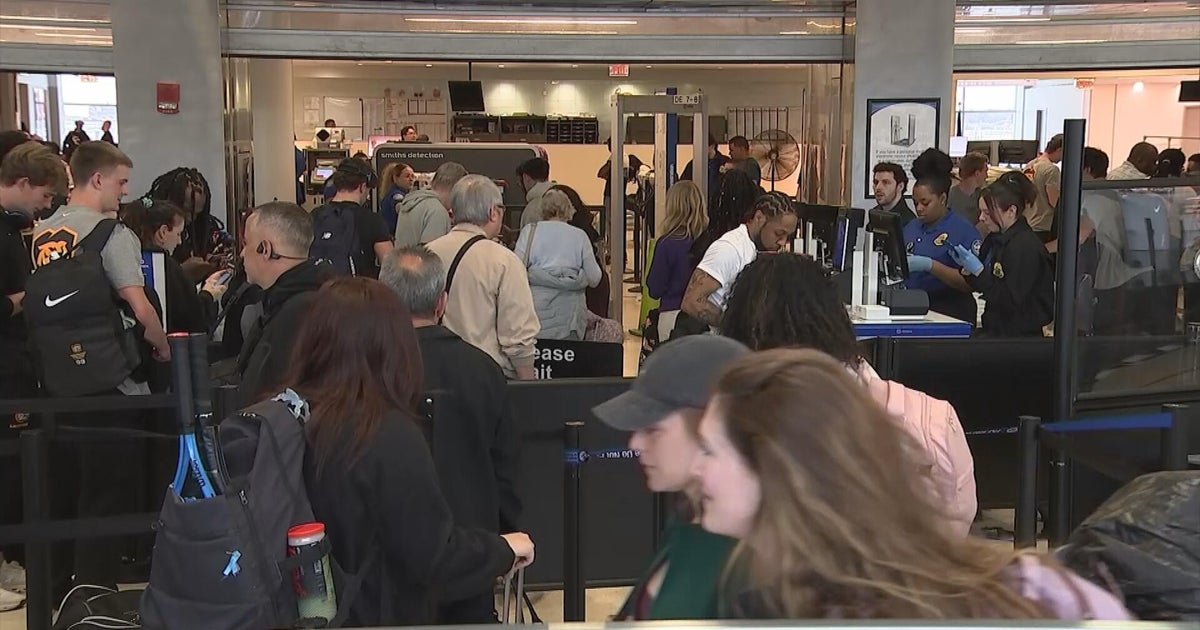
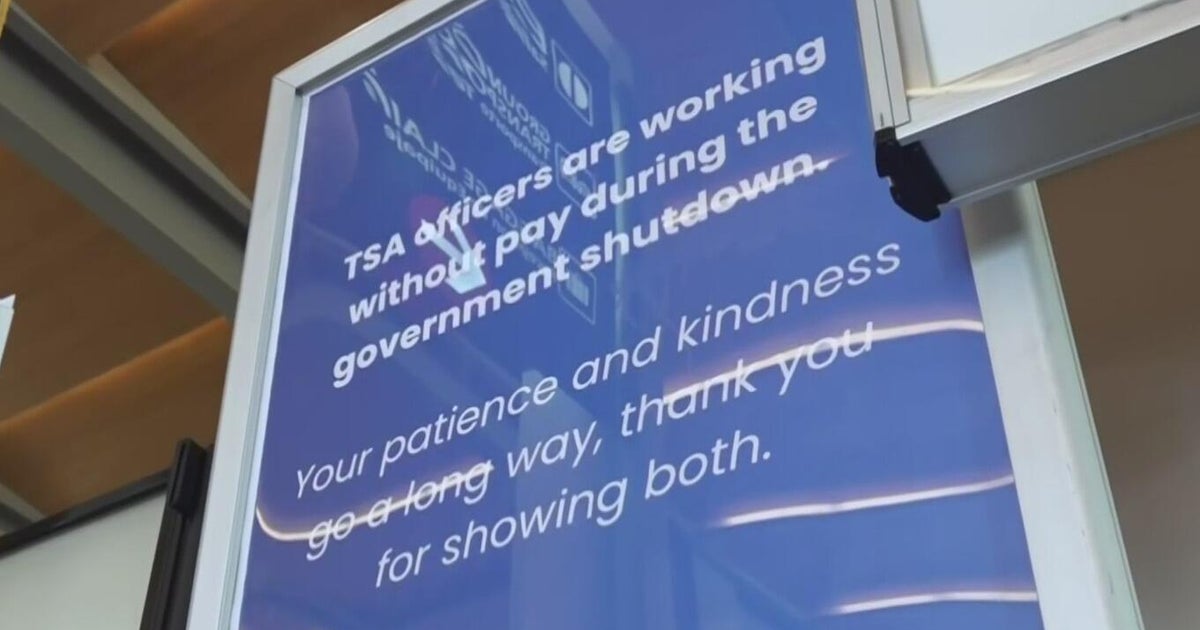
Responding to some GOP criticism of the plan to use reconciliation, Graham told reporters Tuesday afternoon that "there's some people that don't like it on our side, I'm sure there's some people that don't like it on their side." But, he said, "if you're waiting in line four hours in Atlanta, this madness needs to come to an end," a reference to enormous security lines in some airports caused by staffing shortages of TSA officers.
Graham also warned Democrats against seeking changes to the GOP offer.
"You're not changing this now," Graham said. "I didn't go down there and spend two hours with the president to get him to where the deal was to only have it changed."