CSU Long Beach student alleges fraternity hazing caused Riverside County crash that killed friend
After 48 hours in the hot, dusty Southern California desert, Camilo Losada just wanted to call his mom, get back into his friend's 1998 Toyota 4Runner and drive home.
"The second I got my phone back, I wanted to call my mother super bad," Losada said. "I just wanted to let her know I was OK."
Losada and his friends Preston Obeidin and Diego Collins, all 19 at the time, were in the final phase of pledging CSU Long Beach's Pi Kappa Alpha fraternity. First, Losada claims they had to endure a weekend of non-stop hazing before driving nearly four hours back to the university.
"It's just torture. It feels endless, because everything's being repeated and in your head you're just hallucinating," Losada said. "We're running. We may be drunk. We're throwing up. We're fatigued. We're doing workouts. We're losing our minds."
Obeidin never made it back.
The trio crashed their SUV on the side of a highway just outside of Temecula.
Obeidin died. Losada and Diego were left scarred for the rest of their lives.
"I'll never be the same," he said.
A year later, Losada filed a lawsuit against the university and fraternity, alleging that negligent supervision and control of activities during the "initiation retreat" led to the deadly crash caused by sleep deprivation and coerced unsafe travel.
"I had some serious PTSD — I still have it," Losada said. "I'll never forget that. I mean, I can't, because I think about it literally every day."
Hell Week
Last April, Losada said that the pledges were informed of the retreat, but the location remained a mystery. He, Obeidin and Collins, all friends from childhood, left Long Beach with an active brother who gave them directions but never said exactly where they were headed.
If they arrived late, then they would be punished, according to Losada.
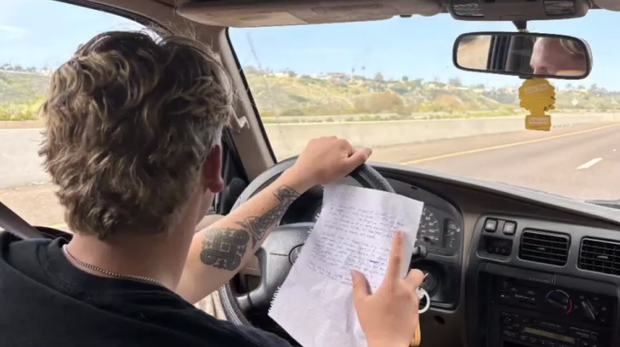
On the drive there, Losada said they were forced to memorize the PIKE creed. If they didn't, they could face punishment, he added.
"We were given motivation to do it because we were scared," Losada said. "Even Preston, who's driving … we had to help him memorize, even though he was driving. So he was half-distracted, because we had to write down the creed on a piece of paper so he could look at it while driving."
Losada said they arrived in the middle of nowhere, veering off the main road and into a canyon.
"We were kind of just looking at each other, shocked, like, there was truly nothing around us," he said. "The heat was no joke. It was extremely hot."
After all of the pledges had arrived, Losada said that the active members of the fraternity took their phones and watches and told them to begin setting up camp.
"The second everyone gets there, everyone's getting yelled at," he recalled. "We're immediately setting up tents."
Though the first night is hazy in his head, Losada says he remembers the hazing.
"What I do remember is going to bed after getting hazed," Losada said. "Doing pushups, shotgunning beers, being forced to drink liquor and alcohol."
He claims that they were also fed sardines, raw onions and garlic, which caused some of his other pledge brothers to throw up. They were also allegedly forced to do "weird exercises" and say a chant, and if someone got something wrong, they would be punished.
"If somebody got something wrong, they might have to run to the top of a mountain, as we were in this ravine," Losada said.
Though they were told they'd be well-fed and get some sleep in, Losada claims that pledges were given limited access to actual food and that while they were trying to sleep, active members would shake the outside of their tents. Other times, they were woken by loud bangs.
"We didn't even know there were fireworks, to be honest with you. Could have been gunshots," Losada said. "There weren't any, like, firework lights."
At one point, he claims they were woken up and told to start digging holes with their bare hands. Once they got deep enough, they were given shovels to dig even deeper.
"They were extremely deep," he said. "I think they told us they were gonna bury us, under, inside the hole."
Despite this, Losada said he doesn't recall a purpose of digging the holes other than the brothers threatening them throughout the process, until the second night, when they were forced to bury the "Hellmaster," or the person in charge of the pledges.
"It's a tradition, a weird tradition they do," Losada said. "The Hellmaster was forced to be in there. The pledges had to fight him, almost choke him out. It was weird. We were forced to do it."
Losada claims the next day saw much of the same, with forced alcohol consumption, including "case races," meaning pledges had to compete to finish a 30-pack of beers. As the day continued, they were sent on a hike up the mountain, stopping along the way in what Losada described as an "obstacle course" of brothers.
"From the bottom all the way to the top, there were different checkpoints with different people," Losada said. "We would have to do exercises, case races … or just shotgun as many beers as they said."
Failure wasn't an option.
"If we failed at one of those checkpoints, we'd have to run all the way back. It was a race," Losada said. "You wanted to be the first. … If you were last, you'd get punished."
When asked what was going through his head throughout the weekend, Losada said he kept thinking about going home.
"Fear. I wanna go home," he said. "We all, like, people were crying, for sure. No one wants to be there. We're manipulated into not dropping or gaslighted. We don't want to quit. If we quit, we're making our brothers or our friends suffer even more."
Going home
Despite the shared notion among pledges that they would be initiated at the end of the weekend, Losada said the brothers lined them up and told them how awful their class was throughout the process. Instead of finally welcoming them into their fraternity, the brothers threw trash around the campsite and began to leave.
Once they were ready to go, Losada said that they could not find the active brother who was supposed to drive them home because he had already left. He, Obeidin and Collins decided to leave on their own, as some of the last people at the camp, despite being threatened with more hazing.
"It was a scary moment," he said. "We were like, 'Let's get out of here.' We couldn't sleep, we put the tent away, packed the car, and we left and we're just like, 'Thank God we're out of here.'"
They left at around 3 a.m., Losada said. On their way, they stopped for quick breaks to switch drivers and to sleep. When the crash happened, it was almost 7:30 a.m., according to California Highway Patrol officers who investigated the incident.
"We weren't all in the right mind or headspace to be doing any of this," Losada said. "We were lost, confused, in the middle of nowhere."
Losada said he was asleep in the front passenger seat when the crash happened, and that Obeidin was driving while Collins slept in the back seat.
"All I remember is waking up by my buddy in the back, Diego, screaming and then boom. Lights out," Losada said. "When I came to, I was being pulled into the ambulance. ... They were explaining it ... I hadn't known that Preston had passed away yet and one of them told me. ... Someone telling you that the person less than a foot away from you is dead is unreal."
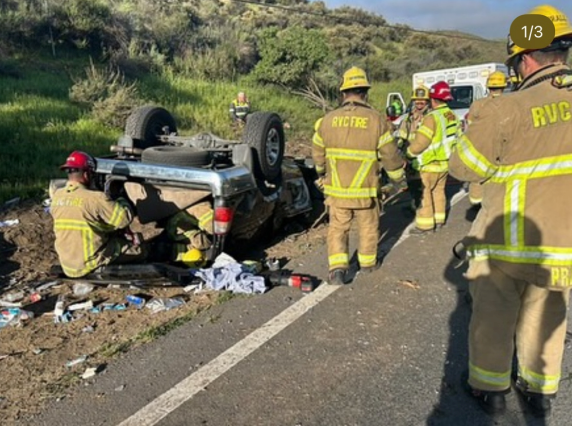
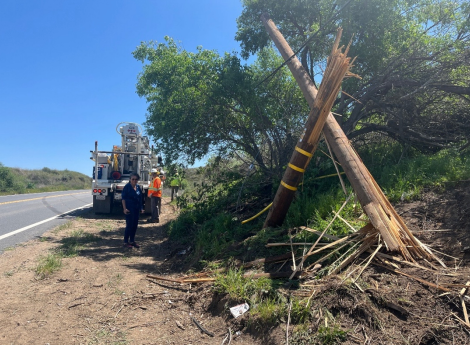
CHP officers said that the crash occurred on southbound SR-79, near Anza Road, when 19-year-old Obeidin crossed the double yellow line and drove onto the dirt shoulder of the road.
He then overcorrected and lost control of the SUV. It rolled over, slammed into a telephone pole and landed on its roof, according to police.
Investigators believe that Obeidin fell asleep as a result of the lack of sleep from the fraternity activities. Drug and alcohol screenings came back negative.
"I need help"
Losada woke up again in the hospital, terrified that he was paralyzed in the crash. As he frantically asked doctors about his condition, he heard Collins screaming.
"All I hear is my buddy Diego screaming in pain, in a voice I've just never heard before., I don't ever want to hear again," he said.
Since then, Losada says that he's been struggling with survivor's guilt and PTSD.
"I was supposed to die. ... I wasn't supposed to die, but like, in my head, I'm saying I was supposed to die," he said. "I had serious survivor guilt. ... I got some serious PTSD. ... I still have it, and I had some serious, or have some serious depression from it."
Losada still thinks about the crash every day, but struggled to talk about it.
The emotional weight of everything, from the hazing, Obeidin's death and hearing Collins screaming at the hospital, became too much for Losada to bear while he was having dinner with his dad a week after the crash.
I had an out-of-body experience," Losada said. I felt like I wasn't okay. I felt like I could see myself from above, like a third-person perspective. I was, mentally, really messed up, just experiencing weird stuff. Like, I thought I was dead."
Throughout his life, Losada said he never wanted to show any type of weakness to his father. He prided himself on keeping a strong persona whenever the two were together. But at that moment, he looked at his dad and broke down.
"I said, 'Papa. ... I'm not good. I'm not good,'" Losada said. "I need help right now. I need help. I need to go to therapy."
The lingering memories of that morning drive home with friends changed Losada. He said he's constantly thinking about death. Losada and Collins, who remain close friends, still talk about the crash a year later, helping each other cope with the pain.
"I wish we could do things a little bit safer, go back in time and do things safer and hold accountability," Losada said. "The whole fraternity could have looked over us a little bit better, I think."
While he doesn't believe it was their intent for someone to die, Losada said that things should have been handled differently, especially from the place of power that the brothers had.
"Somebody did die, at the end of the day. My buddy and me got seriously hurt," he said.
Collins has also filed a complaint against the school and fraternity, alleging the same set of circumstances that led to the deadly crash.
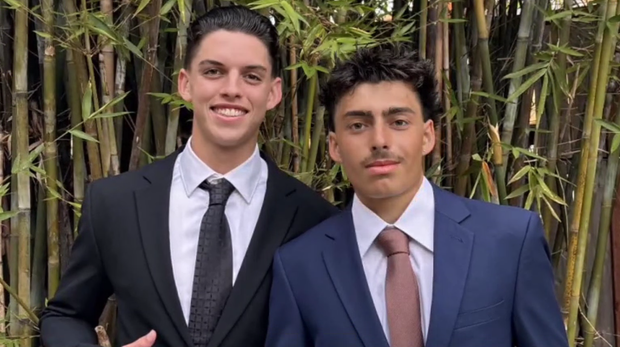
A Long Beach State spokesperson expressed the university's condolences for the deadly crash.
"We have been deeply saddened by this tragic accident in Riverside County, which claimed the life of Mr. Obeidin and injured two of our students," the spokesperson wrote. "While it is campus practice not to comment on pending litigation, we do not believe the university is a proper party to lawsuits arising from this incident."
Pi Kappa Alpha International Fraternity officials said that the Iota Epsilon Chapter at CSU Long Beach was suspended and had its charter revoked in April 2025 for violation of fraternity standards and university policies.
"In addition, all undergraduate members of the chapter were expelled from the Fraternity," said a statement from Justin A. Buck, the fraternity's executive vice president. "Our thoughts are with the individuals and families impacted by this tragic event."


