Live Updates: Path forward for U.S.-Iran talks unclear after weekend strikes
What to know about the Iran war today:
- Iran's Foreign Ministry denied Monday that its negotiators would be meeting with U.S. officials in Qatar on Tuesday after President Trump announced the talks would resume at Tehran's request. Both sides exchanged strikes over the weekend, testing the fragile ceasefire.
- Iran's president said Monday that the country is set to receive $6 billion in frozen assets currently held in Qatar, according to Iranian state media. The unfreezing of Iran's financial assets is one of the conditions in the U.S.-Iran memorandum of understanding.
- Iranian and Omani officials have met for the first time to discuss management of the Strait of Hormuz, after sending mixed messages about how free and open the vital waterway will be going forward.
Trump says U.S. efforts in Qatar will be "perhaps important, perhaps not"
President Trump said U.S. officials' planned efforts in Qatar this week would be "perhaps important, perhaps not" after Iran denied that its negotiators would be meeting with Americans in the Middle East.
"The meeting in Doha is going to be perhaps important, perhaps not," Mr. Trump told reporters in the Oval Office, referring to Qatar's capital. "We're going to find out."
United Arab Emirates lifts war-related ban on Lebanon travel
The United Arab Emirates said its nationals can travel to Lebanon, lifting a weekslong ban in place because of the Middle East war and concerns about Iran's influence.
The Foreign Ministry announced "it will allow UAE citizens to travel to the sisterly Lebanese Republic, starting from Monday, June 29, 2026," the official WAM news agency reported.
The ministry asked citizens to register with its consular services platform before travelling to Lebanon.
Emirati nationals were banned from traveling to Lebanon in April as well as to Iraq and Iran, citing regional developments including the Middle East war.
During the war, Gulf states bore the brunt of Iran's retaliatory aerial campaign following U.S. and Israeli strikes on the Islamic Republic beginning on Feb. 28.
Earlier on Monday, flights resumed between Tehran and Dubai, Iranian state TV and other media reported, for the first time since the war.
However, the ban on Emirati nationals traveling to Iran was not lifted.
Iran says delegation heading to Qatar won't meet with U.S.
Iran on Monday said a delegation of experts would travel to Qatar's capital of Doha this week for discussions on the implementation of the memorandum of understanding with the U.S., but no meetings would be happening between the two countries.
"An expert delegation from the Islamic Republic of Iran will travel to Doha later this week" to discuss the implementation of clauses of the memorandum, Foreign Ministry spokesman Esmaeil Baqaei said.
"We have not yet entered the stage of negotiating a final agreement," he said, noting that "over the coming days, we will not have any negotiation meetings with the U.S. side at any level."
CBS/AFP
Iran alone will demine Strait of Hormuz, says Iranian official
Iran's deputy foreign minister said Monday that Iran alone will undertake the process of removing mines from the Strait of Hormuz in line with the U.S.-Iran memorandum of understanding.
Deputy Foreign Minister Kazem Gharibabadi said on X that Iran will not allow any other country to participate in demining, adding, that the situation in the Strait of Hormuz is "sensitive and complex" and that they strongly advise France against complicating it with its "provocations."
French President Emmanuel Macron said earlier Monday that France and Oman agreed to collaborate with international partners on demining the strait.
Lebanon's president says determined to deploy army up to Israel border
Lebanese President Joseph Aoun told the U.S. Central Command chief on Monday that he was committed to extending the state's control through its military up to the border with Israel, where Iran-backed militant group Hezbollah maintains a strong presence.
He reaffirmed to Admiral Brad Cooper "the Lebanese state's determination to extend its authority, through its armed forces, to the southern border," the presidency said in a statement, adding that the pair discussed preparations for implementing a framework agreement between Lebanon, Israel and the U.S.
France, Oman to collaborate with international partners on demining Strait of Hormuz
France and Oman have agreed to collaborate with international partners on demining the Strait of Hormuz, French President Emmanuel Macron announced Monday.
After a visit from the Sultan of Oman, Haitham bin Tarik, Macron posted on X: "We have decided to collaborate jointly, in coordination with our partners, on demining the strait to secure maritime routes and ensure free and unconditional passage through the Strait of Hormuz."
The announcement was made despite point 5 of the U.S.-Iran memorandum of understanding appearing to assign the demining of the approximately 80 mines in the strait to Iran: "The traffic of commercial vessels will immediately start, and considering the need for removing the tactical and military obstacles and demining by the Islamic Republic of Iran will be instated within 30 days."
Iran and Oman both separately confirmed Monday that they had held their first meeting to discuss the management of the Strait of Hormuz.
The meeting was held in Muscat, Oman's foreign ministry confirmed, but neither side said when it had taken place.
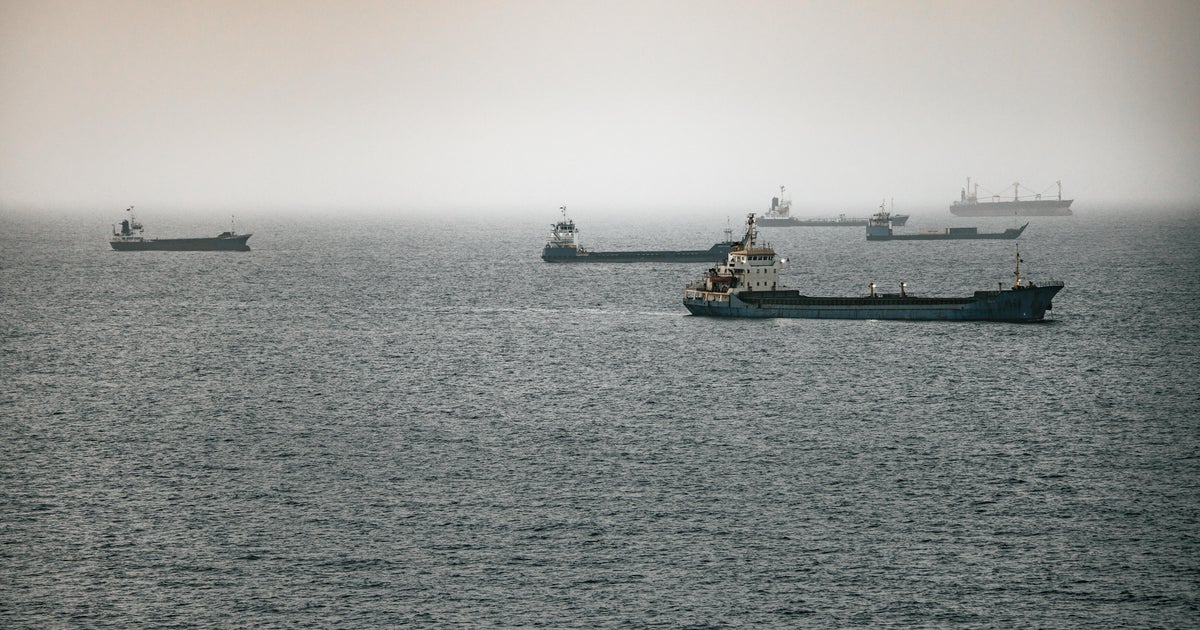
Hormuz traffic drops after Saturday strike on vessel
Strait of Hormuz traffic slowed over the weekend after a vessel was struck while transiting the waterway on Saturday, and a fresh exchange of strikes between the U.S. and Iran strained their preliminary deal to end the conflict.
In total, 29 commodity vessels crossed on Saturday and 12 transited on Sunday, according to data from the maritime tracking firm Kpler.
Sunday's figures marked a sharp decline from last week, when a memorandum of understanding signed by Tehran and Washington on June 15 boosted traffic through the strait to its highest level since the start of the Middle East war, reaching 70 crossings on Wednesday, according to Kpler.
Despite Iran's warning against using unapproved shipping lanes, vessels continued to take several routes through the waterway over the weekend.
After a vessel was struck while transiting the strait on Saturday morning, ships continued for several hours to use a southern corridor through Omani waters before traffic appeared to slow, according to the Kpler-owned website MarineTraffic.
The website tracks only vessels with active transponders, meaning additional ships may have crossed with their signals switched off.
More ships entered the Gulf over the weekend than departed, reversing a trend seen over the previous week, when efforts focused on evacuating seafarers stranded in the Gulf.
Iran said Monday it had held its first meeting with Oman to discuss managing the strait, as Washington warns it will not accept transit fees for using what it considers an international waterway.
AFP
Iran announces funeral schedule for Ali Khamenei, supreme leader killed at start of war
Iranian authorities have announced the schedule for the public farewell and funeral ceremonies for Ali Khamenei, Iran's supreme leader who was killed in airstrikes at the start of the war. Events are set to begin in Tehran on Saturday, July 4, according to Iranian state TV.
According to the governor of Tehran, the public farewell will start at 6 a.m. local at Tehran's Mosalla and continue through Sunday, with funeral prayers scheduled for the early hours of the second day.
The main funeral procession will take place on Monday, July 6, beginning on Damavand Street and passing through Imam Hossein Square, Enghelab Street, and Azadi Street before ending at Shahid Lashgari Street.
More than 1.7 million people in Iraq have registered to attend the funeral ceremonies in Iran.
Iraq sets Sept. 30 deadline for pro-Iran groups to disarm
Iraq's government has given pro-Iran armed groups in the country until Sept. 30 to disarm, its spokesman said at a press conference Monday.
The announcement comes ahead of a visit to the United States by new Prime Minister Ali al-Zaidi, with Washington exerting pressure on Baghdad to ensure the factions turn in their weapons.
Some of the groups targeted U.S. facilities in Iraq during the Middle East war, which was sparked by Israeli-American strikes against Iran in late February.
AFP
Qatar tells ship owners, operators to suspend sailing and marine activity immediately
Qatar has told owners and operators of ships to "suspend sailing and all marine activities" until further notice.
In a post on X Monday, Qatar's transport ministry said that "in the interest of public safety … all owners and users of marine vessels" should "temporarily suspend navigation and marine activities," without giving further details.
Israel says it destroyed "terrorist infrastructure" as Hezbollah decries ceasefire violation
Hezbollah accused Israel of ceasefire violations Monday as Israel said it had destroyed part of the group's "underground terrorist infrastructure" in a village in southern Lebanon.
A statement from Israeli Prime Minister Benjamin Netanyahu and Defense Minister Israel Ketz that was posted on X said Israel's military "just destroyed the underground terrorist infrastructure" of the Iranian-backed group in Majdal Zoun, in southern Lebanon.
"The tunnel, which was over 200 meters long and more than 25 meters deep, contained hundreds of weapons and several launch silos intended to target the territory of the State of Israel and its citizens," the statement said.
"Israel updated the United States and the American representative in Lebanon in advance regarding the destruction of the infrastructure," it continued.
The statement also said Israeli "commanders and fighters will remain in the security zone in southern Lebanon and will continue to destroy terrorist infrastructure, remove threats to northern communities, and safeguard the security of Israel's citizens."
Also on Monday, Hezbollah accused Israel of multiple violations of their fragile ceasefire, citing several strikes on southern Lebanese towns.
Stocks mixed, oil edges up after U.S.-Iran clashes
Stocks diverged and oil prices edged higher Monday after the U.S. and Iran exchanged fire over the weekend, underscoring the fragility of their tentative, initial agreement to end the war.
While a U.S. official said the two sides had agreed to halt their attacks and continue talks, the strikes disrupted shipping through the vital Strait of Hormuz over the weekend.
Oil prices, which last week fell to pre-war levels, ticked slightly back up on Monday.
"The impact on oil prices remains relatively contained," said Ipek Ozkardeskaya, senior analyst at Swissquote. "News that some key markets have even turned oversupplied thanks to the release of strategic reserves and oil tankers quietly making their way out of Hormuz has certainly helped investors react more moderately to the latest escalation."
In Europe, markets in London and Paris retreated, while Frankfurt edged up in midday deals. Asian stock markets fared better with Tokyo, Hong Kong and Shanghai all closing higher.
Investor confidence remained shaky, however, after last week saw markets whipsaw on growing concerns about a tech bubble fuelled by the AI boom.
CBS/AFP
Iran's senior negotiator denies new round of talks with U.S. scheduled
Iran's senior negotiator Kazem Gharibabadi denied on Monday that any new meetings between U.S. and Iranian teams had been scheduled, appearing to contradict an earlier social media post by President Trump.
"The holding of technical meetings of the working groups has not been scheduled for this week," Gharibabadi said, according to Iran's official state news agency IRNA.
Mr. Trump posted on his Truth Social platform early Monday that Iran had requested a meeting and that it would take place in Doha, Qatar, on Tuesday.
"Although consultations with Qatar, including regarding the follow-up on the implementation of the other party's commitments, are ongoing as usual, reports by some media outlets about the holding of technical talks of the working groups in Doha are not confirmed," said Gharibabadi.
"The first round of technical talks within the framework of the designated working groups will be held once conditions are in place and after agreement on the date and location. Consultations on this matter will continue through mediating countries."
Oman "committed" to not imposing "transit fees" in Strait of Hormuz
Oman is "committed" to not imposing "transit fees" in the Strait of Hormuz, the country's foreign minister told Monte Carlo International Radio on Monday.
Iran announced Monday that officials from Tehran and Muscat had met to discuss the future management of the waterway, as per the stipulations of the U.S.-Iran memorandum of understanding. The two nations have given mixed messages on tolls and routes through the vital waterway.
"We are not in favor of imposing transit fees," said Badr al-Busaidi. "This is stipulated — meaning it is internationally prohibited — and we are committed to these regulations."
"This is primarily a responsibility that falls entirely on Iran," he added, "to ensure that the strait and internationally approved shipping lanes are free from any hazards related to mines."
U.S., Iranian reps to meet in Doha for technical talks on Strait of Hormuz, deescalation, Iranian source tells Reuters
Representatives from the U.S. and Iran will meet Tuesday in Doha, Qatar, for a new round of technical talks, a senior Iranian source told the Reuters news agency on Monday.
The source said the meeting would focus on the management of shipping in the Strait of Hormuz, and how to deescalate the tension between the two countries.
President Trump posted on Truth Social not long before the Reuters report to say that Iran had requested another meeting and that it would take place in Doha on Tuesday, but he offered no further detail.
So far the two sides have sat down together only once — on June 21 in Switzerland — since Mr. Trump and his Iranian counterpart signed a memorandum of understanding between the countries. That MoU calls for the immediate reopening of the Strait of Hormuz and for 60 days of negotiations between the countries to hash out a wider deal to end the war.
Meeting between U.S. and Iran to take place Tuesday in Qatar, Trump says
Iran has asked for a meeting that will take place on Tuesday in Qatar, President Trump said Monday in a brief social media post, without giving any specifics.
"IRAN HAS REQUESTED A MEETING," the president wrote on his Truth Social platform. "IT WILL TAKE PLACE TOMORROW IN DOHA!"
Iran and the U.S. traded strikes over the weekend before both sides agreed to pause the fighting.
So far the only direct meeting between the two sides since Mr. Trump and his Iranian counterpart signed the memorandum of understanding was a day of talks that took place just over a week ago in Switzerland.
Iranian and Omani officials meet to discuss Strait of Hormuz management
Iranian and Omani officials have met for the first time to discuss management of the Strait of Hormuz, after appearing to disagree last week on tolls and routes through the vital waterway going forward.
Both countries have claimed sovereignty over the strait.
"During a trip to Muscat, the first meeting of the Joint Hormuz Committee was held," said Iranian Deputy Foreign Minister Kazem Gharibabadi on X, without saying when it happened.
"While reviewing the current issues related to the strait, we exchanged views on the future management," he added.
The future of the strait, which is a vital route for the world's supply of oil and gas, has been a major point of contention between the U.S. and Iran.
Iran has said it might impose "services fees" on ships passing through the channel, which the U.S. opposes, saying the strait is an international waterway.
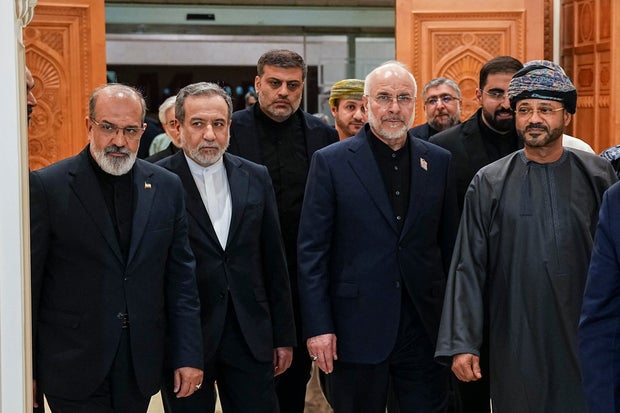
Oman has given mixed messages on its position. Last Tuesday it released a joint statement with Iran saying they were looking into the costs relating to managing the strait, then later said that no "passage fees" were planned and that a "temporary maritime corridor" would be opened in coordination with the UN.
Iran responded by saying the only authorized route was a corridor close to its coastline.
The U.S.-Iran memorandum of understanding says that "Iran will engage in a dialogue with the Sultanate of Oman to define the future administration and maritime services in the Strait of Hormuz, in consultation with other Persian Gulf littoral states, in accordance with applicable international law and the sovereign rights of the coastal states of the Strait of Hormuz."
The text says the strait is to be toll-free "for 60 days only" after the signing of the deal.
Iran says $6 billion in frozen assets to be released
Iran is set to receive $6bn in frozen assets currently being held in Qatar, according to the country's president.
In remarks reported by Iranian state media, Masoud Pezeshkian said: "Based on the plans made, $6 billion out of the total $12 billion of Iranian resources in Qatar will be released and returned to the country, and necessary follow-ups are being carried out."
"Efforts are ongoing to recover the remaining funds," he added.
The U.S. has not confirmed that any frozen assets have been released.
The unfreezing of Iran's sanctioned assets is one of the conditions in the U.S.-Iran memorandum of understanding.
Talks with Iran set to continue, U.S. official says
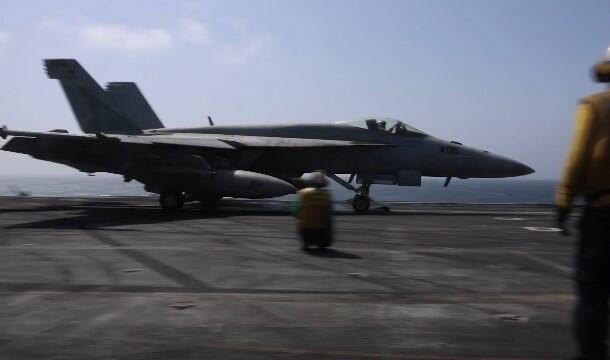
A U.S. official told CBS News talks with Iran were set to continue and both the U.S. and Iran will stand down after trading strikes over the weekend. Vessels will be allowed to move freely in the Strait of Hormuz, the official said.
Reuters news agency reported Monday that Iranian and American technical teams would meet in Doha in the following days, according to a source with knowledge of the talks. But Iran's deputy foreign minister said Monday that "No technical meetings of the working groups are planned for this week," according to state TV.
No Iranian missiles hit U.S. assets in Bahrain and Kuwait, official says
A U.S. official told CBS News on Sunday morning that no drones or missiles launched by Iran at U.S. assets in Bahrain and Kuwait last night reached their targets, with some shot down or intercepted.
The official said there were no U.S. wounded or impacts on U.S. assets.
Israel strikes south Lebanon despite framework agreement to end hostilities
Israel renewed its strikes on Lebanon on Sunday, Lebanese state media reported, two days after an agreement was signed by the two countries, which a Hezbollah lawmaker warned would lead to "internal conflict."
The strikes come a day after one person was killed in an Israeli strike on the south, according to Lebanon's health ministry, with the Israeli military saying it targeted Hezbollah members near its self-proclaimed "security zone", which reaches 10 kilometres (6 miles) into Lebanon.
Lebanon's state-run National News Agency reported several strikes on Sunday.
The Israeli army said a soldier "fell in combat" in southern Lebanon.
In a later statement, Israeli military chief Eyal Zamir approved plans for "continued operations in the security zone, in accordance with the ceasefire agreement".