Michigan adds Callery pear tree, 5 other plants to restricted or prohibited lists

Two invasive plants will be added in June to Michigan's list of prohibited species, with four others added to the restricted species list starting in 2028, state officials said.
One of the soon-to-be restricted plants is a flowering tree that has been commonly planted in urban areas – the Callery pear.
The Michigan Commission of Agriculture and Rural Development issued the order after its Wednesday meeting.
An invasive species is not native to a specific area and additionally has been known to cause harm or is likely to harm the existing environment. "Invasive species cause harm when they out-compete native species by reproducing and spreading rapidly in areas where they have no natural predators and change the balance of the ecosystems we rely on," state officials said.
If a species is prohibited, it is not widely seen in Michigan, and effective management or control techniques are considered not available. If a species is restricted, it has already been established, and usually, some measures can be used to control it.
Official state orders routinely update the list.
Under either a prohibition or a restriction, it is illegal to introduce, import, sell, or possess, with intent to distribute, the listed species.
Newly prohibited plants
As of June 19, the water hyacinth and water lettuce are under a prohibition order.
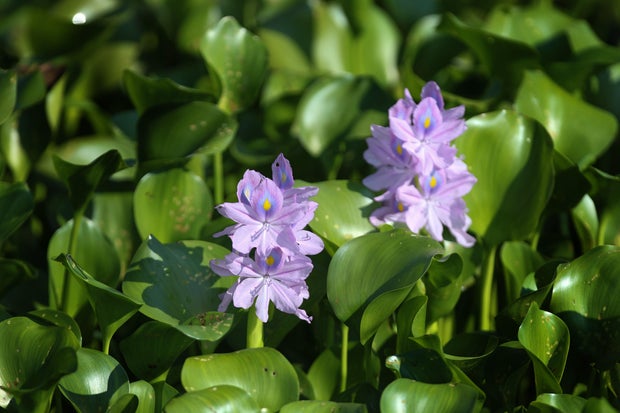
Water hyacinth (Eichhornia crassipes) is a free-floating perennial herb with lavender flowers. It can grow quickly in water bodies, crowding out native species, reducing water flow and interfering with hydroelectric power generation. It is native to the Amazon basin, but has been seen in about 25 states.
Water lettuce (Pistia stratiotes) is a free-floating perennial plant with a head-like appearance. It has small white flowers. The plant's original habitat is unknown, but it has spread into several states. The perennial collects into thick mats of plants that prevent the growth of other plants and can interfere with fish and other aquatic life.
Soon-to-be restricted plants
The plant species that will be listed as restricted as of Jan. 1, 2028, are common buckthorn, glossy buckthorn, Callery pear and Japanese barberry.
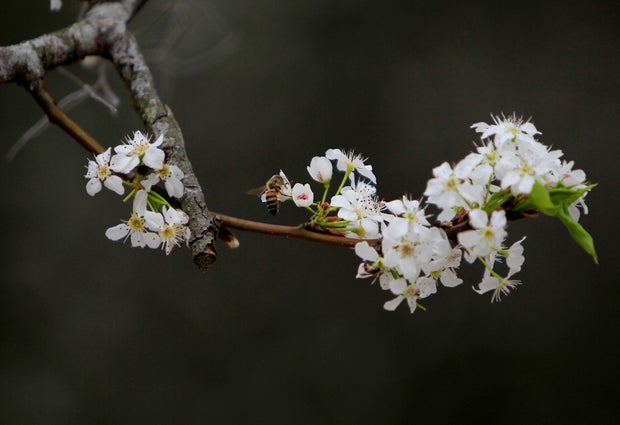
Callery pear, also known as Bradford pear or Cleveland pear, has been identified and mapped in Southeast Michigan. It is a flowering tree that was commonly planted as an ornamental street tree. But state officials say the tree can spread past its planted areas and crowd out native vegetation in restored wetlands and forest edges.


