Hikers' tip to Michigan DNR hotline leads to rescue of 27 stranded sturgeon
State wildlife officials, a tribal government and a power utility teamed up on three separate missions this month to save 27 lake sturgeon stranded by low water in a Michigan river channel, the Department of Natural Resources said.
The rescues began after hikers on the North Country Trail crossed the West Branch Ontonagon River downstream of Victoria Dam on Aug. 23 and spotted three sturgeon trapped in isolated pools. They reported the sighting to the DNR's Report All Poaching hotline, the same tip line the agency used earlier this year to investigate a sturgeon found dumped on a West Michigan road.
That stretch of river regularly runs dry or nearly dry for parts of the year, because Victoria Dam — a hydroelectric facility operated by Upper Peninsula Power Company — diverts water to generate power before it rejoins the river downstream.
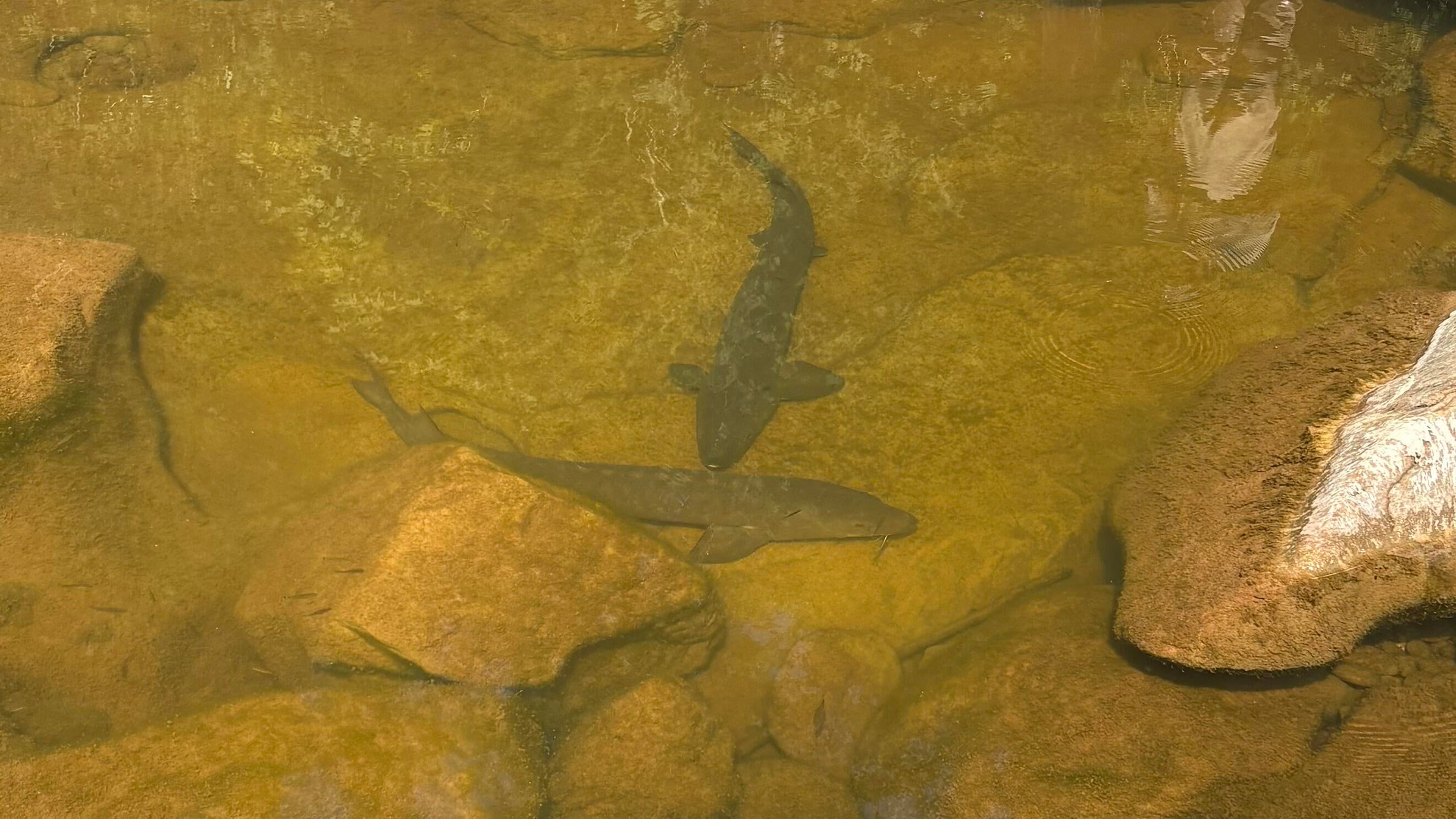
DNR fisheries technicians Kyle Urban and Jack Cole responded first, finding two sturgeon in an isolated pool and carrying them nearly a mile over rugged terrain to reach full flow. DNR staff then returned with help from the Keweenaw Bay Indian Community and UPPCO and found a larger group of sturgeon in a sediment-clouded pool; 10 more fish were moved to safety, though not all could be rescued on that trip. UPPCO released additional water into the channel within its permit limits to help the remaining fish while a third mission was planned.
On that final trip, crews with more staff and survey equipment recovered the last 15 sturgeon and confirmed none remained in the dewatered channel.
Lake sturgeon have been listed as a threatened species in Michigan since 1994, and the state has stocked them in the Ontonagon River since 1998. None of the rescued fish are believed to be older than 28, and the largest measured 55 inches.
"Projects like hydroelectric dams have environmental impacts," said Dave Caroffino, the DNR's Lake Superior basin coordinator. "We have to work collaboratively with partners like KBIC and UPPCO, as well as the public, to prevent and mitigate negative effects."
The DNR is now reviewing historical flow and temperature data for the area and considering expanded surveys to catch similar strandings earlier.


