Macomb County utility crews handling $11.5-million rehabilitation of sewer pipe

Critical rehabilitation work has begun on about 1 ½ miles of sanitary sewer pipe in Macomb County, Michigan, after utility crews found severe degradation in the line.
The goal is to prevent sinkholes and a collapse of the pipe, a 5-foot diameter conduit through which raw sewage flows from about 500,000 Macomb County residents. During 2016, officials said, a major sinkhole had occurred along 15 Mile Road in Fraser.
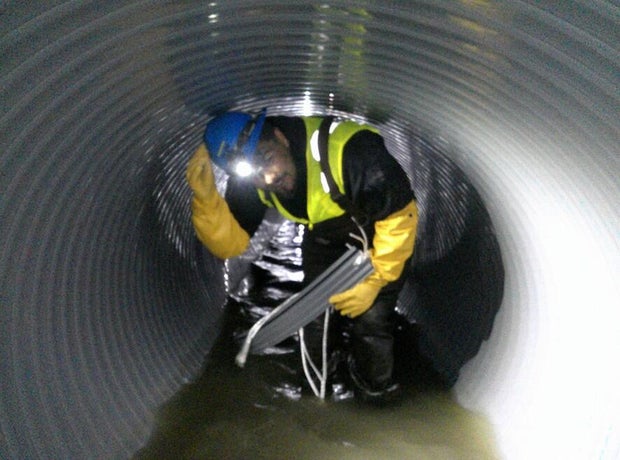
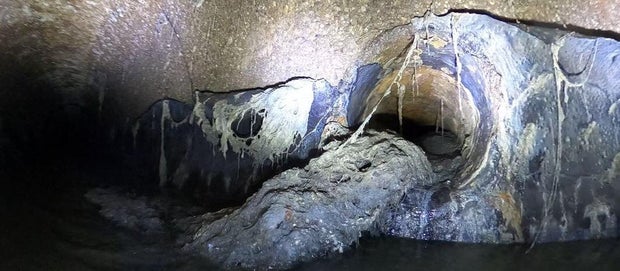
"We've lost an inch-and-a-half of the concrete pipe. It's just eaten away," said Macomb County Public Works Commissioner Candice S. Miller. "If you don't get ahead of it, you're going to have another sinkhole. That's what happens."
The 15 Mile Interceptor is part of the Macomb Interceptor Drain Drainage District, serving residents in 11 of Macomb County's communities. The steel-reinforced concrete pipe, known as the 15 Mile Interceptor, has experienced severe corrosion from sewer gas, the agency said. The gas, hydrogen sulfide, is created by turbulence of the sanitary sewage flow.
The Public Works Office determined last fall, based on underground drone images and artificial intelligence analysis of the video footage, that the pipe was in worse condition than expected.
The $11.5 million repair project includes lining of the pipe along its 15 Mile Road route, from two blocks east of Gratiot Avenue to just west of Groesbeck Highway in Clinton Township. The work includes 268 vertical feet of access hole risers.
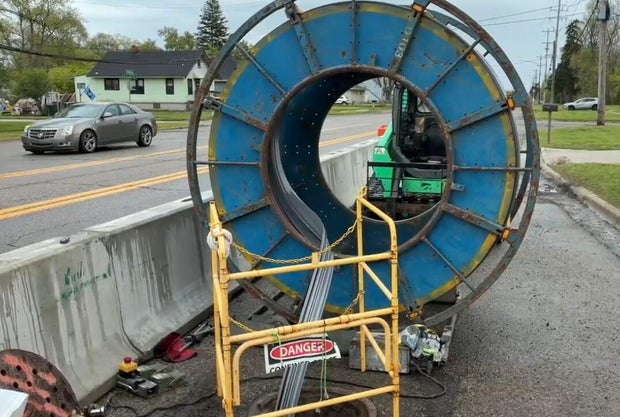
The rehabilitation involves placing a steel-ribbed, PVC spiral-bound liner along the inside wall of the pipe. The crews will feed the interlocking PVC strip from a spool and down an access hole. Crews will then guide the liner by hand to its intended location. This method was first used in Michigan in 2023.
"The flow inside the interceptor is low enough that the contractor's crew can work inside the pipe," the department said.
The project is scheduled to be completed by January, weather permitting, and is expected to last at least 50 years.
"Underground infrastructure may seem out of sight, but it can't be out of mind, and it certainly isn't in our department," Miller said. "There's nothing magical about this - you've got to make sure you inspect your underground and put together a capital improvement plan."
The work will not result in a sewer rate increase, officials said.


