Remains of invasive khapra beetle found among a passenger's items at Detroit Metro Airport

U.S. Customs and Border Protection agriculture specialists intercepted the remains of a khapra beetle from an incoming passenger at Detroit Metro Airport.
The species, customs officials said, is "the world's most invasive grain pest."
The incident was announced on Wednesday and involves a discovery made on April 18 among an incoming passenger's luggage. The traveler, who was returning from Lebanon, was referred for an agricultural inspection, where federal officials found a small bag of seeds intended for growing.
Customs officials seized the package. In the meantime, the traveler was given a warning to declare all imported agricultural goods and was released.
Upon closer inspection of the package, the customs agency said its agriculture specialists noticed what appeared to be an insect's discarded skin among the seeds. Detroit-based officials from the customs office and the U.S. Department of Agriculture believed the specimen might be from a khapra beetle, and sent out the material for testing.
"Differentiating khapra beetle from closely related species is difficult and entails microdissection," the report said.
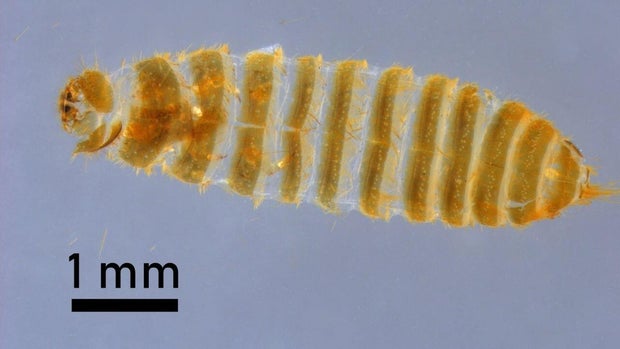
The identification was eventually made.
"Khapra beetle is one of the many significant threats we face at our borders," Area Port Director Fadia Pastilong said about the incident. "This particularly destructive insect is known to be extremely difficult to detect, which is why even intercepting a cast skin is a big deal."
Khapra beetle is among the insects that the USDA considers "quarantine significant," whether the pest is dead or alive. The reason is that beetle infestations within storage areas cause the agricultural products to become inedible. The beetle can go dormant and is also resistant to many pesticides.
As a result, any control efforts are expensive and need a long-term approach.
"We understand there may not be an explicit intent to bring a destructive pest into the U.S., but that is why it is absolutely essential for travelers to make an honest declaration of what they are bringing in," CBP Director of Field Operations Marty C. Raybon said. "This allows CBP personnel to examine items, if necessary, to determine if they are permissible and free of any potential threats."
A list of prohibited and restricted items for airline travel into the U.S. can be found on the CBP website.
Previous reports of unwelcome agricultural pests intercepted at Detroit Metro have included a medfly amid damaged fruit with a passenger from Albania, caper fruit fly larvae amid fresh flowers from Italy, and seeds of a prickly acacia plant confiscated from a passenger from Egypt.