First 2026 cases of epizootic hemorrhagic disease in deer are confirmed in these Michigan counties

The Michigan Department of Natural Resources confirms that it has detected epizootic hemorrhagic disease virus in free-ranging white-tailed deer from four southern Michigan counties.
The DNR's Wildlife Health Section and Michigan State University's Veterinary Diagnostic Laboratory confirmed the EHD virus in the first detections of 2026 from Branch, Ingham, Jackson and Lenawee counties.
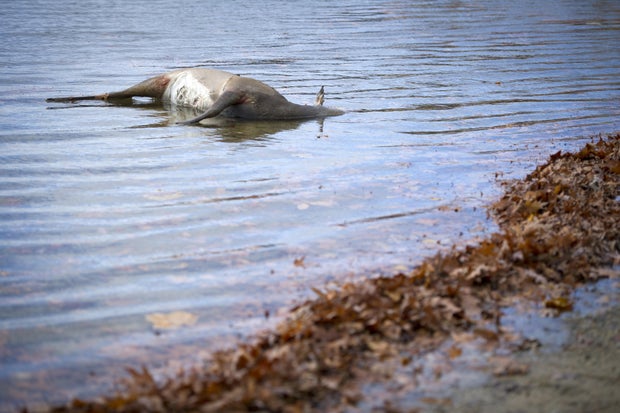
According to the DNR, EHD is a viral, sometimes fatal disease that periodically affects white-tailed deer in Michigan and is transmitted by the bite of an infected midge or other biting fly.
The virus can only be transmitted through the insect and cannot be transmitted from one deer to another, the DNR says.
The DNR said that there is no evidence that humans, household pets or other Michigan wildlife can contract the virus, and that venison harvested in areas affected by EHD is safe for consumption.
"We do not recommend consuming any animals that are visibly sick, but healthy deer harvested from areas where EHD has been present are still safe to eat," said Brent Rudolph, deer, elk and moose management specialist for the DNR Wildlife Division. "So far, we are seeing EHD on the landscape at levels similar to 2025."

EHD typically affects deer in late summer and early fall, but the first frost kills the midge population and stops disease transmission, according to the DNR.
The DNR suggests submitting a diseased wildlife report through its Eyes in the Field online system if a dead deer or an EHD-contracted deer was found.
While EHD can only be confirmed through laboratory testing, the DNR says its visible symptoms include appearing lethargic, disoriented, lame, or unresponsive; bloody discharge from the nose and mouth; a swollen or blue-tinged tongue and swelling of the eyelids and around the neck or head.
"The impacts of EHD on northern states seems to be changing. As weather in Michigan has become warmer and wetter, conditions have become more favorable to the EHD virus and the biting midges that carry it. A different strain of the virus has also emerged in this part of the country in the last few years, making for a more complex situation for deer herds to develop immunity, since immunity to one strain doesn't necessarily provide full immunity to other strains, " said Dr. Scott Larsen, veterinarian for the DNR Wildlife Division.


