Customs officials intercept cattle fever tick arriving at Detroit Metro Airport

A species of tick that was considered eradicated decades ago in the United States almost hitched a ride on leaves that arrived at Detroit Metro Airport, the U.S. Customs and Border Protection said.
Agriculture specialists from the CBP Detroit Field Office recently noticed and intercepted a Southern cattle tick nymph among leaves arriving from Vietnam.
Detroit Field Office director Marty C. Raybon made a reference to a "no tick zone" when reporting the recent incident.
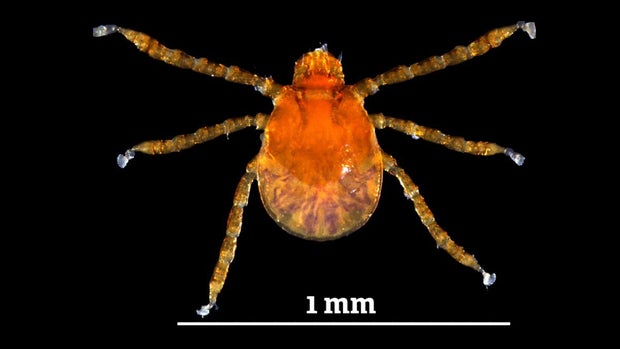
Cattle fever ticks, specifically Rhipicephalus (Boophilus) annulatus and R. (B.) microplus, are "the most dangerous cattle ectoparasites in the United States," the U.S. Department of Agriculture said.
These ticks will typically attach themselves to an animal's skin, mainly cattle, horses and white-tailed deer. The disease that they can spread among animals is commonly known as cattle fever; the USDA says it is a fatal disease that resulted in "enormous losses" to the U.S. cattle industry during the late 1800s and early 1900s.
A decades-long eradication campaign led to the elimination of the cattle fever ticks in most of the country by 1943.
Cattle fever ticks are now found only in the U.S., in parts of Texas along the Mexican border, and in some parts of Puerto Rico and the U.S. Virgin Islands. Federal and Texas agriculture officials inspect all livestock in the affected region of Texas at least once a year, certifying an animal as tick-free before it is shipped elsewhere.
A list of prohibited and restricted items for airline travel into the U.S. can be found on the CBP website.
Previous reports of unwelcome agricultural pests intercepted by Customs and Border Protection at Detroit Metro have included a medfly amid damaged fruit with a passenger from Albania, caper fruit fly larvae amid fresh flowers from Italy, and seeds of a prickly acacia plant confiscated from a passenger from Egypt.
The above video originally aired on February 9, 2026


