CPI rose at 2.7% annual rate in December as inflation remains sticky
The Consumer Price Index rose at an annual rate of 2.7% in the final month of 2025, in line with economists' forecasts and unchanged from the prior month, capping a year when many Americans felt squeezed by price pressures.
By the numbers
The CPI was expected to rise 2.6% on an annual basis last month, according to economists surveyed by financial data firm FactSet.
The CPI tracks the changes in a basket of goods and services typically bought by consumers, such as food and apparel.
Inflation last month matched November's 2.7% annual pace, signaling that prices didn't ease further at the end of the year.

So-called core inflation, or CPI data that excludes volatile food and energy prices, rose by 2.6% over the past 12 months, according to the Bureau of Labor Statistics. Economists polled by FactSet had predicted a 2.7% increase for that measure.
Food prices jumped 3.1% last month, accelerating from a 2.6% increase in November, and the highest since August.
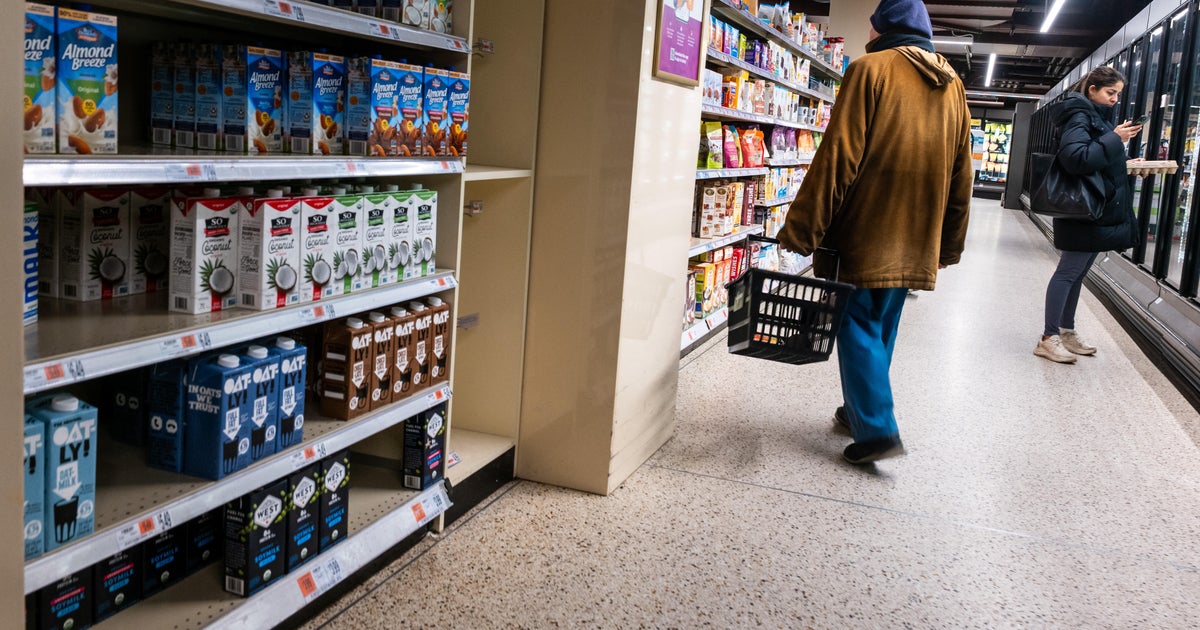
Groceries have remained a sticking point for Americans who have had to stretch their budget to afford basic staples.
For cash-strapped Americans, that could prove to be a pain point as we navigate a tricky economic backdrop.
Ground beef prices jumped 15.5% compared with a year earlier, while coffee surged 19.8% and bananas rose 5.9%. One food staple that saw a price cut was eggs, which fell 20.9% from a year ago.
The latest CPI reading closes out a year marked by economic resilience alongside lingering price pressures. Inflation stayed at or below 3% throughout 2025, well below the pandemic peak of 9.1% in June 2022.
Even so, the CPI climbed for several months in 2025 in the wake of the Trump administration's tariff announcements, although the levies didn't reignite inflation to the extent that some economists had predicted. The tariff impact was more muted on inflation than predicted because many retailers swallowed some tariff costs rather than passing them on directly to customers.
However, cooling inflation did not translate into price relief. Prices continued to rise, leaving many households feeling pinched and complicating efforts to save for retirement or buy a home.
"Inflation remains a challenge, with core PCE inflation holding above the Federal Reserve's 2% target for 55 months," noted Seema Shah, chief global strategist at investment firm Principal Asset Management, in a Tuesday email.
The Federal Reserve cut rates three times in the final months of 2025 to counter a cooling labor market, despite inflation remaining above the central bank's 2% target. Fed Chair Jerome Powell said labor-market headwinds outweighed the risk of renewed price pressures. The next Fed meeting is scheduled for Jan. 27 to 28.
What experts are saying
While inflation isn't accelerating, it remains above the Federal Reserve's target rate, analysts noted.
"By most accounts, inflation is unlikely to drop to the 2% target in 2026, although it may gravitate towards that target, assuming that Fed independence stays intact," said Carla Nunes, a Managing Director within Kroll's Financial Advisory Practice, in an email.
Analysts noted that core inflation was cooler than anticipated. The inflation measure, which excludes the food and energy categories, rose 0.2% in December, lower than the 0.3% increase expected by economists.
"Stepping back from the noise and volatility, core goods inflation appears to have peaked," Michael Pearce, chief U.S. economist at Oxford Economics, said in an email note.
While some measures signal inflation is cooling, Americans are still facing high costs in certain categories, including food and shelter.
"December's CPI report reinforces price pressure is edging higher across key consumer product categories that matter most to consumers," said Rob Holston, EY global and Americas consumer products leader, in an email.
Taken together, today's inflation data and the latest jobs report, which showed a lower unemployment rate, are likely to keep the Fed on track to hold rates steady at its meeting later this month, experts say.
Interest rate traders currently place a 95% likelihood that the central bank will keep rates in the 3.5% to 3.75% range when it meets in January, according to CME Group's Fed Watch Tool.