Christa Pike's attorneys say botched execution was "cruel," "torturous" and "predictable"
Attorneys for Tennessee death row inmate Christa Pike, who survived the state's attempt to execute her by lethal injection Wednesday night, are calling for her sentence to be commuted after she endured what they said was a "cruel," "torturous," and "predictable" botched execution.
"The state of Tennessee has shown us again that they are not capable of carrying out an execution consistent with basic human dignity," attorney Randy Spivey told reporters Thursday during a news conference. "Last night was not just inefficient, it was cruel, and it was torturous. It was also predictable."
Spivey and Steve Ferrell, another attorney representing Pike, said they informed the state months ago that Pike was likely to endure an agonizing death due to a blood condition and prior difficulties finding veins by other medical professionals.
"Christa has endured punishment greater than any other person in the history of the American death penalty," Spivey said. "The governor must commute Christa's sentence now."
Pike was in critical condition and receiving lifesaving medical care as of Thursday afternoon, but further details on her condition weren't readily available.
"We don't have a sense of her prognosis or much update on her health at the moment," Spivey said.
Pike's execution is currently on hold after Tennessee Gov. Bill Lee called off the remaining executions scheduled in the state for the rest of the year, ordering "a comprehensive, third-party review to determine exactly what occurred."
Pike was set to become the first woman executed in Tennessee in the last 200 years after the Supreme Court ruled earlier Wednesday that her execution could proceed. She was sentenced to death for the 1995 murder of her former classmate, Colleen Slemmer.
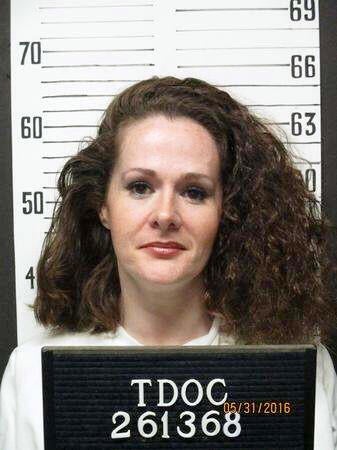
According to court records, Pike and Slemmer were students at the Job Corps Center in Knoxville when Pike, then 18, tortured and killed her, allegedly over comments Slemmer, 19, had made about her relationship. Pike is now 50.
Spivey said the execution team tried to establish an IV line for an hour on Wednesday night and that he personally counted the use of at least seven needles, one of which appeared to be bent when it was pulled out of Pike's arm during an unsuccessful attempt.
"It took an hour, despite the fact that Ms. Pike was not just cooperative, but was trying to help instruct the people placing the IV lines of where she could, of where they could find them," Spivey said. "Over and over again, said, 'Please try up on my shoulder higher. Please try here. Please try here. I think it will be OK.' And she thanked them when they were, when they were able to, at least when they thought they had established a line."
"Ms. Pike was kind, and she was, she was cooperative, and she was at peace the whole time," he added.
Both attorneys also noted that in previous court filings, Pike had not sought to stop or delay her execution, but that "she was seeking to have that execution performed humanely and as quickly and as painlessly as possible."
"I don't think we could ever know what it was like to go through that time, but I do know that that really was her biggest fear," Ferrell said. "It was not a fear of dying, it was a fear of a prolonged, painful, traumatic death."
Spivey said that throughout the ordeal, Pike's spiritual adviser was taken out of the room twice, even though she was clearly still alive, and the curtain covering the window from the viewing room was brought down.
"What the protocol calls for is a five-minute waiting period, where they check the vital signs," Spivey explained. "And so, between 8:25 and essentially 8:50, when we were finally told that the ambulance was on its way, I have no idea what happened in that room."
The attorneys also criticized the state's inability to quickly and efficiently communicate any issues during the execution attempt.
"It took approximately seven minutes, passage through six locked doors, to finally get me to a phone where I could alert Christa's legal team to what was happening," Spivey said, noting that happened some 40 minutes after Pike was given the first dose of chemicals.
Ferrell said the Tennessee Supreme Court had previously said it was troubled by the lack of telephone access in a prior botched execution, "but did absolutely nothing to remedy the problem."
Ferrell said when they finally got access to a phone, they reached out to the governor's office, which didn't respond, and then to the state Supreme Court using a special emergency number they were told to use, which went to voicemail. He said they were only able to get access to the court after filing their emergency motion electronically and then being emailed a cellphone number.
Neither attorney could say with certainty what would happen next for Pike. Both expressed hope that she could recover and be part of any litigation moving forward. They noted the state has no requirement to apply for a new execution date and that the electric chair is another option available to the state. But they reiterated their hope that Pike's sentence would be commuted after what she has gone through.
"She is in a class by herself as to what she has gone through," Spivey said. "She endured more than 20 years of solitary confinement, and a full attempt, a full lethal injection attempt. That is unprecedented. That is cruel. This should not happen again."


