This is why Michigan is seeing so much wildfire smoke
Let's be honest: This smoke is getting ridiculous, and we're all sick of it.
But why does this keep happening?
I have answers for this, some of which you won't like, but this is the reality of our situation.
Where is it coming from?
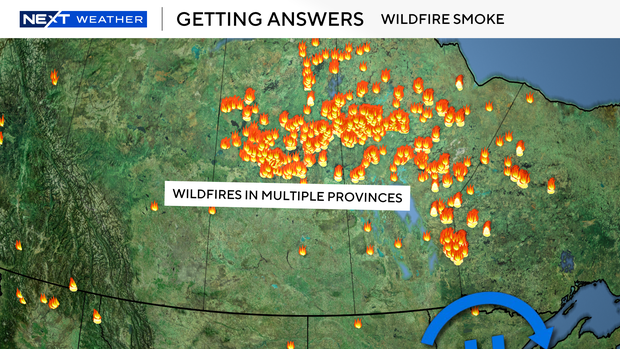
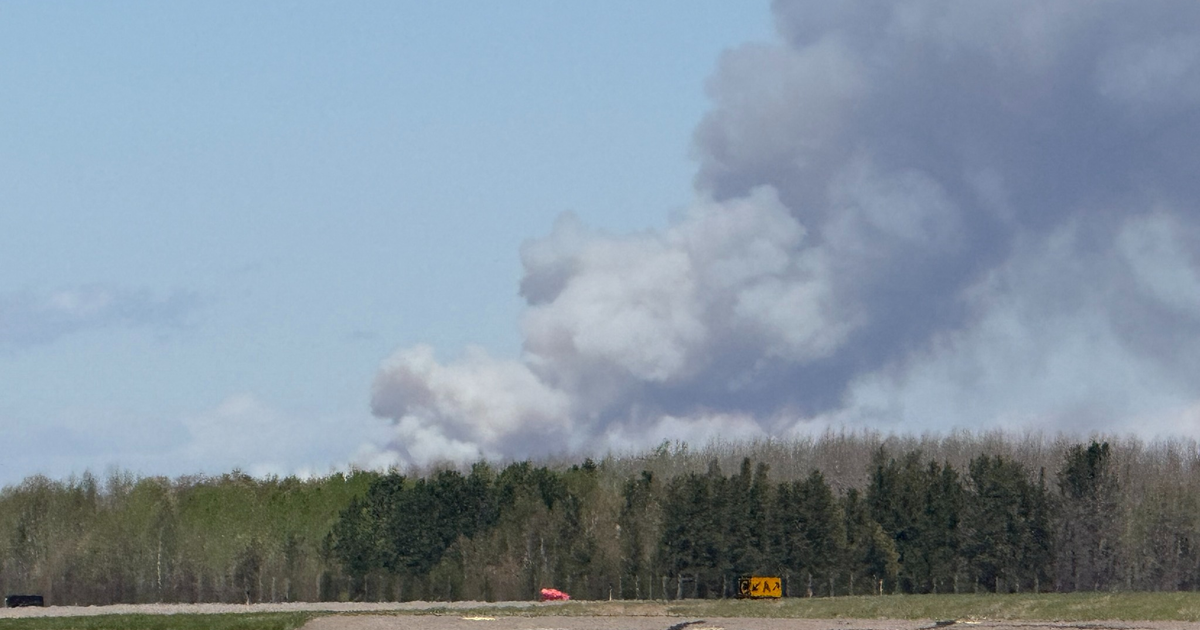
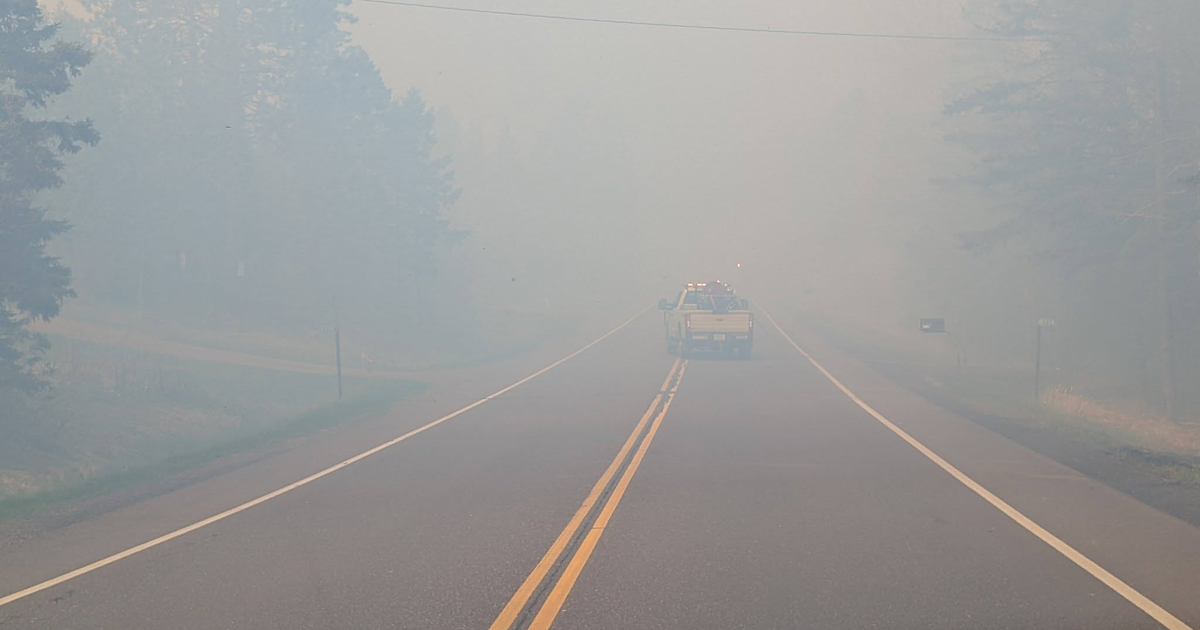
Wildfires continue to burn across a massive area in Canada, particularly in the provinces of Saskatchewan and Manitoba.
These fires throw a ton of smoke into the air.
What's important to know is that the atmosphere is like a fluid, so much so that meteorologists learn some fluid dynamics in school to understand how it "flows."
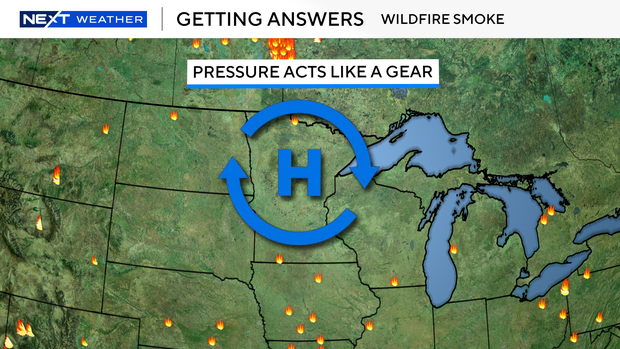
High pressure around us lately has brought beautiful weather to the region, minus the smoke, of course.
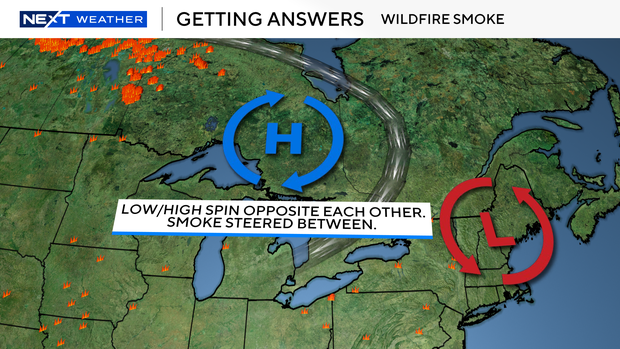
What's important to know about pressure is that it spins; High pressure clockwise and Low pressure counterclockwise. These can act like gears in conjunction with the atmosphere around the centers of each pressure, and sometimes with each other.
High pressure is not just at the surface, but extremely high in the air.
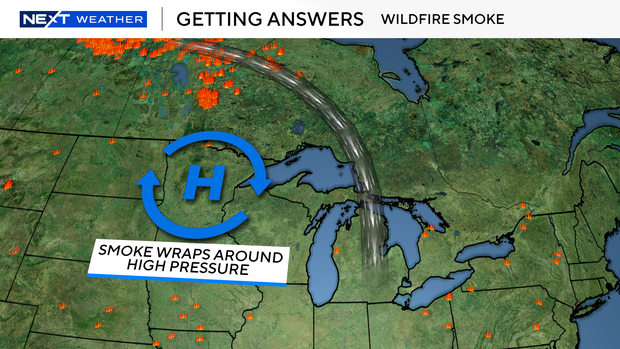
Smoke that is dense enough will flow around the area of pressure in the direction of its spin, in our case, clockwise around strong high pressure.
More recently, the high pressure has started moving east, and the area between a strong High and Low acts like a funnel. Each area of pressure now works like two gears spinning in conjunction with one another, and smoke funnels through that flowing air in between.
Unfortunately, this means it flows through Michigan, but once another area of low pressure moves in, it will bump our high out of the way. The atmosphere flows this way with an overall pattern of high, low, high, then low in a circulation around the globe.
OK, but why?
This is the hard part, and be warned, it involves some math.
As our climate warms, there are multiple issues that these areas of Canada experience on a larger scale.
Starting with the basics, temperatures in Saskatchewan have risen 11.8 degrees Fahrenheit to 20.4 degrees Fahrenheit above average.
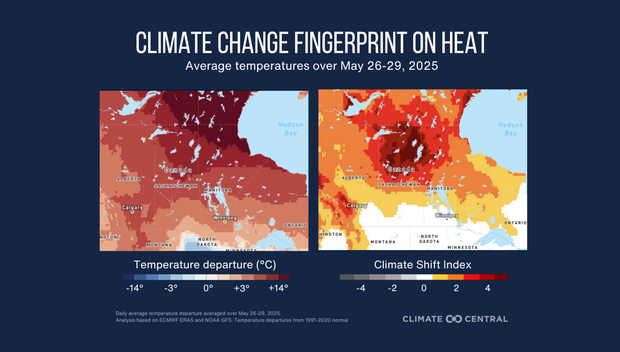
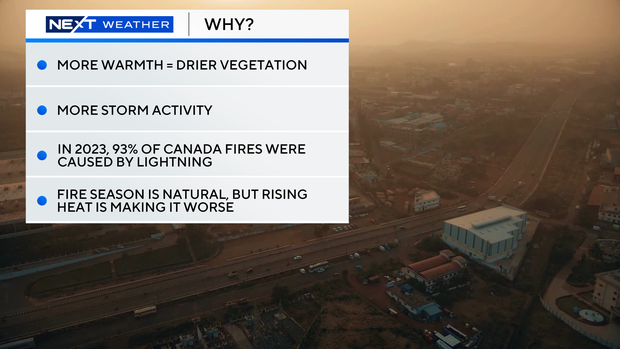
Manitoba has risen 22 to 24.3 degrees Fahrenheit above average. Intense heat is a double-edged sword, causing both dry vegetation and heightened storm issues. For example, 93% of fires in Canada in 2023 (arguably one of the worst years) were caused by lightning strikes.
According to Climate Central, which tracks temperature and climate conditions around the globe, Canada is warming at a rate double that of the global rate.
Another issue is the population and the area affected. These fires aren't like those in the U.S., where access can sometimes be easier to fight.
Saskatchewan and Manitoba account for just over 6% of the entire population of Canada, and the fire locations are far less than that.
Most of Canada is a massive forest, and with a large fire in the middle with nothing but air access, it's extremely difficult to both manage, mitigate, and fight a fire. Fires in dry forest can spread up to 14 miles per hour, and in the middle of nowhere, that's no time.
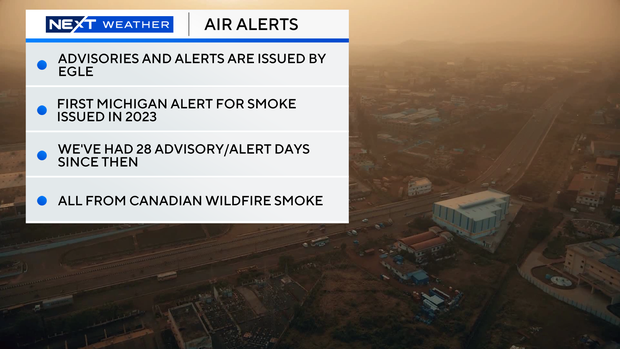
In Michigan, we had our first alert for air quality due to smoke in 2023. Since then, we have had 28 days (including Tuesday, Aug. 5) of advisory or alert-level air quality due to wildfire smoke.
So, how bad is the smoke?
I'll be honest, it's pretty nasty.
Several times over the past week, we've been in the top five for worst air quality on the planet, according to IQAir. One of the main levels we measure is called PM2.5, particulate matter that measures with a diameter of less than 2.5 micrometers.
Wildfire smoke, exhaust, etc., fit into this measurement. Depending on the level in the atmosphere, it can be the equivalent of smoking several cigarettes a day with continuous exposure.
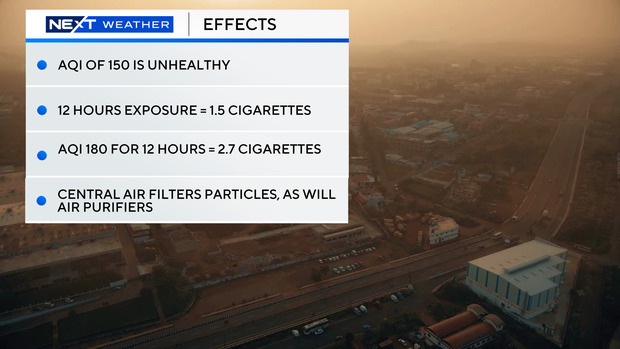
For example, an AQI of 150, which is what we've been around for a few days, would mean a continuous and unfiltered exposure would equal 1.5 cigarettes in 12 hours.
The good news is that most HVAC systems have filters, and air purifiers do as well. However, it gets more complicated than that.
The bottom line is that if you are someone with respiratory concerns, you want to limit time outdoors at these levels, and especially during strenuous work.
Now what happens?
That doesn't have an easy answer.
This may become an issue each wildfire season as our climate warms. Remember, fire season is perfectly normal.
But what isn't normal is the rate of occurrence, and sadly, in areas with little to no access for mitigation and fire-fighting. This is a story and concern that we will continue to track.
The better the winter, the better the brush, and the lower the fire risk overall for those areas.