Michigan lawsuit alleges Apple has failed to "adequately protect" people from being stalked with AirTags
A lawsuit filed on behalf of two Southeast Michigan residents alleges that Apple has failed to "adequately protect" people from being stalked with AirTags.
The court document was filed in the U.S. District Court for the Eastern District of Michigan on Monday and lists a Madison Heights resident and a Birmingham resident as the plaintiffs. It claims that when Apple released the product in April 2021, the company knew that "it could–and would–be purchased" by individuals to track and abuse others.
An AirTag is an accessory designed to help keep track of and find items with Apple's Find My app, the company said in a 2021 news release introducing the product. It can be attached to a handbag, keys, backpack or other items.
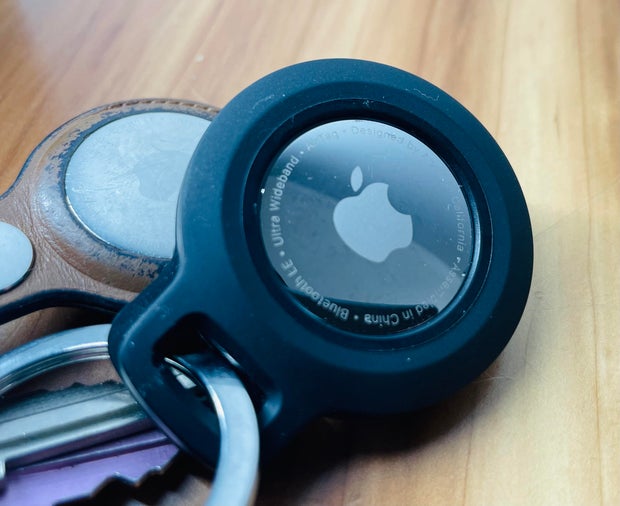
The lawsuit says Apple also knew in 2021, when releasing the product, that "adequate safeguards" had not yet been implemented. It went on to say that the company allegedly received over 40,000 stalking reports between April 2021 and April 2024. CBS News Detroit has not yet been able to independently verify the claim.
According to the court document, the Birmingham resident, identified as Jane Doe, has been "repeatedly stalked and tracked by a former romantic partner using concealed tracking devices, including at least one Apple AirTag" since at least July 2026. Their "stalker repeatedly appeared at her locations uninvited, demonstrating real-time knowledge of her movements," the lawsuit said.
The Madison Heights resident in 2023 moved into a new apartment after leaving an abusive relationship of four years, according to the lawsuit. On the day they moved in, their former romantic partner appeared at the building and was "banging" on their apartment door before leaving. The court document said that, around two weeks later, the resident discovered an AirTag concealed under the backseat of their car that was placed by their former partner without their knowledge or consent.
Location data and history are never stored on the AirTag, and the data is "encrypted every step of the way," according to Apple's website. The company also says the product is designed to "discourage unwanted tracking."
"If someone else's AirTag finds its way into your stuff, your iPhone or Android phone will notice it's traveling with you and send you an alert," Apple's website says. "If you still havenʼt found it after a while, the AirTag will start playing a sound letting you know it's there."
According to the lawsuit, Apple has violated the Michigan Consumer Protection Act by "representing to the public that AirTags included adequate safeguards against stalking and unwanted tracking" while continuing to sell the devices despite knowing they could be used for stalking.
The Michigan residents are asking the court to prevent Apple from continuing "unlawful or unfair practices with respect to the design, manufacture, and release into the market of its AirTags."
CBS News Detroit has reached out to Apple for comment, but has yet to hear back.


