More than 75% of homes across the U.S. are unaffordable, study finds
Homeownership is increasingly out of reach for most U.S. families as the gap between people's earnings and home prices widens, according to a new analysis.
More than 75% of homes across the country are unaffordable for the typical household, Bankrate said in a report. The personal finance firm defines a home as affordable if the annual housing costs do not exceed 30% of a household's income.
"Only a sliver of the housing market is affordable to the typical household," Bankrate data analyst Alex Gailey told CBS News. "That's when homeownership starts to feel less like a common middle-class milestone and more like a luxury."
Experts emphasize that the ability to buy a home, long viewed as a pillar of the American Dream, is critical for building wealth. But high home prices, driven in part by a nationwide shortage of affordable housing, have made that difficult for many Americans.
"It's left the average American household with far fewer homes than they can afford, and we haven't been building at the rate we should be," Gailey said.
Figures from the National Association of Realtors show that only 24% of housing sales last year were by first-time homebuyers — down from 50% in 2010. The U.S. needs 4.7 million housing units to keep up with demand, according to a July analysis from Zillow, an online real estate marketplace.
In 2024 (the latest date for which figures are available), the median household income in the U.S. after adjusting for inflation was nearly $84,000, according to Census data. That is far less than the $113,000 in annual income needed to buy a typical home, which now costs around $435,000, according to Bankrate.
In the country's priciest cities, such as New York, San Francisco and Seattle, households must earn at least $200,000 a year to afford the median-priced home.
As of 2025, about 65% of U.S. households owned their own home, down from a peak of more than 69% in 2004, according to data from the Federal Reserve Bank of St. Louis.
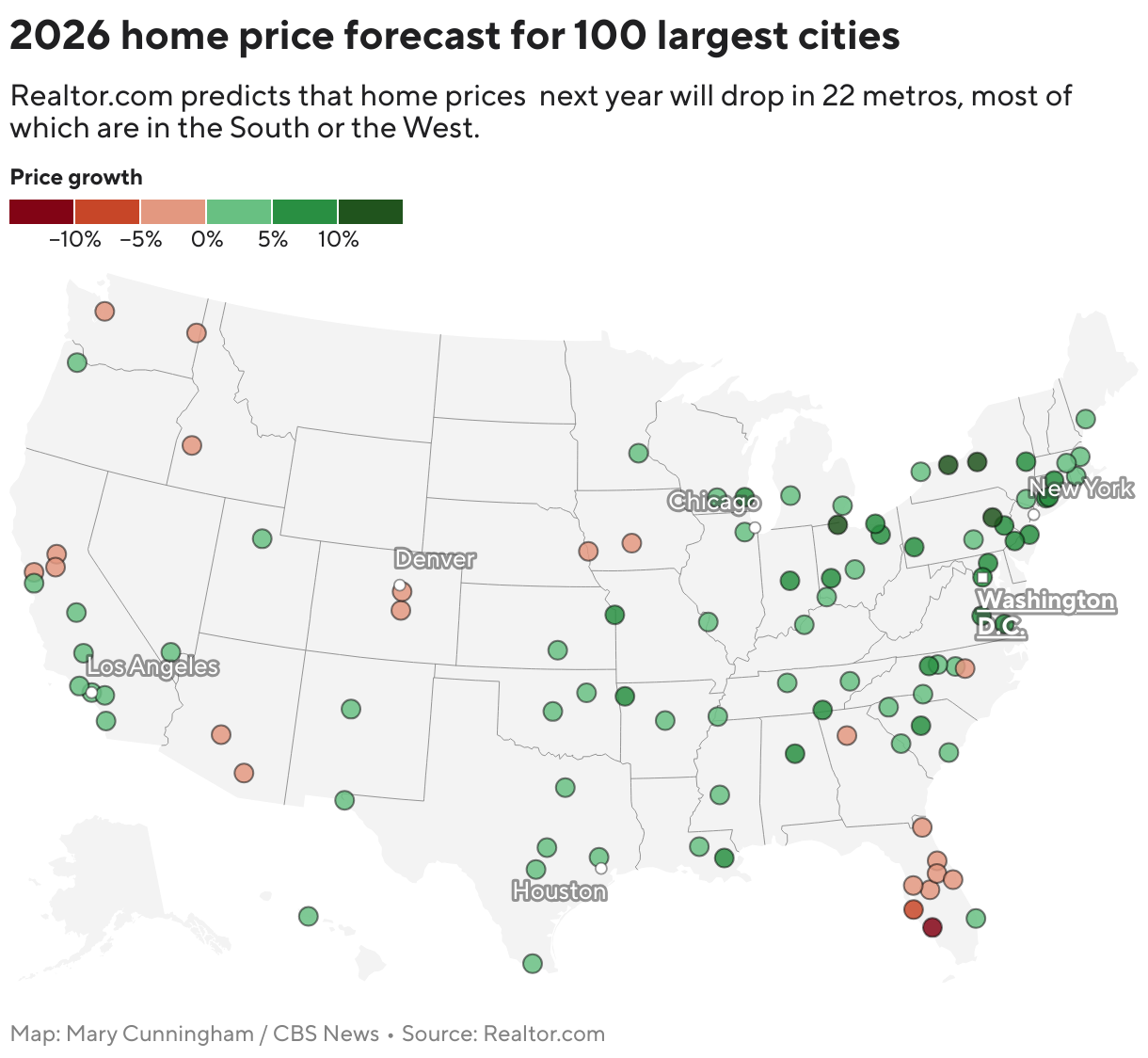
By contrast, in some parts of the South and West, where home construction has picked up in some markets, there are glimmers of hope, Gailey said, pointing to stronger tax incentives and looser permitting requirements as policies that could boost construction.
"Those regions have brighter outlooks than the Northeast and Midwest, where building has lagged, and inventory levels remain well below pre-pandemic norms," she said.
Aspiring homebuyers could see some relief in 2026. Mortgage rates are expected to dip to an average of 6.3% next year, a slight drop from the 6.6% average in 2025, according to Realtor.com.