Challenge to Colorado School of Mines students brings answers to big problems with wildfire mitigation

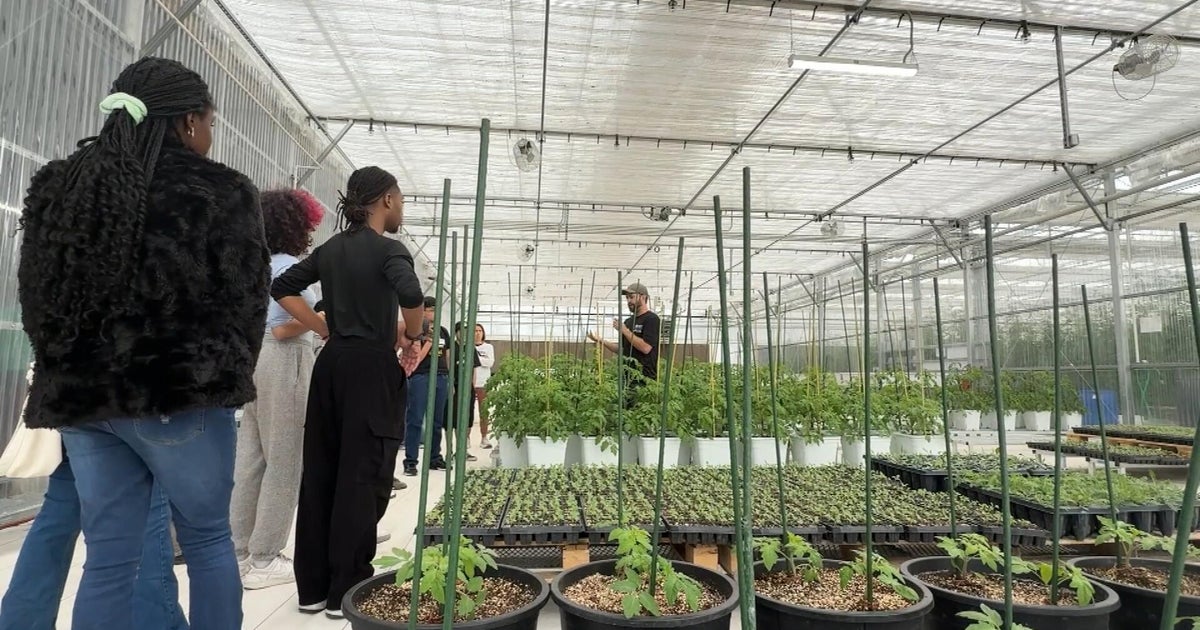
Young minds may have come up with some answers for one of Colorado's rising issues -- what to do with all that biomass from wildfire mitigation efforts?
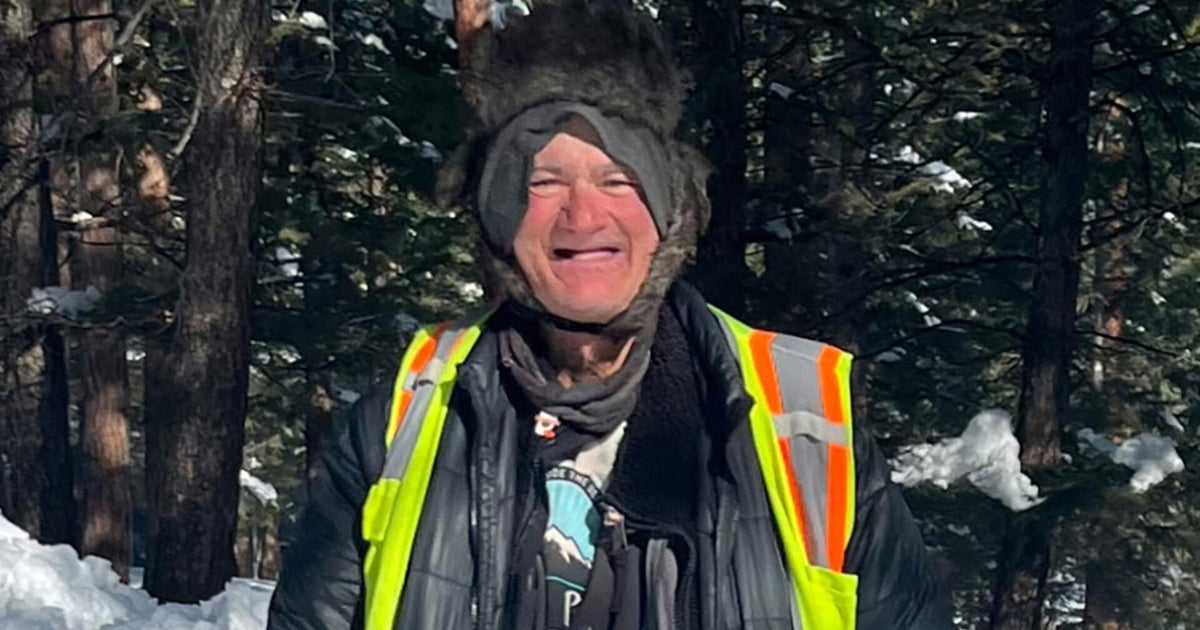
"We create a ton of (tree) material and there are ways of dealing with the material, just not great ways," said Jason Puffett, Division Chief of Wildland Fire for Evergreen Fire Rescue.
Puffett and Evergreen Fire went to the Colorado School of Mines with a question: who has some ideas on what to do with it?
"The creative solutions that we get to problems that we solve are just awesome," said Dr. Lia Franklin, acting director for the McNeil Center for Entrepreneurship and Innovation at Mines.
Some answers may have been found in the minds of some of the youngest students at Mines.
"This is like materials sustainability, which I really am interested in and I like that," said freshman Hannah Rodda.
Rodda, 19, is from Lake Forest, California, in fire-prone Orange County. She says she knows fire "a little bit too well."
Rodda is the winner of what became the Biomass Challenge for her idea of what to do with pine tree needles.
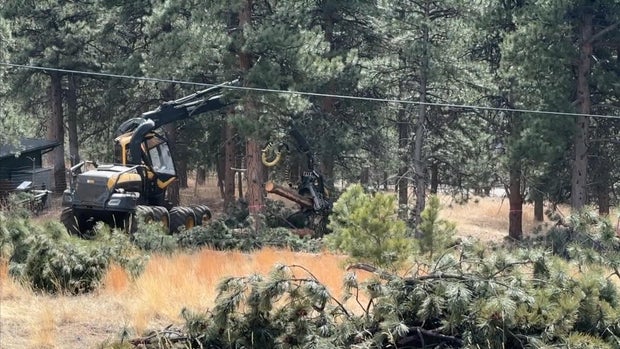
Needles are a pesky problem in mitigation, says Puffett.
"The components within pine needles are hard to deal with. It's difficult to burn. We can't really use or recycle them. So generally, they go to the landfill."
That is simply impractical for Evergreen and other communities around the country trying to do fire mitigation.
"This is a national problem. This is a global problem. We're all dealing with these challenges," Puffett explained.
Evergreen has been forced to skip the burning of slash piles this winter because of a lack of snow. That leaves wood, slash, chipped wood and pine needles waiting. Other students in the challenge came up with ideas for some of that material, including the creation of bricks that turn out to be fire resistant.
Hannah's idea was to transform needles into what's called biochar carbon. She took a small number of needles and places them into a nitrogen tube furnace that chars but does not burn the needles, because the furnace is an oxygen-free device. She hoped to turn the needles to carbon. Carbon black is mixed with a binder solution to create conductive ink used to print electronic circuitry. The question was, could she make a carbon from pine needles with the same properties?
"So carbon black and pine biochar, they're both made of carbon and once the pine biochar is in a nitrogen furnace, just completely biocharred, they have the same elements basically," explained Hannah.
The needles emerge from the furnace and crumble. She used the powder to create the pine biochar and ink, but needed to test conductivity. That was the aha! moment.
"I got a battery and an LED and I put the ink on top and then the LED lit up and I was like, 'No way that actually works, that's awesome,'" she exclaimed.
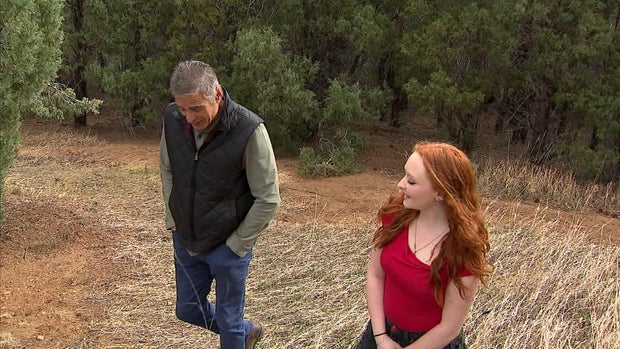
"I was just like now it's not theoretical, now I have actual readings and I can prove that this works."
There's more refinement and testing ahead, but it looks like the idea can be scaled up and marketed. Hannah will have the rights.
"Once they win, that's not the end of it. You've got this great idea, how can we help coach you and support you to get this to market," said Dr. Franklin.
It looks like her process has the potential to be a lot cheaper than current methods of producing conductive carbon black. Maybe about a sixth of the current cost.
"A solution is a great idea, but if there's no economic value to it and if it's not sustainable, it won't live," said Dr. Franklin. She says the school is thinking of bringing the challenge back next year with a different twist to continue to find solutions.