Why Do People Put Themselves In Danger?
DENVER (CBS4) - It's been one of the rarely considered factors in Avalanche deaths until recently.
"It's human behavior, you know we don't have avalanche accidents unless there's a person involved," Colorado Avalanche Information Center forecaster Spencer Logan said.
More people have died from avalanches in Colorado than any other state. There were 119 before this season. Four since it started. That's due in part to access for the population base. Alaska has had over 80. Utah, Montana, Wyoming and Washington follow.
Logan cites the work of Utah-based avalanche researcher Ian McCammon. McCammon has identified what he calls "heuristic traps." Those he identifies as what most of us call simple rules of thumb.
McCammon reviewed avalanche accidents involving 41 avalanche-aware victims. In a paper presented at the International Snow Science Workshop in British Columbia, he found 83 percent were due to "decision-making errors, rather than the subtleties of the terrain or snowpack."
"Humans are good at making quick decisions," Logan said.
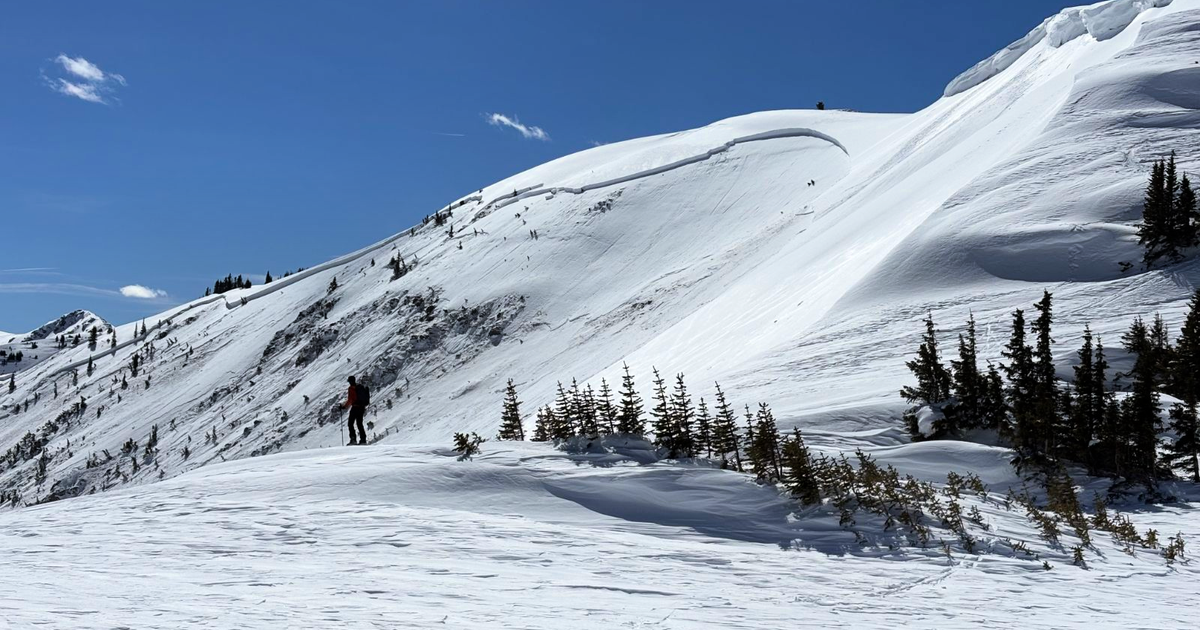
It's those quick decisions that can put us in trouble around slopes of 30 degrees to 45 degrees where avalanches are most likely. Logan said they are trying to re-educate even people with avalanche knowledge about the need to constantly re-evaluate their situation.
We rely on quick decisions to get through every day. We need them for things like driving. Advertisers know we make them. McCammon cites the very existence of the advertising industry as being somewhat dependent on them.
"When we think about that decision, what we're often doing is justifying that decision after we've already made it," Logan said. "We're looking for the information that reinforces the decision that we're already made."
Like the decision to buy a certain product after seeing an ad. Or the decision to risk a dangerous slope we've travelled to in the mountains.
"We're more focused on the goal that we've already decided and tend to ignore some evidence that may tell us that goal is not a good choice that day."
That may include wind loading, recent snow or signs of recent avalanche -- all danger signs.
Logan said there is also danger in groups of three, four, or five.
"This can become a bigger problem when you're with a larger group. More people tend to reinforce that goal, because the person who's thinking otherwise doesn't want to be the guy who says common' guys, I'm scared, I don't want to go."
Even knowledge can endanger.
"Sometimes, there's something that we call the expert halo," Logan said.
The experts, he said, need to learn the dangers of how decisions are made. That may be the future of reducing the death count.
"You're still going to make decisions the same way, but if you're more aware of the process, you can set up check points."
Additional Resources
• Go to a special section of the Avaluator Web site for trip planning and one for slope assessment. There are obvious clues for avalanche danger on the site.
• The obvious clues grew out of Ian McCammon's research. More information can be found about McCammon's research on the ScienceDirect Web site.
• Get an Avalanche Accident Prevention Card available on the Canadian Avalanche Centre's Web site.
-- Written by Alan Gionet