Wet Spring Predicted For Colorado, Flood Concern To Ramp Up In April
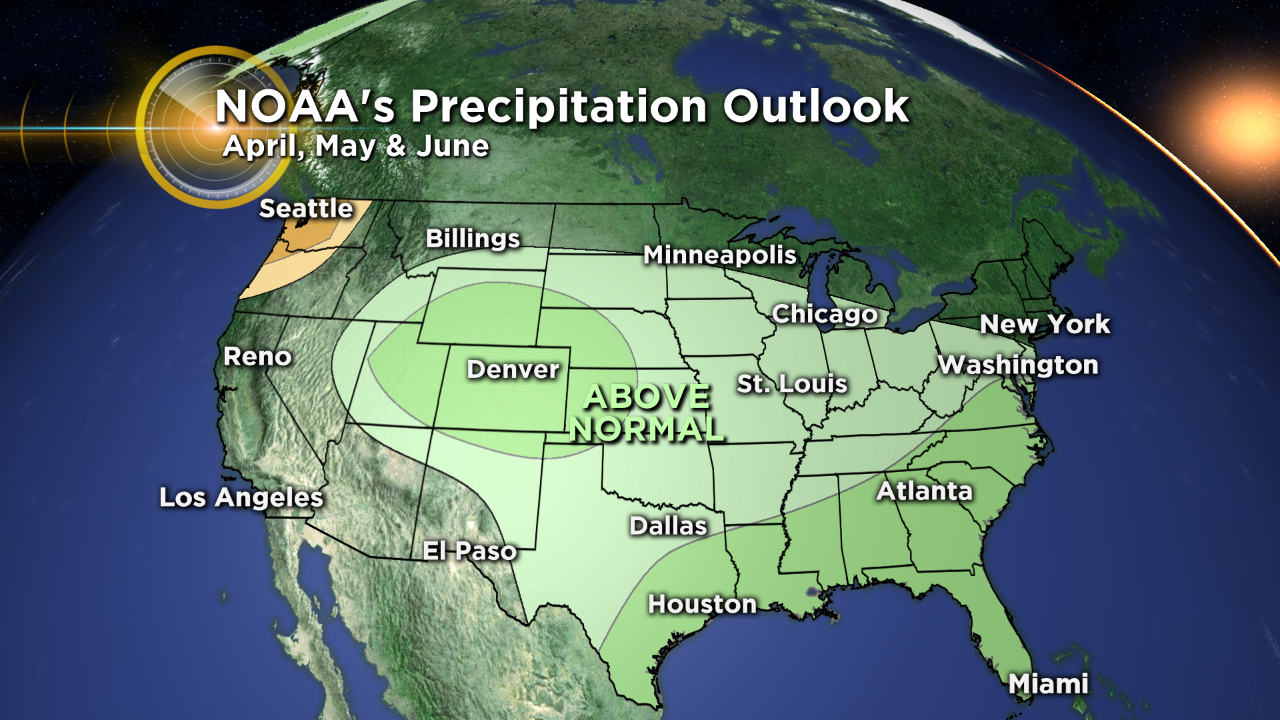
DENVER (CBS4) - The Climate Prediction Center issued their spring outlook for the United States this week for the period covering April, May and June. The outlook calls for most of the country to be wetter-than-normal over the next several weeks.
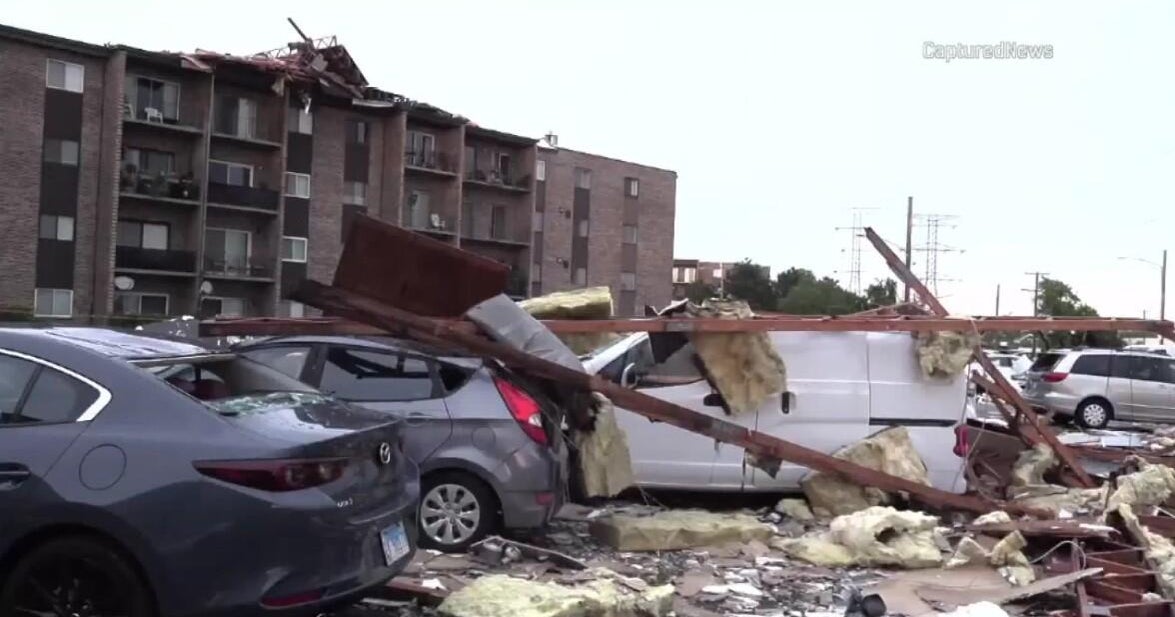
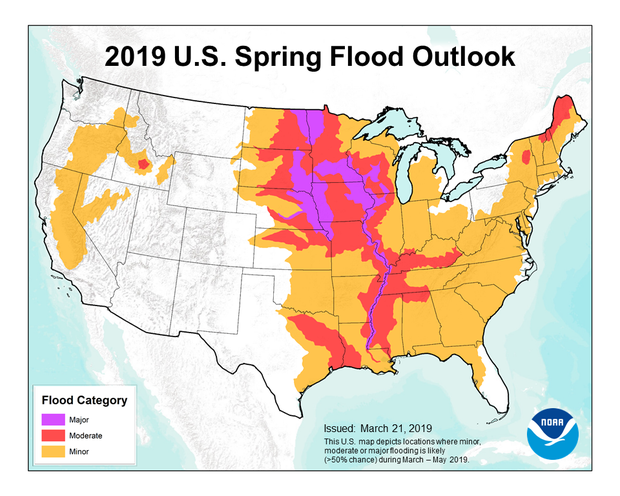
The report also includes a dire flood outlook for the center of the nation, including places being hit so hard right now, such as Nebraska, Iowa, Wisconsin and Missouri.
COLORADO PRECIPITATION OUTLOOK
With a forecast for El Niño conditions to continue this spring the outlook calls for above normal precipitation in Colorado. We've been in a very active storm track since the middle of February with a consistent parade of storms. Long-range models suggest this trend will continue.
Keep in mind this outlook is predicting a period of 90 days. We will definitely see dry spells in between storms. Above normal precipitation doesn't mean it will be wet the entire time. To give you an extreme example it could be bone dry for 80 days with 10 unusually wet ones thrown in, making the 90-day total above normal
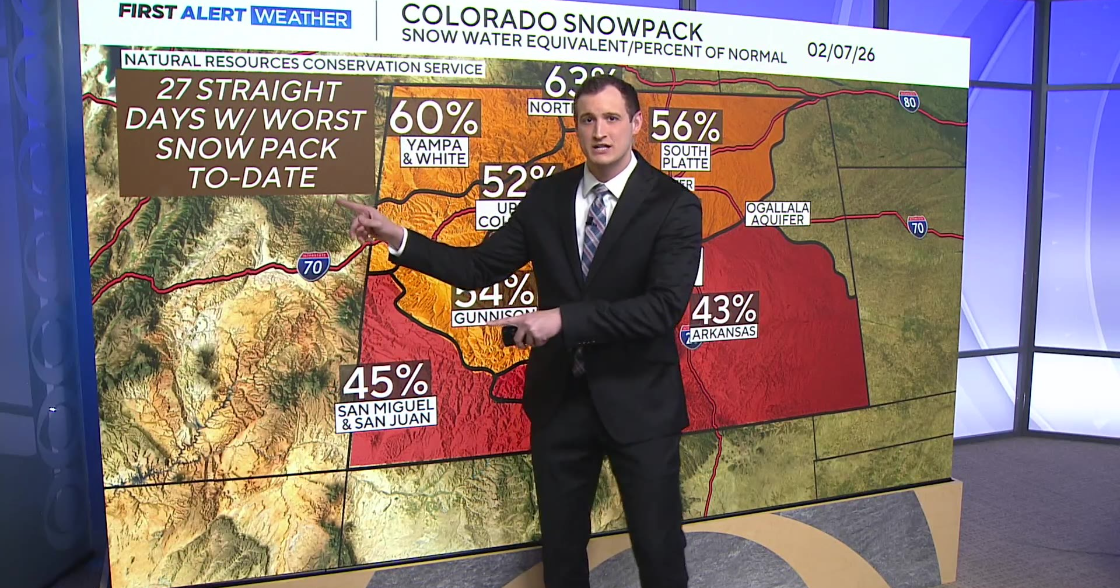
Because there is a large amount of water locked up in the deep mountain snowpack the potential for spring flooding is already higher than normal. Add in the prediction for a wet spring and the concern only increases, in particular, as we move into mid and late April when warmer temperatures typically arrive.

COLORADO TEMPERATURE OUTLOOK
NOAA's outlook for temperatures indicate the potential for below normal weather in the center of the nation, which includes the eastern half of Colorado. This is a major wildcard when talking about the potential for flooding because a slow warming trend means a slower melt of mountain snowpack. However it will only take a few really warm days to accelerate snow melt.
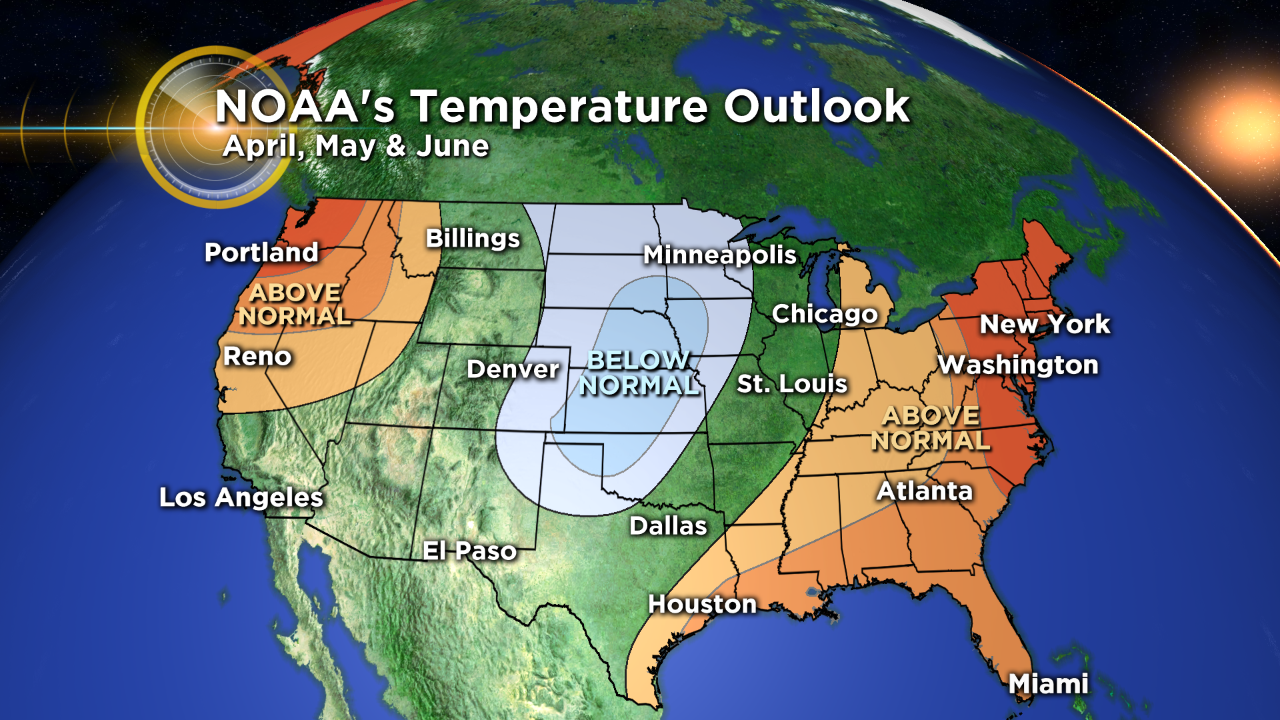
In case you're wondering why the edges of the country are predicted to be warmer-than-normal with cooler weather in the middle, it may have to do with all the current flooding and the prediction for a lot more. Excessive flooding means there will be a lot of evaporation taking place over the next several weeks in the middle of the country, and evaporation is a cooling process for the atmosphere.
The energy required for evaporation is then locked inside the water vapor as latent heat and can later be released to the atmosphere during condensation, or the process of forming clouds. It's almost a double-edged sword because increased evaporation can lead to increased showers and thunderstorms, and that would only aggravate the flooding issues.