University of Colorado experts predict the state's economy level for the year ahead

The much-watched predictions for Colorado's economy from CU's Leeds School of Business are out and the answer is… staying the course overall. The 61st annual Business Economic Outlook is an assessment of the health of Colorado's economy as we look to another year.
"Continued slow growth is the message," said Richard Wobbekind, senior economist for The University of Colorado's Leeds School of Business. It predicts 17,500 new jobs next year, which, in a state with over three million current jobs, is not much of a blip.
But it's not a decline either. And it's slightly more than 2025, which was beset with inconsistent tariffs, the longest government shutdown in history, and tougher immigration policies.
"This country has done a lot with innovation, and immigrants have had a big role in the innovation. You can think of Silicon Valley," said Wobbekind. Tougher immigration policies are likely to affect construction, agriculture, and experts in science, technology, engineering, and math known as STEM.
The bad news is that information, manufacturing, and professional and business services, which include high tech, are trending down in employment. Colorado's upside in 2026 could come in healthcare, local government, including K-12 education jobs, and "other services," which includes small businesses like shops.
"There's just a lot of small, startup companies that are adding people," said Wobbekind.
It is not like the go-go years between 2008 and 2023 in which, relative to other states, Colorado was often in the top five in big economic categories like population, income, and employment growth. Now the state is middle of the pack. The high-tech professional and business services category has bled jobs all over the country, with AI pushing part of it. "We were going gangbusters, and we were oversharing in the growth there. Now we're oversharing in the job losses there as they have rightsized more," said Wobbekind.

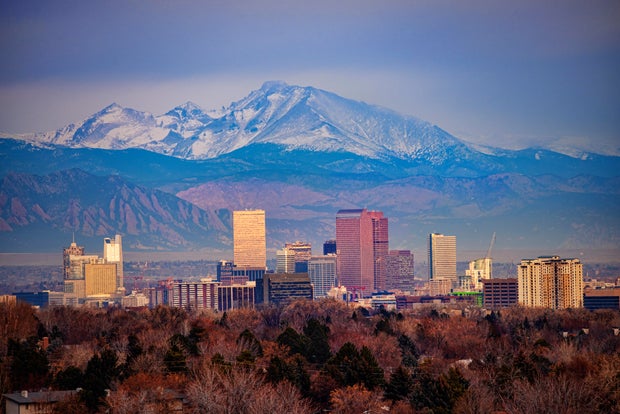
The diversity of Colorado's economy is a strong pillar of support for stability. Tourism and agriculture remain pretty constant. Wobbekind feels the completion of the 16th Street Mall project in Denver should help revitalize downtown. LoDo is doing relatively well, but vacancy rates in commercial office buildings in other parts of downtown are running at 40%. In town in Denver, there is a glut of construction of multi-family housing that will mean vacancies there as well. Single-family home prices are softening, with a high percentage of people pulling homes for sale back off the market, hoping for better prices in 2026. But construction work could be affected by what some have called an overbuilding of high-rise apartments.
"Especially in the urban locations," said Matt Barnett, managing director for Walker & Dunlop, a commercial real estate broker. "The economics don't work for new high-rise apartment buildings today. It will be a few years before they do, and as you may have a slowdown in construction and high-rise. Suburban stick-built not as much."
Tariffs continue to be a question as well when it comes to Colorado businesses. It has not taken away the interest of foreign companies in moving into American markets, said Nicole Zimmermann, founding partner and CEO with Zelocin & Patrners, a strategic marketing and consulting firm working with foreign businesses.
"It has slowed down the speed of decision making, how fast you want to enter a market because there is huge uncertainty in terms of the final level of tariffs," said Zimmermann. "That might have slowed down the launch dates, so to speak, of entering the market, but at the end of the day, they are still very interested to come."