No charges filed against driver who caused fatal crash, Northern Colorado DA says investigators took too long

The family of a Wyoming man killed in a rear-end crash on Interstate 25 in Northern Colorado is questioning why no charges were filed against the driver who hit him, after delays in the investigation and the victim's toxicology results complicated the case.
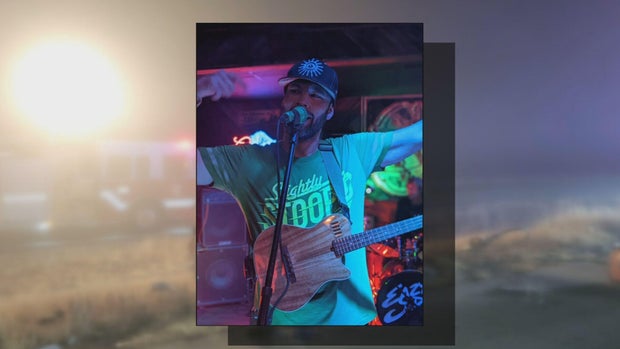
Brennan Capellas died Jan. 3, 2025, after his vehicle was struck from behind in thick fog in Larimer County, north of Fort Collins. Nearly two years later, his wife and daughter are still looking for answers about how the crash was handled and why prosecutors ultimately declined to pursue charges.
"I was told from the beginning that charges were going to be pressed against this person who hit my husband," said Brittany Capellas, Brennan's wife.
But the family said months passed without updates on the investigation.
"There were no updates at all. We didn't know the extent of anything," said Daisy Maynard, Capellas' daughter.
The Colorado State Patrol responded to the crash but initially believed it involved a single vehicle because of the dense fog and difficult conditions.
"Due to the unusual weather that day, it was hard to identify what took place," said Capt. John Ray with the Colorado State Patrol's vehicular crimes unit.
Investigators did not identify the second vehicle as part of the crash for nearly six hours, according to Larimer County District Attorney Gordon McLaughlin. During that time, the man who hit Capellas was in a field nearby, sitting in a vehicle that had been reported stolen. Investigators said the driver never called 911.
CBS Colorado is not identifying that driver because he was never charged in Colorado with connection to the crash.
CSP eventually submitted its investigation to McLaughlin's office nearly a year later.
"They presented the case to us like 11-months and change in, knowing that the year statute of limitations (for misdemeanors) was there," McLaughlin said.
His office had only a few weeks to investigate and file any misdemeanor charges before the statute of limitations expired.
"There was no room for error," McLaughlin said.
McLaughlin also said he asked for cellphone data from the driver who struck Capellas and was told by Colorado State Patrol that investigators could not access it. He said he later learned, too late, that the data could have been accessed.
Ray said that the agency puts significant resources into its crash investigations and defended the time investigators took to complete the case. However, he did add that everyone should always strive to do better no matter what their job is.
"It is 100% our job to present a case that's factual, thorough, thoughtful," Ray said.
Ray said that there was no malicious intent behind the length of the investigation and argued that rushing the process could jeopardize a case.
"How valuable would it be if I rush through an investigation, or any investigator would rush through an investigation, and falter where we could have been successful otherwise?" Ray said.
Ray also said the statute of limitations for vehicular homicide and other felony charges remained open, even as the deadline for misdemeanor charges approached.
McLaughlin ultimately decided not to file felony charges against the driver who hit Capellas. He cited the circumstances of the crash, the investigative delays and Capellas' toxicology results.
According to McLaughlin, Capellas had 1,300 nanograms per milliliter of methamphetamine in his system at the time of the crash.
"That means it is such a high level of methamphetamine that that would be enough to kill most people," McLaughlin said.
McLaughlin said Capellas was culpable in the crash because he knowingly operated a vehicle while intoxicated to that extent. He also told CBS Colorado that, had the collision not occurred, Capellas likely would have crashed on his own farther down I-25. McLaughlin said he felt he could not convince a jury to convict the other driver due to Capellas' intoxication at the time of the crash.
When asked whether the case and prosecution would have been different if Capellas had been sober, McLaughlin said it would have been.
"100% different," he said.
McLaughlin said he empathizes with the family but believed the evidence and circumstances left his office unable to file charges against the other driver.
For Capellas' wife and daughter, the decision has been difficult to accept.
"To find out we're never going to press any charges was shocking," Brittany Capellas said.
Maynard questioned how her father's drug use factored into the decision not to prosecute the other driver.
"What's the number of drug that needs to be in your system for your life to not be valuable anymore?" Maynard said.
Brittany Capellas said the outcome has left her feeling that her husband's life was treated as less important because of his intoxication.
"It's super-super hurtful. It makes me feel like, if your loved one is on drugs, their life doesn't matter," she said.
McLaughlin acknowledged the difficulty of the case, pointing to the circumstances that complicated the investigation and the limited time his office had to review it.
"That proves why, you know, justice delayed is sometimes justice denied," McLaughlin said.
For Maynard, the decision has left a question about accountability that her family still cannot resolve.
"It just brings into question who's liable for it. Who should be in trouble? Trouble because it feels like someone needs to be in trouble," she said.


